Search

Kizárt szavak

Tiltott szavak

  • cialis
  • viagra
  • php
  • sql
  • html
  • https
  • http
  • chr
  • script
  • sex
  • porn
  • sexmassage

Alternatív kifejezések

  • =

1. Valley of Herbs

Last modification: 2025. November. 26. 09:58

Herbs become teas and infused oils, fruits turn into dried snacks and pure juices — all crafted from natural ingredients using modern methods. Step into their “witch’s kitchen” and discover how nature’s gifts are transformed.

Találati relevancia adatok

megtalálta: cím (10) lead (3) szöveg (1) title (5) description (4)  | összesen: 23 pont
Tárolt adatok:
cím: + 10 Valley of Herbs
lead: + 3 Herbs become teas and infused oils, fruits turn into dried snacks and pure juices — all crafted from natural ingredients using modern methods. Step into their “witch’s kitchen” and discover how nature’s gifts are transformed.
tartalom: + 1 Small-scale organic rarming in Zala Péter Bakos and his wife Zsuzsa left their former careers behind to start farming, building their model farm step by step. Here, they grow and process herbs, fruits, and spices into 100% pure juices, dried fruits, infused oils, essential oils, and floral waters. What makes them unique is their commitment to human-scale, artisanal production.Visitors can tour the workshop, taste natural delicacies, and learn firsthand about the healing power of herbs. Where people, animals, and plants thrive together Drawn to a sustainable, nature-connected lifestyle, Péter and Zsuzsa settled in Zalaszentlászló. Though they once lived in Budapest, their love for nature and interest in herbalism had always been there. When they found their property in the Zala Valley, they quickly realized its potential — wild herbs flourished everywhere. Over time, this blossomed into the Valley of Herbs. Their vision was simple: create a place where nature sets the rhythm, and the family only takes what each season offers. To deepen her knowledge, Zsuzsa completed formal phytotherapy training, gaining a deep understanding of the valley’s medicinal plants. Tradition meets modern processing In their “witch’s kitchen,” Valley of Herbs produces infused oils, dried fruits, pure juices, and herbal teas — all from natural, carefully selected ingredients. Modern pressing technology ensures minimal intervention for juices, while crafting infused oils, drying fruits, and preparing teas remains a hands-on, meticulous process. Every herb, spice, and fruit is sorted by hand before it goes into oils, dehydrators, or drying racks. Unlike industrial producers, Péter and Zsuzsa focus on quality over quantity. They use only their own crops or ingredients from trusted local farmers. Herbs are homegrown or wild-harvested from their land.  Their infused oils are blended with omega-3 rich Hungarian oil and flavored with homegrown basil, garlic, tarragon, and thyme.Dried fruits — apricots, plums, apples, sour cherries — are gently dehydrated at low temperatures to preserve their natural flavor and nutrients. Juices are pressed from seasonal harvests — apples, grapes, rowanberries, currants, beets, and pumpkins — without added sugars or preservatives. A little of everything in one place Their 15-hectare farm is a vibrant mix of wild meadows, orchards, herb gardens, and a fragrant spice patch. Chickens, roosters, and horses are part of daily life, cared for by Zsuzsa with joy. The farm also includes a small on-site shop, where, by appointment, visitors can buy their favorite products, join herb walks, and attend educational workshops.   Product highlights Dried fruits – Local, natural, handcrafted Valley of Herbs dried fruits are made exclusively from local, hand-selected produce. Only the best fruits are used — anything bruised or overripe is carefully excluded to maintain top quality in taste and appearance. Apples, pears, and plums are hand-picked, pitted, sliced, and gently dehydrated using an eco-friendly, small-scale drying system. Dried slowly at low temperatures (45–55°C) over several hours or even days, the fruits retain their color, vitamins, and natural sweetness. No added sugar, no preservatives — just the pure, sun-ripened flavor and aroma of the fruit. Where to buy the products: 8788 Zalaszentlászló, Vörösmajor 0154 Google Maps More information & Contact: Facebook Website Phone: +36 30 952 6024  

The Life-Giving Winds of the Ice Age: How Loess Shaped the Land

Did you know that Transdanubia’s rich, golden soils are actually a gift from the winds of the Ice Age? Loess isn’t just a dry geological term — it’s an ancient natural recipe that gave rise to some of the most fertile soils in the Carpathian Basin. Where vineyards grow today and birds nest in loess cliffs, strong winds once carried yellow dust across the landscape — for thousands of years. Learn how this unique sediment shaped the land and why loess is still essential for sustainable farming today.

What Is Loess and How Did It Form?

The term loess comes from the German word lose, meaning "loose." Loess is a fine-grained, yellowish sediment that was deposited during the Pleistocene epoch (2.58–0.01 million years ago), particularly during glacial periods. It formed in periglacial environments south of the great Scandinavian ice sheet — cold, dry landscapes with little or no vegetation.

The dust was carried by strong Ice Age winds from floodplains and barren steppes, and slowly accumulated over tens of thousands of years. Eventually, calcium carbonate cemented these layers into loess, which developed characteristic vertical fissures.

It’s important to note that the Pleistocene wasn't a single “Ice Age,” but a period that included alternating cold and warm phases — some even warmer than today.

Loess and the Landscape

Loess gave the Carpathian Basin — especially Transdanubia — its distinct terrain.

Steep loess cliffs (sometimes up to 10 meters high), caves that provide nesting sites for bee-eaters and sand martins, centuries-old sunken roads carved into hillsides, and exposed root systems are all part of the landscape’s geological legacy.

Together, they define the unique character of this region — shaped by time, wind, and stone.

Fertility and Water Retention

Loess-rich areas have produced some of the most fertile soils in the region. Many local producers farm on land that sits atop loess. This creates an excellent foundation for agriculture — not just because of the high humus content, but also because loess has outstanding water-holding capacity. Its vertical pores allow moisture to penetrate deeply and remain in the soil, even during dry periods.

A Modern Echo — Dust from the Sahara

Interestingly, the fine Saharan dust that now reaches Central Europe more frequently can be seen as a modern counterpart to loess-forming material. It’s a reminder that the powerful natural forces that shaped the land long ago are still at work today — just on a different scale.

[galeria]
title: + 5 Valley of Herbs
description: + 4 Herbs become teas and infused oils, fruits turn into dried snacks and pure juices — all crafted from natural ingredients using modern methods. Step into their “witch’s kitchen” and discover how nature’s gifts are transformed.
címkék:
fókusz kulcsszó:
szinoníma címkék:

2. Gallery

Last modification: 2023. January. 24. 11:12

Találati relevancia adatok

megtalálta: cím (10)  | összesen: 10 pont
Tárolt adatok:
cím: + 10 Gallery
lead:
tartalom:
title:
description:
címkék: ;Hévíz;
fókusz kulcsszó:
szinoníma címkék:

3. Gallery

Last modification: 2019. March. 28. 09:34

Találati relevancia adatok

megtalálta: cím (10)  | összesen: 10 pont
Tárolt adatok:
cím: + 10 Gallery
lead:
tartalom:
title:
description:
címkék:
fókusz kulcsszó:
szinoníma címkék:

4. Programmes for all the four seasons

Last modification: 2024. September. 03. 13:02

Találati relevancia adatok

megtalálta: cím (10)  | összesen: 10 pont
Tárolt adatok:
cím: + 10 Programmes for all the four seasons
lead:
tartalom:

Why spring? Because spring is about renewal, beauty, health, and life itself. Because the grass is greener, the weather is warmer, the evenings are longer and the water of Lake Hévíz is getting hotter and hotter every day. Spring is the joy of life, the season of birth and rebirth of the town, the season of the Happy Peacetimes Festival, the celebration of mothers, women, children and faith. The hiking boots, bicycles, e-bikes, scooters are taken out again. With renewed energy, you get out in nature and can’t have enough of the smell of freshly cut grass. You enjoy the first rays of the sun and have the incredible experience of swimming on the shores of a hot-water lake, even in April. What to do here? Bathe in the 30°C thermal lake before the summer beach season, recharge your batteries in nature, either during an easy hike or a bike ride. Climb to the castle ruins, the lookout towers and enjoy the magnificent view of Lake Balaton, Kis-Balaton, or even in the mating dance of waterfowl. Or pamper yourself in the spa, recharge your batteries, exercise, change your lifestyle, go on a diet, treat your skin or relieve the aches and pains in your stiff limbs with the help of skilled hands because it has been a long winter. Take advantage of every long weekend to get away from the routine of everyday life.

Why summer? Because in summer the area is full of life, fun and programmes. Everybody goes to the pools or the beach at the lake in Hévíz or to the best beaches of Lake Balaton /Keszthely, Gyenesdiás, Vonyarcvashegy, Balatongyörök/, or, in the case of bad weather, to the adventure baths of the area /Kehidakustány, Zalakaros/. Because festivals in the villages, knights’ tournaments in the castles and summer theatre plays in the park of the palace offer you unforgettable experiences almost every day. This is the time of beer, wine and gastro festivals, running and cycling races, music and dance festivals. And anyway, as the song goes: "The sun is shining, don't be sad....” What to do here? Enjoy the summer and your holiday, discover the best places in Hévíz and the surrounding area. It's the time of active relaxation, festival atmosphere, fun, children's laughter and clinking of glasses in the evening. Come and join in the fun and indulge in a variety of adventures. You won't be bored, however, you can decide to relax in the very pleasant, hot water of Lake Hévíz all day.

Why autumn? Because autumn is full of the vibes of summer, of the sun under your skin, of wonderful flavours, smells and colours. It is also full of the praise of wine, grapes, pumpkins, roast goose. Every warm day of autumn is a gift, a closure and a preparation. Autumn is quality, desire, and sensuality. Autumn brings time and attention. It encourages you to enjoy every moment while you can, but slowly, with pleasure because it quickly slips away. What else could it be about but gastronomy, the harmony of flavours, scents and colours, Variations on WINE wine dinners and Martin's Day, about introspection, caring. What should you do here? Enjoy the beach season that lasts until October here when the water of Lake Hévíz still retains the warmth of summer. Enjoy the culinary events of autumn and early evening concerts of popular music on a cosy terrace or at the Egregy wine hill. Take one last boat ride in the sunset on Lake Balaton, run, jog, walk, cycle along the promenades rustling with falling leaves. Recuperate, relax, slow down, be a little selfish and take care of yourself.
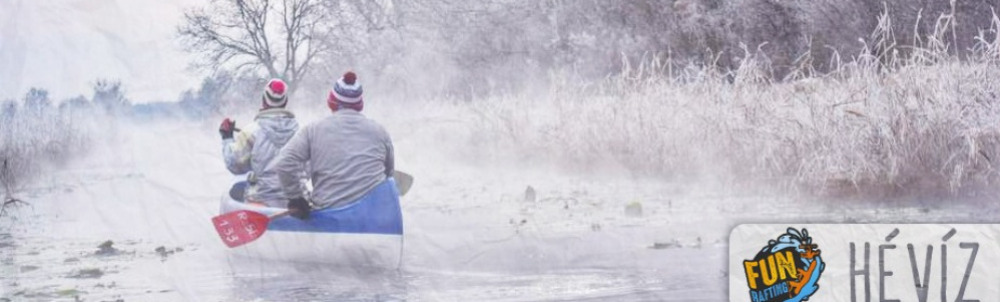
Why winter? Because winter is full of lights, flavours, atmospheres, intimacy. And also with Advent markets, Christmas concerts and, of course, New Year's Eve street parties. Winter is wonderful, especially when it's white. When you canoe in the snowfall on the steaming Hévíz stream, when the frozen Balaton becomes a seemingly endless skating rink, when you swim in the steaming Hévíz Lake while everything around you is frosty and white. The winter is full of warmth: sit in the thermal waters of the pool, enjoy a sauna session, have a hot Christmas drink between your hands. And winter is also full of romance, days spent together, silence and love. And if you stay until the end of winter, it's full of fun and happiness too, when we get bored of it and drive it away at the carnival. What should you do here? Enjoy the peace, the lights, the delicious flavours. Indulge yourself and your partner with massages, relax in the sauna sessions, unwind with the power of steam. Take a swim in the Hévíz steam in winter, because you can't do it in summer, and go to the cinema in the evening instead of watching TV. Take part in gastronomic events, but don't miss the magnificent view of Lake Balaton in winter from the highest tower of Szigliget Castle. Winter is all about you. It's about you and your loved one. Surprise her/him.

title:
description:
címkék:
fókusz kulcsszó:
szinoníma címkék:

5. Cserszegtomaj Delights

Last modification: 2025. November. 26. 09:41

Pickles, fermented vegetables, smoky zakuska, homemade jams, and roasted hazelnuts — all crafted from homegrown produce, free of additives, just like grandma used to make.

Találati relevancia adatok

megtalálta: lead (3) szöveg (1) description (4)  | összesen: 8 pont
Tárolt adatok:
cím: Cserszegtomaj Delights
lead: + 3 Pickles, fermented vegetables, smoky zakuska, homemade jams, and roasted hazelnuts — all crafted from homegrown produce, free of additives, just like grandma used to make.
tartalom: + 1 From garden to jar Have you ever tasted roasted hazelnuts? Tried pickled turnips? Love fermented vegetables? At Cserszegtomaj Delights, the family’s homegrown fruits and vegetables are transformed into delicious jams, healthy pickles, rich vegetable spreads — and even roasted hazelnuts, one of the key ingredients in Nutella. Éva Mózerné Merics and her family have been growing their own produce for decades. By expanding into small-scale processing, they now manage every step from seed to jar themselves. A legacy rooted in grandmother’s kitchen The farm is built on generations of family knowledge and experience. What started as growing food for personal use gradually turned into selling surplus at local markets. For years, Éva’s grandmother sold their homemade products at the Keszthely market. As demand for preservative-free, homemade goods grew, Éva left her previous job and dedicated herself full-time to farming and processing. Today, the family cultivates several hectares of orchards, vegetable plots, and a hazelnut grove in Cserszegtomaj. Thanks to increased processing capacity, their products are now available year-round — though seasonal ingredients ensure constant variety. Traditional methods, modern values The product range includes classic pickles, fermented vegetables, vegetable spreads, jams, and roasted Turkish hazelnuts — plain, salted, or chocolate-coated. Depending on the season, Éva might also bring fresh produce to market: pumpkins in autumn, persimmons or quince paste in winter. Éva learned the art of preserving, fermenting, and natural processing from her mother-in-law. Many of her products are made without preservatives or additives, using traditional methods — just like grandma did. Fermented and pickled products — like turnips, cabbage, beets, or broad beans — are unpasteurized, retaining their natural nutrients and rich flavors. All vegetables are grown on the family’s land. Every step — slicing, bottling, labeling — is done by hand in their workshop in Cserszegtomaj. "Good things take time" That philosophy could easily be Cserszegtomaj Delights’ slogan. Éva believes that patience is the key to creating truly healthy, high-quality foods — whether preserving, pickling, or fermenting. More than a farm: an experience Besides their Cserszegtomaj farm, the family also maintains plantations in Alsópáhok, where they operate two guesthouses. Soon, they will open a demonstration garden, offering thematic programs and hands-on workshops where visitors can learn the secrets of homemade preserves. A mission, not just a job “What the garden gives, I want to turn into more than just flavor. I want to create life.” For Éva, farming is not just work, but a calling. She firmly believes that what we eat affects our quality of life, which is why knowing where food comes from — and how it’s made — truly matters.   Product highlights Zakuska This traditional vegetable spread is made from fire-roasted eggplants, homemade ground peppers, and their own tomato puree — all free of additives. The eggplants are roasted over fruitwood coals, giving them a signature smoky flavor. Every step is done by hand: peeling the eggplants, harvesting garden-grown peppers and onions, simmering the tomatoes. Seasoned simply but boldly, the zakuszka showcases the true taste of vegetables. Thick and creamy, it’s vegan, gluten-free, and perfect on bread, toast, or as a flavorful side dish. Each jar captures the essence of a Cserszegtomaj season. Roasted hazelnuts On their plantation, Éva’s son Gergő and his family tend to over 700 hazelnut bushes, using eco-friendly, chemical-free methods. After harvesting, the nuts are dried, cracked, hand-sorted, and roasted in small batches to ensure maximum flavor and crunch. They are available plain, salted, or coated in chocolate for those with a sweet tooth. Gergő also produces cold-pressed hazelnut oil — a rare delicacy in Hungary. Where to buy Hévíz Farmers’ Market Szezonkosár (Seasonal Basket Initiative) More information & Contact: Facebook

Imagine a vast body of water — over 1,000 meters deep and more than 400 times the size of Lake Balaton — once rippling across this land. The story of the Pannonian Lake is not just a fascinating chapter of geological history, but a legacy that continues to shape the region: it left behind mineral resources, fertile soils, and even inspired legends. Discover how an ancient lake transformed Transdanubia — and why its impact is still felt today.

An Inland Sea for Millions of Years

At its greatest extent, the Pannonian Lake covered an enormous area, far surpassing the size of today’s Balaton. For millions of years (approximately 12 to 8.5 million years ago), it dominated the region. As surrounding mountain ranges gradually rose, the lake became cut off from the world’s oceans. Its water slowly turned fresh, and its basin began to fill with sediments. Because of its isolation, the lake developed a unique ecosystem with many endemic species.

The Lake Didn’t Appear Overnight

The Pannonian Lake didn’t simply “appear” in the Carpathian Basin. Its formation was the result of millions of years of tectonic activity and shifting climate. It emerged as an independent, enclosed body of water — no longer connected to the open seas.

Deep Waters, Varied Shores

In some areas, the lake reached depths of over 1,000 meters. Elsewhere, shallower zones supported lagoons, river deltas, and small, isolated lakes. During high water periods, rocky shorelines formed along the mountain fringes — traces of which can still be found today in the Keszthely Hills and the Mecsek Mountains.

The Lake’s Retreat — and Sediment Legacy

Despite its size, the lake was eventually filled in by immense volumes of sediment, carried mainly by rivers flowing from the Alps and the Carpathians. Over the course of 6.5 million years, it gradually disappeared from the landscape.

What did it leave behind?

Its sediments — composed mostly of sand, clay, and fine silt — became the so-called “Pannonian formations,” which today hold key mineral resources (such as petroleum) and aquifers. These formations define much of the surface geology of Transdanubia, including the Zala Hills.

Fertile soils later formed on the laminated silty and clay-rich deposits of the Somló Formation. Even the legendary “Tihany goat’s hoof” fossils — actually worn shell fragments of the Congeria ungulacaprae mollusk — can still be found embedded in these ancient layers.

The Final Lakes and a Gradual Goodbye

Because most of the sediment entered from the northwest, north, and northeast, the lake slowly retreated toward the south and southeast — as if it were “withdrawing” from what is now Hungary.

Small remnant lakes persisted for much longer in areas of present-day Slavonia (Croatia) and northern Serbia, but due to their different scale, character, and fauna, they are not considered true successors of the ancient Pannonian Lake.

About 10,000 years ago, rapid climate warming triggered a cascade of natural responses: torrential floods, landslides, and intense rock weathering. The landscape we walk on today was not shaped over mere centuries, but by the dramatic forces of climate and water, working together. Did you know that the Zala Valley floor is made up of sediments deposited by a kind of "river of time"? Discover how the Earth’s surface became one of the most sensitive indicators of climate change.

Climate Change: Not Just a Modern Phenomenon

We often associate climate change with contemporary issues, but Earth’s climate has shifted many times throughout its history — sometimes quite rapidly. Within large-scale climatic cycles, alternating periods of warming and cooling have long been part of the planet’s natural rhythm.

When Climate Changes, Everything Reacts

A change in climate sets off a chain reaction of environmental processes. It’s not just animals and plants that respond — so does the landscape itself.

Around 10,000 years ago, as the climate warmed significantly, rainfall became more intense.

More rain meant more erosion: stormwater began washing away sediment from hills and valleys into riverbeds. The rivers, now carrying more water and more sediment, flooded more often and spread these materials across the landscape.

Shaping the Terrain

This had a major impact on topography: the land surface became more fragmented and dynamic. Warming temperatures also sped up chemical and physical weathering, breaking down bedrock and helping fertile soil layers to develop.
 In short, natural geological processes that had long been underway suddenly accelerated — and reshaped the surface of the land.

Young Sediments at the Base of the Slopes

Today, in many areas of the region, the lower slopes and valley edges are coated with sediment — debris washed down from higher ground, largely within the last 10,000–20,000 years. In the Zala Valley, for instance, these deposits have spread so far that they now reach the center of the valley floor.

The original bedrock source of these sediments varies: in Zala, it’s typically Pannonian sand (Somló Formation), while in the Keszthely Hills, marine-origin carbonates dominate — mostly dolomite, with some limestone. These sediments now appear as fine gravel, pebbles, or coarse sand, quietly recording the environmental changes of the recent past.

[galeria]
title: Cserszegtomaj Delights
description: + 4 Pickles, fermented vegetables, smoky zakuska, homemade jams, and roasted hazelnuts — all crafted from homegrown produce, free of additives, just like grandma used to make.
címkék:
fókusz kulcsszó:
szinoníma címkék:

6. GM Design

Last modification: 2025. November. 26. 09:57

In the heart of the “capital of Lake Balaton,” a small artisan workshop in Keszthely crafts handmade chocolates from premium Belgian ingredients. One of their most unique creations features sea buckthorn.

Találati relevancia adatok

megtalálta: lead (3) szöveg (1) description (4)  | összesen: 8 pont
Tárolt adatok:
cím: GM Design
lead: + 3 In the heart of the “capital of Lake Balaton,” a small artisan workshop in Keszthely crafts handmade chocolates from premium Belgian ingredients. One of their most unique creations features sea buckthorn.
tartalom: + 1 Artisan chocolate crafted as an artform Did you know that sea buckthorn isn’t just an immune-boosting superfruit, but also pairs beautifully with dark chocolate Gorza Melinda, founder of GM Design Chocolate Atelier, discovered this perfect harmony when she created her sea buckthorn-infused dark chocolate bars and bonbons. But GM Design is more than just a chocolate shop. Melinda’s creativity shines through in pastry competitions, where she regularly wins awards for her artistic chocolate sculptures. Now you can taste her award-winning chocolates too! A childhood dream come true Melinda knew by age nine that she wanted to become a pastry chef. In 2006, she earned her pastry certification and has been honing her skills ever since, especially in chocolate-making. For her, working with chocolate is more than a job — it’s a passion and a form of artistic expression. In 2025, she opened her own workshop and store in Keszthely, GM Design, where she creates handmade chocolates using Belgian couverture. Melinda loves that through chocolate, she can bring a little happiness into people’s everyday lives. To sharpen her skills and fuel her creativity, she regularly competes in pastry contests, particularly in the artistic category — crafting edible chocolate sculptures and lifelike compositions that require weeks of precision and imagination. For true chocolate lovers At GM Design, you’ll find everything a chocolate lover could wish for: filled and unfilled bars, bonbons, chocolate sculptures, chocolate flowers — in a variety of flavors. Melinda creates every product by hand, using premium Belgian chocolate. She never uses cocoa mass substitutes, palm oil, or artificial additives. Her milk chocolate contains 36.5% cocoa, while her dark chocolate boasts 70.5% cocoa content. She handles every step of production herself — from tempering the chocolate to achieve a glossy, crisp finish, to molding bars, bonbons, figurines, and roses. For filled chocolates, she develops her own ganache recipes with seasonal flavors like sour cherry, raspberry, coconut, pistachio, rose, salted caramel — and the most distinctive of all, sea buckthorn. Melinda often decorates her creations with freeze-dried fruits, edible flowers, and nuts. After cooling, the chocolates are packaged — available in gift boxes and special seasonal themes. A real treat is her chocolate-covered dried or fresh fruits, available seasonally. An authentic chocolate experience GM Design is located in downtown Keszthely, just steps from the main square. The cozy shop doubles as an open-view workshop, where visitors can peek into the chocolate-making process. The shop is open Tuesday to Saturday, and Melinda also brings her sweets to the Hévíz Farmers’ Market every Thursday and Saturday.   Product highlights Sea buckthorn filled dark chocolate bar & bonbon Among GM Design’s most exciting creations are the sea buckthorn-filled dark chocolate bar and bonbon. Here, the tartness of sea buckthorn perfectly balances the richness of silky dark chocolate. Made with 70.5% premium Belgian chocolate, these treats feature a refreshing sea buckthorn ganache — offering both a unique taste and a natural vitamin boost. Fun fact: ganache is a silky filling made from chocolate and butter, commonly used in chocolates and pastries. Melinda enhances hers with sea buckthorn purée and ground seeds, giving an added layer of flavor and texture. The sea buckthorn is sourced from a local producer, Kiss Homoktövis farm in Bocfölde, ensuring freshness and traceability. Where to find GM Design Chocolates: Hévíz Farmers’ Market 8360 Keszthely, Bem József Street 25 Google Maps More information & Contact: Facebook Website Phone: +36 30 216 2294  [galeria]
title: GM Design
description: + 4 In the heart of the “capital of Lake Balaton,” a small artisan workshop in Keszthely crafts handmade chocolates from premium Belgian ingredients. One of their most unique creations features sea buckthorn.
címkék:
fókusz kulcsszó:
szinoníma címkék:

7. Margit Kreiner

Last modification: 2025. November. 26. 10:32

It’s not often you get to taste quail eggs — especially ones marinated in aromatic olive oil. Another must-try specialty is the wild garlic pesto, an irresistible highlight of the farm.

Találati relevancia adatok

megtalálta: lead (3) szöveg (1) description (4)  | összesen: 8 pont
Tárolt adatok:
cím: Margit Kreiner
lead: + 3 It’s not often you get to taste quail eggs — especially ones marinated in aromatic olive oil. Another must-try specialty is the wild garlic pesto, an irresistible highlight of the farm.
tartalom: + 1 Unique delicacies preserved in a jar At Margit Kreiner’s stand at the Hévíz Farmers’ Market, you can sample smoked, spiced quail eggs, wild garlic pesto, paprika creams, syrups, and jams. In Raposka, a quiet corner of the Balaton Uplands at the foot of Szent György Hill, nearly 400 quails chirp daily under the care of Margit and her daughter, thanking them with hundreds of tiny, nutritious eggs. Quail eggs are considered a healthy delicacy, but when smoked and preserved in olive oil, they become a true gourmet treat. Farming as a passion Margit has been immersed in agriculture and homestead farming her whole life. Over the years, she has gained extensive experience in animal husbandry. Previously, her family lived in Káptalantóti, where they raised hundreds of poultry and sheep, produced herbal teas, and cultivated lavender and roses. After moving to Raposka, she continued her passion on a smaller scale. Inspired by an experienced friend, she began raising quails, learning everything through reading, hands-on experience, and trial and error. Today, she and her daughter care for several hundred quails, providing them with fresh water and high-quality feed daily. From the start, Margit has avoided industrial feeds, sourcing natural grains — corn, wheat, barley, peas, soy — from a nearby farm. This ensures the quails remain healthy and their eggs retain a rich, characteristic flavor. As Margit says “Anyone who has tasted eggs from industrially-fed poultry and then tries one from a home-raised bird fed with natural grains will immediately notice the difference.” Not only is the taste superior, but the appearance is too. The yolk has a deeper, more vibrant color that remains golden even after cooking. Artisan processing, creative flavors After boiling, the quail eggs are soaked in brine for several hours, then smoked over beechwood. The firm, white eggs are then preserved in olive oil with garlic, chili, wild garlic, or other seasonal herbs. Each flavor is the result of Margit’s own experiments — nothing reaches the market until she deems it 100% perfect. The most popular flavors include plain, garlic, and chili. Tip: Don’t discard the marinade — the aromatic olive oil can be used for cooking after the eggs are gone! Customers often suggest new flavor ideas, which Margit gladly tries to bring to life. While the smoked quail eggs are the flagship product, Margit also makes wild garlic pesto, sweet and spicy paprika creams from homegrown vegetables, and fruit-based jams and syrups.   Product highlights Wild garlic pesto Made from freshly harvested wild garlic at its seasonal peak, this pesto combines finely chopped leaves with olive oil, salt, and either walnuts or chili. Margit uses only the leafy parts to preserve the fresh, mildly garlicky aroma. She collects the wild garlic herself from trusted local spots, sometimes with the help of family. The versions with walnuts or chili add a distinctive twist to this spring delicacy. Perfect for pasta, spread on toast, as a meat accompaniment, or as a salad dressing. No preservatives are used. Spiced smoked quail eggs in olive oil One of Margit’s most unique creations, these smoked quail eggs preserved in olive oil are a true delicacy. The quails are home-raised on natural feed, resulting in eggs rich in vitamins and minerals. Preparing these tiny treasures is a meticulous process: The eggs are soaked in vinegar water to remove natural pigments, then boiled in salted water, cooled, and peeled by hand. After that, they are smoked over beechwood for three hours. The prepared eggs are then submerged in olive oil, plain or flavored with garlic, chili, or seasonal herbs. The oil acts not only as a preservative but also captures the smoky and spicy aromas, making it perfect for later culinary use. Made exclusively with natural ingredients, free from additives and preservatives, this product has a shelf life of six months. Enjoy as an appetizer, finger food, or salad topping — a true homemade delicacy from Raposka.   Where to buy Hévíz Farmers’ Market Liliomkert Market, Káptalantóti

The Life-Giving Winds of the Ice Age: How Loess Shaped the Land

Did you know that Transdanubia’s rich, golden soils are actually a gift from the winds of the Ice Age? Loess isn’t just a dry geological term — it’s an ancient natural recipe that gave rise to some of the most fertile soils in the Carpathian Basin. Where vineyards grow today and birds nest in loess cliffs, strong winds once carried yellow dust across the landscape — for thousands of years. Learn how this unique sediment shaped the land and why loess is still essential for sustainable farming today.

What Is Loess and How Did It Form?

The term loess comes from the German word lose, meaning "loose." Loess is a fine-grained, yellowish sediment that was deposited during the Pleistocene epoch (2.58–0.01 million years ago), particularly during glacial periods. It formed in periglacial environments south of the great Scandinavian ice sheet — cold, dry landscapes with little or no vegetation.

The dust was carried by strong Ice Age winds from floodplains and barren steppes, and slowly accumulated over tens of thousands of years. Eventually, calcium carbonate cemented these layers into loess, which developed characteristic vertical fissures.

It’s important to note that the Pleistocene wasn't a single “Ice Age,” but a period that included alternating cold and warm phases — some even warmer than today.

Loess and the Landscape

Loess gave the Carpathian Basin — especially Transdanubia — its distinct terrain.

Steep loess cliffs (sometimes up to 10 meters high), caves that provide nesting sites for bee-eaters and sand martins, centuries-old sunken roads carved into hillsides, and exposed root systems are all part of the landscape’s geological legacy.

Together, they define the unique character of this region — shaped by time, wind, and stone.

Fertility and Water Retention

Loess-rich areas have produced some of the most fertile soils in the region. Many local producers farm on land that sits atop loess. This creates an excellent foundation for agriculture — not just because of the high humus content, but also because loess has outstanding water-holding capacity. Its vertical pores allow moisture to penetrate deeply and remain in the soil, even during dry periods.

A Modern Echo — Dust from the Sahara

Interestingly, the fine Saharan dust that now reaches Central Europe more frequently can be seen as a modern counterpart to loess-forming material. It’s a reminder that the powerful natural forces that shaped the land long ago are still at work today — just on a different scale.

[galeria]
title: Margit Kreiner
description: + 4 It’s not often you get to taste quail eggs — especially ones marinated in aromatic olive oil. Another must-try specialty is the wild garlic pesto, an irresistible highlight of the farm.
címkék:
fókusz kulcsszó:
szinoníma címkék:

8. LídRind Porta

Last modification: 2025. November. 26. 10:34

At Lídrind Porta, every bite comes from home-raised cattle, crafted naturally and by hand, without additives.

Találati relevancia adatok

megtalálta: lead (3) szöveg (1) description (4)  | összesen: 8 pont
Tárolt adatok:
cím: LídRind Porta
lead: + 3 At Lídrind Porta, every bite comes from home-raised cattle, crafted naturally and by hand, without additives.
tartalom: + 1 Beef specialties from Csáford Berkovics-Tarsoly Lídia has combined family heritage with accounting precision to build her small-scale operation, where every meat product reflects genuine care and expertise. There are no additives, no shortcuts—only natural ingredients, time, and attention. Thanks to their nature-friendly livestock farming, Lídia creates products that are flavorful on their own. A visit to their farm introduces you to a family who treats their animals with deep respect. Come and taste their authentic flavors! Back to the roots Lídia grew up immersed in farming life. Her father raised cattle and processed meat, so slaughtering, feeding, and all aspects of animal husbandry were part of her everyday world. Spending time alongside her father, she learned first-hand what it means to raise animals responsibly, process meat, and create quality food. Although she studied accounting and initially worked in that field, she soon found her way back to farming. What started as a hobby—raising cattle for family use—soon grew into a business. Today, she runs her own farm, guided by the knowledge passed down from her father. Respect for animals shows in product quality At Lídrind Porta, animals live in free-range conditions, grazing along the banks of the Zala River. Their well-being directly impacts the quality of the meat. The family also grows their own feed, ensuring complete control over what goes into their products. Their goal: to raise healthy, well-cared-for animals that provide high-quality meat for their handcrafted products. Butchering, cutting, curing, and smoking are all done by hand at their small-scale facility in Csáford. Natural beef specialties LídRind Porta's signature products include smoked beef ham, sausage, and salami. They have also expanded into pork products and offer fresh farm eggs. A recent specialty is their basturma—a spiced, air-dried beef rolled in an aromatic herb crust. Served with sourdough bread and homemade cheese, it’s a true delicacy. Lídia follows a natural approach not only in animal husbandry but also in meat processing. Preservation is done simply with salt, deliberately avoiding nitrites, artificial colors, and fast-curing methods. Smoking is carried out with acacia and beech wood. Hams are cured slowly, developing their distinct flavors and textures naturally—unlike industrial products where shortcuts are the norm. Seasonings are made from natural ingredients, often home-grown, such as paprika for their spicy salami and juniper berries for unique flavor profiles. Farm-to-table on the Csáford Vineyard At Lídrind Porta, you’re not only welcome to buy their products—you can taste them right on the farm. Their countryside dining experience includes generous cold platters, hearty hot dishes, and homemade desserts, like traditional Zala-style pork fat pastries. The heart of their hospitality lies in sharing good food and memorable experiences. A visit to Lídrind Porta offers more than a meal; it’s an invitation into the world of small-scale farming, meat processing, and artisanal production. Visits are by appointment, so be sure to book ahead by phone.   Product highlights Smoked beef ham & sausage LídRind Porta’s beef sausage and smoked ham are crafted for those who appreciate traditional flavors and pure ingredients. Made from free-range, home-raised cattle, the sausages are seasoned with classic spices—paprika, garlic, pepper, and salt—without any artificial additives. They are hand-stuffed into natural casings and smoked over beech and acacia wood. The smoked beef ham undergoes a long, cold-smoking process and is preserved using only natural salt. Cuts such as thigh, shoulder, and neck are cured individually for optimal flavor and texture. Slow curing and gentle smoking give LídRind Porta products their distinct character. No preservatives, colorants, or fast-cure methods are used.   Where to Find LídRind Porta: 8795 Zalaszentgrót, W3G9+37 Google Maps More information & Contact: Facebook Phone: +36 30 792 2968

Did you know the Zala River once flowed into the Drava and only later “found” Lake Balaton?
 The history of western Hungary’s water systems is not just a fascinating geological puzzle — it reads like an epic of Earth history: riverbeds shift, rivers “consume” one another, and even Lake Balaton doesn’t enter the scene until the final chapter. Discover how nature reshaped this landscape stroke by stroke — and how the Zala became Balaton’s most vital source of water.

The Quaternary Period and the Power of Landscape Formation

What sets the Quaternary Period (2.58 million years ago to the present) apart from earlier geological epochs is that the surface-shaping processes of this time — and the landforms they produced — continue to define our geographic environment today.

Pleistocene Changes: Riverbed Migrations and Terraces

One of the most pivotal surface processes during the Pleistocene (2.58 to 0.01 million years ago) was the migration of riverbeds and the formation of terraces and alluvial fans. These changes were closely tied to the slow retreat of the Pannonian Lake, which once filled much of the Carpathian Basin (see also: The Legacy of the Ancient Pannonian Lake).

The Ancient Danube Moves West

The early Danube initially flowed westward across what is now western Hungary, draining into the retreating Pannonian Lake. This westward course likely remained until the early Pleistocene.

A River’s Great Turning Point

The most dramatic hydrological change in the Carpathian Basin occurred between the Pliocene and Pleistocene: the formation of the Danube’s Visegrád Gorge (today’s Danube Bend), which diverted the river toward the center of the country and what is now the Pest Plain.

This shift profoundly affected all its former western tributaries — including the Zala.

The Story of the Zala: Migration and Capture

The river system of Central Transdanubia evolved in surprising ways, and the Zala’s journey is one of its most remarkable chapters. The Rába River already flowed northeastward toward the Little Hungarian Plain. The ancient Marcal, running northward, flowed into the Rába — and into it, in turn, flowed the ancient Zala.

But nature redrew the map — using the Zala as its brush. A now-vanished river flowing from north to south (its remnants visible today between Zalaszentgrót and Zalavár) cut into the landscape through a process called headward erosion — where rivers erode backward into the terrain, much like a hot knife slicing through butter. Eventually, it cut into the ancient Zala’s valley and “captured” the river, diverting it into its own course.

A New Path — and the Birth of Lake Balaton

From then on, the Zala made a sharp turn south at Türje and — with no Lake Balaton yet in existence — initially emptied into the Drava. Later, as the depression that would one day become Lake Balaton deepened, the Zala was gradually drawn toward it.

Lake Balaton, as a continuous body of water, is only about 5,000 years old — but for millions of years before, the Zala had already been on a winding journey that ultimately made it Balaton’s primary source of water, and the most life-giving river in the region today.

[galeria]
title: LídRind Porta
description: + 4 At Lídrind Porta, every bite comes from home-raised cattle, crafted naturally and by hand, without additives.
címkék:
fókusz kulcsszó:
szinoníma címkék:

9. Hiking and touring

Last modification: 2024. August. 16. 13:40

Találati relevancia adatok

megtalálta: szöveg (1) description (4)  | összesen: 5 pont
Tárolt adatok:
cím: Hiking and touring
lead:
tartalom: + 1 Walking tours do not require any preparation or sports equipment. Tourists keen on nature may explore the area abounding in woods even individually. As the spring comes closer, it inevitably occurs to the lovers of nature to set out, enjoy the sunny weather and take a deep breath of fresh flower-scent air. At such times it doesn’t matter which direction you choose for a start; the only important thing is being outdoors. The West-Balaton Region, within that the Kis-Balaton and the Balaton Uplands with their unique natural values as well as Hévíz and its surroundings rich in forests provide great opportunities for the tourists who are willing to find a few days for wandering the countryside. These days walking with special poles, called Nordic walking, is getting more and more popular. We recommend this activity primarily for our elderly visitors, since you burden not only your legs but you can set the upper part of your body in motion as well. Nordic walking can be pursued anywhere. Of course, the best choice is walking outdoors, enjoying the fresh air in a pleasant environment close to nature. Such conditions enhance the beneficial effects of the Nordic walking; it relieves stress and improves stamina and gait. You can join the guided Nordic walking tours organized by the Tourinform Office on which you can acquire the basic techniques from an instructor, and in the meantime, you can hear a lot of interesting information on Hévíz and its surroundings. Nordic walking is an excellent family and community sport, that’s why it is highly recommended for tourists who are here with a company or reluctant to do any sports on their own. Do not give up if you have no Nordic walking poles; you can hire ones from the instructor. You can make enquiries on the details of the program in the Tourinform Office. The most popular Nordic walking route – a 6-km-long tour on the route Hévíz Véderdő (shelter forest) – Nemesbük – Egregy winery row – may be covered within one and a half hours. Download the walking tourmap from the area, where all trails are signed! Tourmap Guide for the tour map   Would you like to walk around the Small-Balaton? We recommend you to use this map, which guides you through the whole West-Balaton region. Small text on the other side of the map helps you to get familiar with the area. Tips for walking tours: Hévíz – Egregy – Alsópáhok – Hévíz (8 km) Hévíz – Cserszegtomaj; Margit kilátó (lookout tower) – Hévíz (3 km) Hévíz – Cserszegtomaj Várszínház – Hévíz (4 km) Hévíz – Keszthely Balatonpart – Hévíz (8 km) Hévíz – Cserszegtomaj – Keszthely Kertváros – Hévíz útvonal (12 km) Hévíz – Karmacs – Hévíz (15 km) Relax and enjoy walking!
title: Hiking and touring
description: + 4 Walking tours do not require any preparation or sports equipment. Tourists keen on nature may explore the area abounding in woods even individually.
címkék:
fókusz kulcsszó:
szinoníma címkék:

10. Tourinform Office

Last modification: 2023. August. 02. 12:50

The Tourinform Office is the main information service provider for the visitors arriving in Hévíz; you should also pop in if you have any question or you want to make enquiries about any programs and events in the town. The Office is located in the walking street so it is within easy reach both for motorists and pedestrians. You’ll find a wide range of information publications (leaflets, promotional booklets, calendar of events, catalogue of accommodation, etc.) in the Tourinform Office.

Találati relevancia adatok

megtalálta: szöveg (1) description (4)  | összesen: 5 pont
Tárolt adatok:
cím: Tourinform Office
lead: The Tourinform Office is the main information service provider for the visitors arriving in Hévíz; you should also pop in if you have any question or you want to make enquiries about any programs and events in the town. The Office is located in the walking street so it is within easy reach both for motorists and pedestrians. You’ll find a wide range of information publications (leaflets, promotional booklets, calendar of events, catalogue of accommodation, etc.) in the Tourinform Office.
tartalom: + 1   Do not hesitate to contact us if you are interested in any of our services, such as bike hiring plastic cards for HeBi bikes tickets (for regular and periodical local events, concerts) join our organised programs (bicycle tours, canoe tours in winter) Segway tours buy „Hévíz marked” products order balloonflight, information on transfer or taxi companies collect information materials, prospects about Hévíz and surroundings timetables (bus, train, ship) printing, photocopying, scanning free left-luggage storage The Tourinform Office is in your service even if you have a question which you cannot find the answer to anywhere else.   Open: From 15th May to 15th September:From Monday to Friday: 9 am to 6 pmSaturday: 9 am to 3 pmSunday: 9 am to 2 pm   From 16th September to 14th May:From Monday to Friday: 9 am to 5 pmSaturday: 9 am to 2 pmSunday: 9 am to 12 pm   Contact:H-8380 Hévíz, Rákóczi str. 2.Tel.: +36 83 540 131E-mail: heviz@tourinform.huGPS: 46° 47' 25.857" N, 17° 11' 19.3848" E        
title: Tourinform Office Hévíz
description: + 4 We help tourists in our Tourinform Office of Hévíz! If you need free brochures about the city of Hévíz or the region, bicycles for rent or just guidence, come to our office! We help gladly to all tourists!
címkék: ;Tourinform;Hévíz;Hévíz;Information;
fókusz kulcsszó:
szinoníma címkék:

11. Lake Hévíz

Last modification: 2025. February. 17. 14:58
Lake Hévíz

Találati relevancia adatok

megtalálta: title (5)  | összesen: 5 pont
Tárolt adatok:
cím: Lake Hévíz
lead:
tartalom:

Flavius Theodosius, the emperor who was a sickly child, or the best-known legend of the origin of Lake Hévíz

According to the ancient legend about the birth of the lake and its healing powers, Flavius, a Roman boy, was brought up by a Christian nurse here in Pannonia. The boy was weak and of poor health but his father was a great military leader so the nurse prayed to Virgin Mary to help him. The Holy Virgin, hearing her prayer, caused a spring to gush forth, in the healing water of which the child was bathed every day. The hot water of the spring and the steaming mud made the child's body grow stronger and stronger. Later, the boy became the Emperor of Eastern Rome, Flavius Theodosius, who made Christianity the state religion of his empire in 391. Since then, the water of the spring has been feeding Lake Hévíz and has brought healing to many.
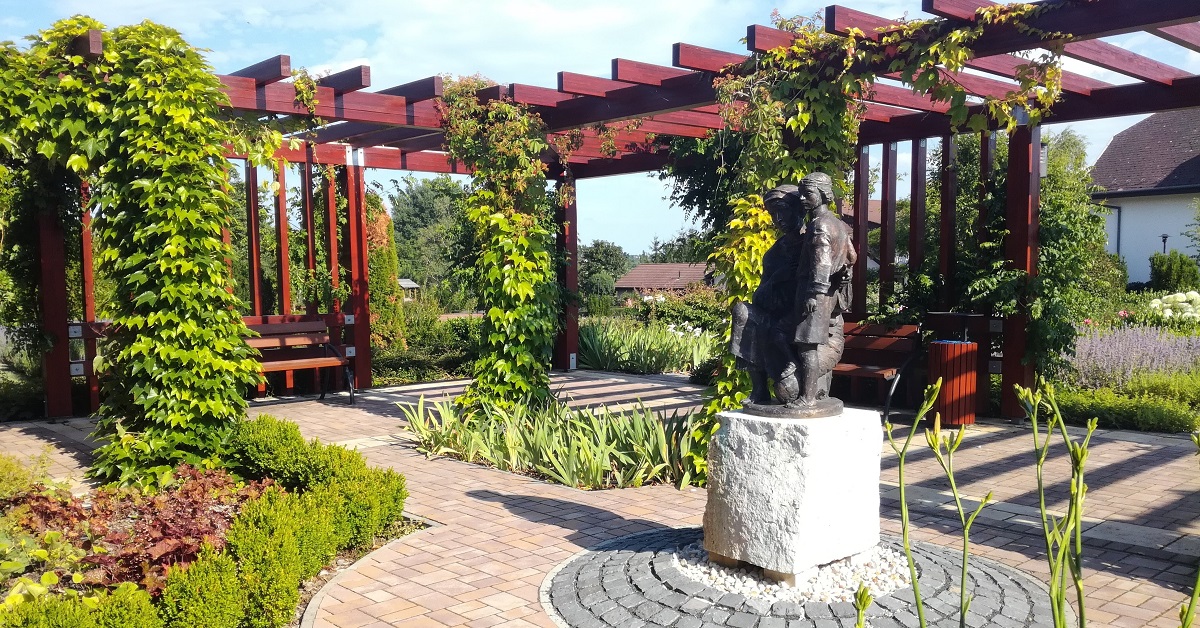

When it comes to Hévíz and the Romans, there is no doubt that there were several places in the settlement and the surrounding area where people lived in Roman times. Local excavations show that there was a significant settlement in the period of the Roman empire in the present-day Egregy district. Several finds of the Villa Rustica - or villa farm - show that the settlement was inhabited from the 1st century until the 5th century. Roman artefacts were found not only in Egregy but also in other parts of Hévíz: Roman coins, earthenware, and an altar stone of Jupiter were found in the bed of Lake Hévíz.
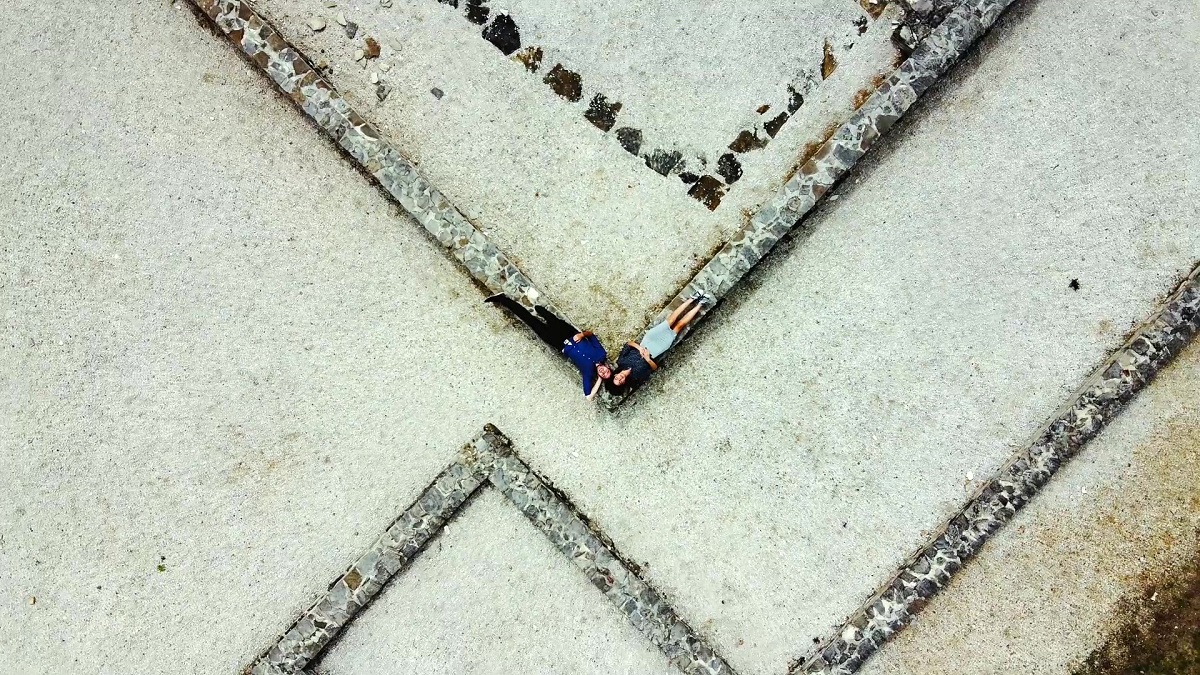

The formation of Lake Hévíz in reality…

Lake Hévíz was born at the same time as Lake Balaton 20-22 thousand years ago. The origin of Lake Hévíz dates back to the time when the basalt mountains around Lake Balaton and Lake Balaton itself were born. At the end of the Pannonian period, volcanoes broke up the landscape of the Transdanubian region. The first signs of postvolcanic activity were the eruption of hot springs, such as the original Hévíz thermal spring. Archaeological excavations show that people lived here as early as the end of the Stone Age. In addition, many legends are dating back to different periods about the healing properties of the water here. According to Roman remains and finds, Hévíz was already a settlement 2,000 years ago, but even more surprisingly, water samples taken upon the discovery of the spring cave suggest that the cold water from the spring is 8,000 years old, while the hot medicinal water is 12,000 years old.
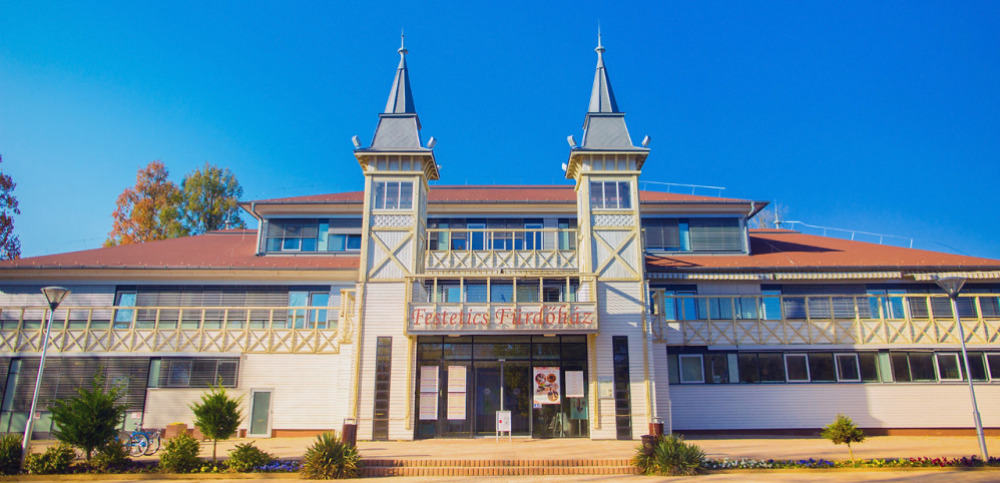
    Are you interested in other things?      

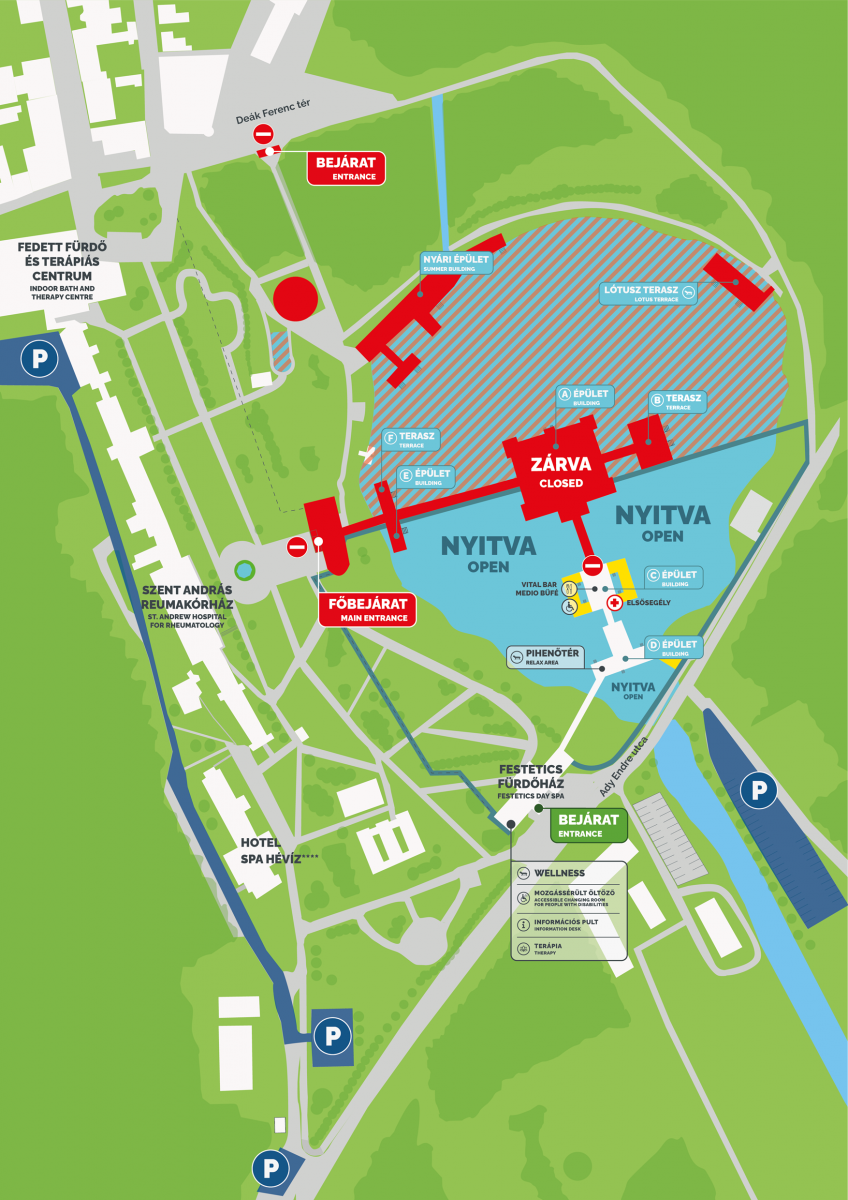
From 3 November 2025, Lake Hévíz can be accessed only via the entrance on Ady Street through the Festetics Day Spa.

Bathing is allowed only outdoors.

 
Accessible areas
• Festetics Day Spa and Therapy section, Kinesio‑Lab
• Wellness area (the admission ticket includes the wellness usage fee)
• Vital Bar and Medio Buffet
• Covered rest areas in the section between Festetics Bathhouse and Vital Bar / Medio Buffet (“C” and “D” buildings)
• Outdoor shoreline section between the main entrance and the Festetics Day Spa (seasonally)

A limit is introduced on the accessible territories of the Lake Bath, which determines the simultaneous capacity of the facilities. For up‑to‑date information, please contact the information desk:

E‑mail: spaheviz@spaheviz.hu

Mobile: +36 30 959 1002

 
Closed areas
• Main entrance from Dr. Schulhof Vilmos Promenade
• Deák Square entrance
• Central Bathhouse (“A” building and “B” terrace)
• Northern water surface (between the “A” building and the Summer building)
Detailed information about the closure of the central Bathhouse (“A” building and “B” terrace) is available on www.spaheviz.hu.

Due to technical preparation work, phased closures on the water surface and shoreline are expected.

 
For guests with disabilities
• Changing room: mixed changing room in the Festetics Day Spa building
• Patient lift: at the outdoor seating pool (Vital Bar terrace, “C” Building )
Our staff provide assistance with the use of the patient lift.
 

Yearly opening hours

  Opening End of bathing and wellness time Closing
2025.10.06. - 2025.10.25. 9:00 17:00 17:30
2025.10.26. - 2026.02.08. 8:30 16:00 16:30
2026.02.09. - 2026.03.29. 9:00 17:00 17:30

Closing time on 24.12.2025 is at 14:00; on 31.12.2025 at 16:00. Opening time is at 11:00 on 01.01.2026.


Hévíz Lake Bath and Festetics Bathhouse price list

Valid from 03.11.2025 to 31.03.2026


2-hour admission + WELLNESS ACCESS

Valid only on the day of purchase – entitles to a one-time entry. Includes the use of the wellness area. An additional charge will be levied if the allotted time limit is exceeded. Additional time extension cannot be purchased after the time limit has expired. Admission for children under the age of 6 is free of charge.
2-hour admission 3 000 HUF
2-hour admission seniors - Available for individuals over the age of 60. Can be purchased upon prior presentation of a valid photo ID.  2 500 HUF
2-hour admission students - Available for individuals over the age of 14. Can be purchased upon prior presentation of a valid student card. 2 500 HUF
2-hour admission children - Available for children aged 6 to 14.  1 500 HUF
2-hour admission groups - Discounted 2-hour admission - available for groups of 20 people or more, if payed in one sum.  2500 HUF/Person

Memberships + WELLNESS ACCESS

10-hour membership - Valid for 20 days (can be used on the day of purchase + 19 calendar days) - the pass grants entry twice per day. Includes the use of the wellness area. The deposit is refundable within 5 calendar days after the expiration date.  13 000 Ft
+ 2 000 Ft deposit
20-hour membership - Valid for 30 days (can be used on the day of purchase + 29 calendar days) - the pass grants entry twice per day. Includes the use of the wellness area. The deposit is refundable within 5 calendar days after the expiration date.  23 000 Ft
+ 2 000 Ft deposit

Other rates

+ 1 hour extension - Usable for extending the 2-hour admission. Valid once per admission. 1 500 HUF
Additional charge - For exceeding the allotted time limit, payable for every 30 minutes. 1 000 HUF
Cloakroom - Operates seasonally - the fee applies per coat/package. 300 HUF
Safety deposit box - Usage is free of charge.
2000 HUF deposit
Swimring rental - Daily fee. 700 HUF
+ 2 000 HUF deposit
Sauna towel 500 HUF


Online purchased tickets and gift vouchers can be redeemed at the information desk located in the Festetics Day Spa. 
Gift vouchers purchased from 1 October 2025, can be redeemed between 1 April 2026 and 31 October 2026.


General information

  • The depth of the lake is 2 to 38 m.
    • We reserve the right to change prices and opening hours.
    • The price of purchased tickets can not be refunded.
    • Accepted means of payment: cash (HUF), bank card or SZÉP card.
    • By purchasing admission to the lake area, visitors implicitly agree to adhere to the house rules.
    • Admission for children under the age of 6 is free.
    • Swimring rental is possible only with the purchase of a rental ticket and the payment of a deposit. The Bath refunds the deposit only, if the rented equipment is returned until the end of bathing time, on the day of rental. Payment is possible only in cash (in Hungarian Forint).
    • The admission tickets include the use of the wellness area. Wellness and sauna services are available to individuals over 12 years of age only. For reasons of hygiene, one sauna towel is provided for each wellness admission.
    • For more information, please contact the information counter at the Festetics Day Spa
         
title: + 5 Lake Hévíz, a unique lake, where you can swim all year long
description: In Hévíz, quality rest time is natural, and many more experiences are waiting for you! Bathing in warm water is a real recharge that the Romans already knew.
címkék:
fókusz kulcsszó: lake heviz
szinoníma címkék:

12. DO NOT MISS IT!

Last modification: 2022. March. 01. 12:51

Találati relevancia adatok

megtalálta: description (4)  | összesen: 4 pont
Tárolt adatok:
cím: DO NOT MISS IT!
lead:
tartalom:          

On two wheels

Choose an outdoor spot for sports activities whenever it is possible. While you are on holiday, a lake-shore area, the edge of a forest or a park could be the most ideal spot for active recreation.

Hévíz and its surroundings provide you with good cycling facilities; there are a number of built cycle tracks and marked cycle routes. While cycling, you can get to know the towns and superb landscapes of the Balaton Highlands, the volcanic hills and the valleys hiding between the shore hills as well as the wildlife of the Kis-Balaton. You can hire a bike in various places, including tourist offices, hotels and even guest houses.


Bicycle and E-bike rent at the Tourinform Office


From January 2021, we await our guests with a whole new set of bicycles, e-bikes!

Prices from 15.05.2025

  3 hours
24 hours
3 or more days
Classic bicycle
4 900 Ft 6 900 Ft 6 500 Ft/day
e-bike - NEUZER
6 000 Ft 9 000 Ft 8 000 Ft/day
e-Trekking BIANCHI 9 000 Ft 14 000 Ft 12 500 Ft/day
e-MTB fully BIANCHI 14 000 Ft 22 000 Ft 20 000 Ft/day

/We reserve the right to change./

Free accessories:

  • child seat
  • bicycle lock
  • crash helmet

Accessories for rent:

  • phone holder: HUF 1,000 / pc
  • side bag: HUF 1,000 / pc
  • water bottle holder: HUF 1,000 / pc
  • basket: HUF 1,000 / pc

Bike Rental – General Conditions

Pick-up and Return:
Bikes can be collected at the Tourinform Hévíz office and must be returned to the same place no later than 30 minutes before closing time, or stored overnight in a locked place. Rental extension is possible with an extra fee (grace period max. 30 minutes).

Payment:
The rental fee must be paid in advance. Accepted payment methods: cash, bank card, SZÉP card. Payment is made in HUF.

Equipment and Accessories:
Bikes are handed over in proper technical condition. Helmets, child seats, phone holders, baskets, panniers, and bottle holders are available on request. E-bikes are provided fully charged.

Use:
The renter must comply with traffic regulations and use the bike properly. It is forbidden to leave the bike unattended or unlocked. Overnight, it should be stored in a locked or guarded place whenever possible.

Liability:
After collection, all risks are borne by the renter. The renter is financially responsible for any damage, loss, or theft of the bike, as well as for any damages or violations caused with the bike. Any damage must be reported and settled immediately upon return.

Data Protection:
Personal data required for the rental will be processed by Hévízi Turisztikai Nonprofit Kft. in accordance with its privacy policy.

This summary is for informational purposes only. The detailed terms and conditions are set out in the rental agreement signed on site.

Active programmes on the beaches, in the marinas

On several beaches of Lake Balaton you can rent canoes, kayaks, SUP and of course paddle boats. If you want to experience something more challenging, you can also try the water adventure park on the Municipal Beach of Keszthely or the water skiing track on the beach of Vonyarcvashegy. Going on a pleasure cruise is less active but also can be great fun. There are not only scheduled boat services from the Keszthely pier but also themed excursion boats. And if you want to drive a boat yourself, you can hire a small motorboat in the bay.


Kis-Balaton Paddling tours

The Balaton-Uplands National Park organises canoe trips to Diás Island on the Gyöngyös stream during the summer. The group can visit the István Fekete Memorial and Uncle Matula’s Hut, which evokes the atmosphere of the famous Hungarian novel Tüskevár. Advance booking is required for the tours. Guided tours around the Kányavár Island on Kis-Balaton are also available.


Paddling on the River Zala

Paddling on the River Zala for 12 km from Zalaapáti to Zalavár, an easy all-day programme for everyone


Canoeing in winter on the steaming Hévíz Stream

Those who are attracted to extreme conditions can try paddling on the steaming Hévíz Stream from November to March. As protected plants bloom in the stream in the summer and several water birds breed in the reeds along the banks, paddling on the stream is only allowed in the winter with a tour guide. However, it's a fantastic experience, especially if it is snowing. You can have more details about tours at the Hévíz Tourinform Office during the winter season.


From 3 November 2025, Lake Hévíz can be accessed only via the entrance on Ady Street through the Festetics Day Spa.

Bathing is allowed only outdoors.

 
Accessible areas
• Festetics Day Spa and Therapy section, Kinesio‑Lab
• Wellness area (the admission ticket includes the wellness usage fee)
• Vital Bar and Medio Buffet
• Covered rest areas in the section between Festetics Bathhouse and Vital Bar / Medio Buffet (“C” and “D” buildings)
• Outdoor shoreline section between the main entrance and the Festetics Day Spa (seasonally)

A limit is introduced on the accessible territories of the Lake Bath, which determines the simultaneous capacity of the facilities. For up‑to‑date information, please contact the information desk:

E‑mail: spaheviz@spaheviz.hu

Mobile: +36 30 959 1002

 
Closed areas
• Main entrance from Dr. Schulhof Vilmos Promenade
• Deák Square entrance
• Central Bathhouse (“A” building and “B” terrace)
• Northern water surface (between the “A” building and the Summer building)
Detailed information about the closure of the central Bathhouse (“A” building and “B” terrace) is available on www.spaheviz.hu.

Due to technical preparation work, phased closures on the water surface and shoreline are expected.

 
For guests with disabilities
• Changing room: mixed changing room in the Festetics Day Spa building
• Patient lift: at the outdoor seating pool (Vital Bar terrace, “C” Building )
Our staff provide assistance with the use of the patient lift.


Yearly opening hours

  Opening End of bathing and wellness time Closing
2025.10.06. - 2025.10.25. 9:00 17:00 17:30
2025.10.26. - 2026.02.08. 8:30 16:00 16:30
2026.02.09. - 2026.03.29. 9:00 17:00 17:30

Closing time on 24.12.2025 is at 14:00; on 31.12.2025 at 16:00. Opening time is at 11:00 on 01.01.2026.


Hévíz Lake Bath and Festetics Bathhouse price list

Valid from 03.11.2025 to 31.03.2026


2-hour admission + WELLNESS ACCESS

Valid only on the day of purchase – entitles to a one-time entry. Includes the use of the wellness area. An additional charge will be levied if the allotted time limit is exceeded. Additional time extension cannot be purchased after the time limit has expired. Admission for children under the age of 6 is free of charge.
2-hour admission 3 000 HUF
2-hour admission seniors - Available for individuals over the age of 60. Can be purchased upon prior presentation of a valid photo ID.  2 500 HUF
2-hour admission students - Available for individuals over the age of 14. Can be purchased upon prior presentation of a valid student card. 2 500 HUF
2-hour admission children - Available for children aged 6 to 14.  1 500 HUF
2-hour admission groups - Discounted 2-hour admission - available for groups of 20 people or more, if payed in one sum.  2500 HUF/Person

Memberships + WELLNESS ACCESS

10-hour membership - Valid for 20 days (can be used on the day of purchase + 19 calendar days) - the pass grants entry twice per day. Includes the use of the wellness area. The deposit is refundable within 5 calendar days after the expiration date.  13 000 Ft
+ 2 000 Ft deposit
20-hour membership - Valid for 30 days (can be used on the day of purchase + 29 calendar days) - the pass grants entry twice per day. Includes the use of the wellness area. The deposit is refundable within 5 calendar days after the expiration date.  23 000 Ft
+ 2 000 Ft deposit

Other rates

+ 1 hour extension - Usable for extending the 2-hour admission. Valid once per admission. 1 500 HUF
Additional charge - For exceeding the allotted time limit, payable for every 30 minutes. 1 000 HUF
Cloakroom - Operates seasonally - the fee applies per coat/package. 300 HUF
Safety deposit box - Usage is free of charge.
2000 HUF deposit
Swimring rental - Daily fee. 700 HUF
+ 2 000 HUF deposit
Sauna towel 500 HUF


Online purchased tickets and gift vouchers can be redeemed at the information desk located in the Festetics Day Spa. 
Gift vouchers purchased from 1 October 2025, can be redeemed between 1 April 2026 and 31 October 2026.


General information

  • The depth of the lake is 2 to 38 m.
    • We reserve the right to change prices and opening hours.
    • The price of purchased tickets can not be refunded.
    • Accepted means of payment: cash (HUF), bank card or SZÉP card.
    • By purchasing admission to the lake area, visitors implicitly agree to adhere to the house rules.
    • Admission for children under the age of 6 is free.
    • Swimring rental is possible only with the purchase of a rental ticket and the payment of a deposit. The Bath refunds the deposit only, if the rented equipment is returned until the end of bathing time, on the day of rental. Payment is possible only in cash (in Hungarian Forint).
    • The admission tickets include the use of the wellness area. Wellness and sauna services are available to individuals over 12 years of age only. For reasons of hygiene, one sauna towel is provided for each wellness admission.
    • For more information, please contact the information counter at the Festetics Day Spa
   
title: Everything you need to see if you walk around Hévíz!
description: + 4 Attractions, seasonal programs, the best places with small children or even in rainy weather. Guided sightseeing tours, or just the most popular excursion places near the western shore of Lake Balaton.
címkék:
fókusz kulcsszó:
szinoníma címkék:

13. Search Program

Last modification: 2022. February. 14. 11:19

Search Program

Találati relevancia adatok

megtalálta: címke (2)  | összesen: 2 pont
Tárolt adatok:
cím: Search Program
lead:
tartalom:
title:
description:
címkék: + 2 ;Hévíz;program;Program guide;Festival;Concert;Relaxation;relaxation;Active;Cinema;Fontana Cinema;Museum;Hot air balloon;
fókusz kulcsszó:
szinoníma címkék:

14. Medicinal mud

Last modification: 2019. June. 13. 15:02

Találati relevancia adatok

megtalálta: szöveg (1)  | összesen: 1 pont
Tárolt adatok:
cím: Medicinal mud
lead:
tartalom: + 1 Medicinal mud The medicinal mud which thickly covers the lake-bed is also worth mentioning. The unique medicinal mud of Hévíz contains organic and inorganic substances, and reduced sulphides also have special healing effects.
  The bed of Lake Hévíz is covered by a 1-7 metre-thick layer of natural, mainly organic medicinal mud, which is dark-grey by colour and soft by texture. The thermal water and medicinal mud were formed in the Pannonic-sea tens of thousands of years ago, and they are suitable for complex physiotherapy treatments, and for the treatment of all kinds of rheumatic and locomotive diseases. The medicinal mud is applied as mud-pack during the treatments. According to the opinion of specialist doctors, a maximum of six body parts can be wrapped in mud at a time. The main effect of medicinal mud is to keep the hands and body parts warm. The duration of the mud treatment is 20 minutes, after which at least a 30 minute period of relaxation is recommended. It is recommended for the following diseases: in case of chronic musculoskeletal diseases, it is indicated for both degenerative, atherosclerotic disease forms and inflammatory diseases in case of certain orthopaedic, neurologic, medical and gynaecological diseases Mud packs can be carried out only on medical advice in Hévíz. Use the Hévíz mud as cosmetics! In addition to the traditional “wrapped” mud packs many cosmetic mud packs are also available these days in the beauty market – even those which were made of the Hévíz mud. The mud formed due to thousands of years of geological and biological processes has high humic acid and organic material content and heat retaining capacity, that is why it has been used in medicine for a long time. However, its cosmetic use is not entirely new. Experiments prove that it also has unique aesthetic effects: empties the excreta, enhances the metabolism of cells, increases the production of collagen, and the minerals inside refill the body. It is excellent for the smoothing of the face, neck and décolleté, and even for body shaping in case of using it as a treatment course. Its regular use enhances the defence mechanism of the immune system. The products made of mud smoothen and soften the skin. They have a beneficial effect on the renewal of the skin and connective tissue cells, reduce inflammation and the signs of aging, because the thermal effects dilate the capillaries, therefore the nutrients- and oxygen supply increases and as a result, the skin becomes more resistant.    These cosmetic products are only made of natural ingredients, their essential minerals, vitamins ensure the balanced functioning of the processes among the cells. Already after the first treatment, you can feel the change on your skin – it will have a silky, youthful, fresh and velvety touch.  Among the products based on mud can be found soaps, mud baths, masks, wraps, creams, facial cleansers, massage creams, body scrubs, balms and body lotions too. You can get more information about the mud products in our webshop or in the Tourinform Office in Hévíz! Feel free to try it!
title:
description:
címkék: ;Mud;Thermal lake;Recover!;Health Therapy;Traditional Hévíz Therapy;
fókusz kulcsszó:
szinoníma címkék:

15. Drinking cure

Last modification: 2019. June. 13. 14:43

Találati relevancia adatok

megtalálta: szöveg (1)  | összesen: 1 pont
Tárolt adatok:
cím: Drinking cure
lead:
tartalom: + 1 Thermal water, not only externally Among the different therapy treatments offered in Hévíz, drinking cure received significantly less attention than its beneficial effects would deserve it. However, the official effects of the drinking therapy using the thermal water of Hévíz can be obviously experienced by those suffering from acute gastro-enteritis and digestive disorders.
  Of the use of the sulphuric water of Hévíz as a drinking cure Dr Noémi Gyarmati says: “It can be successfully used for enhancing intestinal activity and the generation of gastric acid, or in the case of acute bowel inflammation, constipation or haemorrhoid. It also reduces biliary disorders, and enhances the healing of upper respiratory tract infections. Thanks to its special content, it can be also used for relieving pain. Furthermore, not as part of a drinking cure, but for rinsing it can be successfully used for treating acute stomatitis.” Naturally, just like every other thermal water, there are contraindications for using the healing water of Hévíz: the consumption of the sulphuric water must be avoided in the case of acute hepatitis and cholangitis, or increased thyroid function. Drinking fountains for free use in the city: in the Rózsakert building (Rákóczi str 17-19.), from the Erzsébet királyé street  (Open: 8  am - 6 pm)
title:
description:
címkék: ;Drinking Cure;Thermal water;Traditional Hévíz Therapy;Recover!;
fókusz kulcsszó:
szinoníma címkék:

16. Hydrotherapy

Last modification: 2019. June. 13. 14:10

Találati relevancia adatok

megtalálta: szöveg (1)  | összesen: 1 pont
Tárolt adatok:
cím: Hydrotherapy
lead:
tartalom: + 1 Treatment with water In the course of which the physical features of water are used. The effect of the therapy is greatly enhanced by the treatment with medicinal water. It mainly increases the healing of those who suffer from musculoskeletal diseases. Depending on the position of the body, the immersion into the indifferent-temperature water has many positive physiological effects, such as blood „dilution”, decreasing lung breathing capacity, loosening trunk muscles, movement is easier with reduced body weight due to buoyancy, and water resistance also works as muscle toner.
The hydrostatic pressure of the water plays an important role in hydrotherapeutic methods: it has an effect on veins, skin vessels, it reduces the volume of the chest and the abdominal, influences the mechanism of breathing, improves kidney function, and reduces the circumference of the inflamed joints. The temperature of water – hot or cold – results in further changes opposite to each other. Vasodilatation occurs in a hot bath, the blood pressure rises and the heart beat accelerates. In a cold-water bath the blood vessels constrict and as a consequence the blood pressure increases, the heart rhythm decreases and the coronary artery constricts. Hydrotherapeutic treatments, thus treatments carried out with water, include, in addition to the mud and weight bath treatments, which were listed at the basic elements of the Traditional Hévíz Therapy, the following methods: Carbonated bath treatment takes place in a special bath tub. The carbonated water is produced by using the medicinal water of Lake Hévíz. It means a treatment with carbon dioxide “absorbed” by the water, which is suitable for treating patients suffering from heart diseases, high blood pressure and cardiovascular disorders. As a result of the treatment the surface veins expand and blood circulation is restored to normal. It improves the oxygen supply of the cardiac muscle, normalises blood pressure; if applied as a series of treatments the impact is longer-lasting. Indications / counter-indications: Artery and venous circulation disorders High blood pressure, Micro-circulation skin disorders Vegetative nervous system disorders Osteoporosis, chronic locomotive disorders Rehabilitation after heart attack Coronary stenosis, post-treatment of heart surgeries Four-section galvanic bath is also called hydro galvanic bath. Also two-section galvanic bath is often applied. The treatment takes place in plastic tubs filled with medicinal water. Direct current is led to the bath tub. Galvanic bath is recommended for the treatment of the limbs, by the simultaneous application of medicinal water and galvanic current. It is successfully applied primarily for the residual symptoms of previous nerve pains and inflammations, and secondarily for wear (degenerative) disorders. If it is used as a descending treatment it also has a pain alleviative impact. Indications / counter-indications: Alleviation of pain affecting multiple joints and body regions: Rheumatoid arthritis, soft tissue rheumatism Limb joint inflammatory and degenerative diseases Neuritis Sudeck atrophia (circulation disorder after limb injuries with local osteoporosis) Aortic stenosis Contrast bath therapyThe difference between cold and warm water is used for therapeutic purposes. Alternating cold and hot water promotes better circulation to the extremities. Underwater jet massageDuring the underwater jet massage the patient is laid in a medical tub filled with Hévíz healing water, where the temperature of the special tub’s healing water and the mechanic impact of the water jet are jointly applied for the massage therapy. Besides the water jet massage impact also the positive effects of the healing water are enjoyed by patients. The therapy is for individual guests only, and it is tailored according to the complaints of the patient. The therapy is also called “tangentor”, which is a therapeutic treatment based on balneotherapy, hydrotherapy and the mechanic impact of the water jet. The treatment is carried out in a special tub, by using a water jet with adjustable jet power, which can target various parts of the body. The water with a temperature of 34-36ºC is supplied from a pipe and it is targeted manually to various parts of the body. The massage stimulates the blood and lymph circulation and by this also stimulates the metabolism, furthermore contributes to the detoxification of the body. Due to the impact on the lymph system it also boosts the immune system. The therapy releases stress and relaxes the muscles. The vibration of the water penetrates the connective tissue, thus helps the renewal of the skin and restoring its plasticity. It has also got an alleviative effect. Indications release muscular tension, locomotor disorders, after injuries and operations, rheological disorders, nervous system disorders. Hydroxeur bathHydroxeur treatment – or Jacuzzi – is used when due to some reason manual massage cannot be applied or we wish to achieve a different impact. In a special tub the artificially generated air bubbles cause turbulent flow, which massages the entire body surface. The water flow gives a nice sensation to the patient, increases blood circulation and has a stimulating effect through the skin. It has weaker, lighter massaging power than the underwater jet massage. There are no counter-indications for the hydroxeur bath; therefore it can be used without physician supervision. Duration of the treatment: approx. 10 to 20 minutes.
title:
description:
címkék: ;Hydrotherapy;Thermal water;Recover!;Thermal lake;Health Therapy;Traditional Hévíz Therapy;
fókusz kulcsszó:
szinoníma címkék:

17. Additional elements of the therapy

Last modification: 2019. June. 13. 14:52

Találati relevancia adatok

megtalálta: szöveg (1)  | összesen: 1 pont
Tárolt adatok:
cím: Additional elements of the therapy
lead:
tartalom: + 1 Additional elements of the therapy, according to the individual treatment plan, may include: Consuming medicinal water of Hévíz from a drinking-fountain Therapeutic massage Movement therapy individually and/or in a group Physiotherapeutic treatments (electro-magnetic-mechano-light, etc.) Hydrotherapy: CO2 bathtub, underwater jet massage, galvanic bath
title:
description:
címkék: ;Traditional Hévíz Therapy;Hévíz Lake;Thermal water;Thermal lake;Health Therapy;Health;
fókusz kulcsszó:
szinoníma címkék:

18. Places for wine tasting

Last modification: 2019. July. 11. 11:11

Találati relevancia adatok

megtalálta: szöveg (1)  | összesen: 1 pont
Tárolt adatok:
cím: Places for wine tasting
lead:
tartalom: + 1 The world of the wine cellars in Egregy Egregy is a particular part of the town which has a unique atmosphere. The wine cellars and the wine hill – the so-called “Grinzing” of Egregy – of the town which attracts guests themselves, is an extremely popular restaurant area in the green belt, offering heavy wines and Hungarian food. The guests may taste the specialties of Hungarian cuisine that are already famous beyond the borders of the country, as well as the “snack” offered by the local wine producers: fresh lard bread with paprika and onions. Egregy, which is located 1,500 meters from the town centre, was an independent part of the town for a long time, and still preserves its village-like atmosphere even today. Refreshed after the bath treatment, almost all the guests of Lake Hévíz visit Egregy once at least during their stay here, and while listening to the story-telling of frequent visitors, they also take a liking for the local specialties and the pleasant wines. You may access to the place on foot walking along the vineyard past the 12th-century church from the Árpád-dynasty, or by Dotto train starting from the town centre. The wine cellars of Egregy consist of two little streets; it is worth walking in all the streets around and visiting some of the cellars depending on your taste. In the summer you may hear Gypsy music coming from the cellars, trying to attract visitors walking in the streets. Yield to temptation! Clink your glasses to your health and Hévíz as well! Wine tastings are organized regularly in the following restaurants: Macchiato Caffe Korona Pension ***Restaurant Roman Cellar Restaurant Vilmos Cellar Rezi Weinhouse - Strázsai Cellar Premium Wine Tasting - until 30. August Did you know that wine has healing effects? It is largely due to alcohol, which increases the level of HDL cholesterol and decreases that of LDL cholesterol? consuming 1 to 2 glasses of wine (red wine) daily reduces the risk of heart disease? senile dementia can be delayed or prevented by drinking wine? the compounds of red grapes’ skin contain blood-thinning flavonoids, which also reduce the level of cholesterol?  

Friday 13th did not bring the Borbély Family Winery bad luck.

On 13th February 2015 the Wine of Town Hévíz was chosen for the 8th time, organised by the Hévíz TDM Association.

During the public and professional rating of the jury, the visitors could taste the six best wines. They intended to choose the wine that reflects the atmosphere of town Hévíz and would certainly appeal to the general public. That is why the Borbély Family Winery’s Gabriella Muscat Ottonel ’2014’ of Badacsony was chosen. According to the opinion of the jury it is harmonious, elegant and keepable, it suits well to the atmosphere of the spa town and it could be a worthy representative of Hévíz, since this wine will represent the town at touristic and protocol events in 2015.

The Wine of Town Hévíz 2015 can be purchased in the Tourinform Office in Hévíz and will be available at most of the restaurants and bars of Hévíz from the end of February 2015.
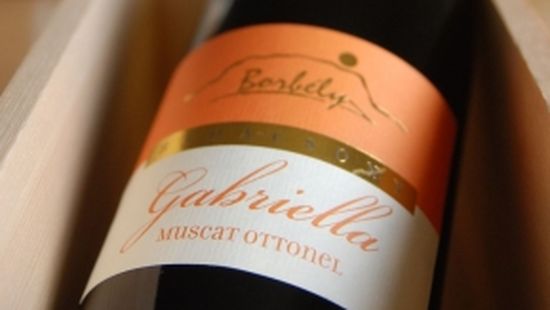
Find our wines in the Tourinform Office, restaurants, at your accommodation or in souvenir shops, and add to the good reputation of our town!

Welschriesling of Rezi of the vintage 2013 has become the Wine of Town Hévíz

The 7th Wine of Town Hévíz Selection took place at 1 pm on 23rd April 2014 in the Assembly hall of the Local Government of Hévíz. 10 wineries from County Zala and the Balaton Wine Region were invited. All of them could enter with not more than two types of dry white wine produced in the Wine Region.
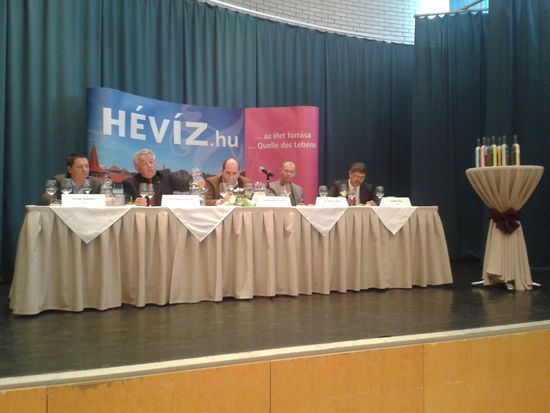
The jury finally, after several re-tasting and consultation, chose the Strázsai Winery’s Welschriesling of Rezi of the vintage 2013 as the wine of the year. They hope that this wine does not only represent high quality this year, but will also be very popular with the guests, since it is very nice, popular and consumer-friendly.

The winning wine is also unique, as it was grown and produced very close to Hévíz, in a relatively small winery in Rezi.


The wine of the year 2013 is Bussay Winery’s fancy named wine: ESKÜVÉ. The wine of the vintage of 2011 is produced by cross-fertilizing Welschriesling and Rhine Riesling. It is harvested with high sugar content and aged in wooden barrels. It is full-bodied dry white wine.
The wine of the year 2013 is Bussay Winery’s fancy named wine: ESKÜVÉ. The wine of the vintage of 2011 is produced by cross-fertilizing Welschriesling and Rhine Riesling. It is harvested with high sugar content and aged in wooden barrels. It is full-bodied dry white wine.   
title:
description:
címkék:
fókusz kulcsszó:
szinoníma címkék:

19. Recipe tips from Hévíz

Last modification: 2019. June. 12. 14:13

Találati relevancia adatok

megtalálta: szöveg (1)  | összesen: 1 pont
Tárolt adatok:
cím: Recipe tips from Hévíz
lead:
tartalom: + 1 We want to give our kind guest some tips for special tasted dishes. The most of the menus were inspired by the wine of Hévíz 2013.The dishes are various and associated with a healthy lifestyle because they are rich in vegetables. Try them! Roasted chicken breast fillet flambéed with white wine, vegetables and flavoury wild mushrooms Rabbit ragout made with tasty wild mushrooms and a pinch of chili served with vegetable rösti Venison wrapped with porcini mushroom and duck leg with ‘Esküvé’ sauce Blue catfish steak with algae tagliatelle and parmesan crisps Veal ragout with cream and vegetables and dödölle of Zala Catfish fillet of Lake Balaton, wild mushroom ragout with spinach and garlic, rösti with cabbage ‘Saltimbocco’ Duck pate with duck liver and wine gelee Goose-giblets with rice Small Festetics Christmas Skewers Cabbage with beans and knuckle of pork, Potato sterz Bejgli – Poppy seed or walnut roll   Roasted chicken breast fillet flambéed with white wine, vegetables and flavoury wild mushrooms Pápai Lajos Master chef's recommendation,Danubius Health Spa Resort Aqua Ingredients (4 servings): 0,6 kilo chicken breast fillet 0,15 kilo celery 0,15 kilo leek 0,15 kilo courgette 0,15 kilo colourful peppers 0,3 kilo mixed mushrooms: porcini mushroom, Scotch bonnet mushroom, champignon, chanterelle 2 bunches of parsley 0,1 litre olive oil white wine, wine of Hévíz, Bussay ESKÜVÉ 2011 0,1 litre cream salt, white pepper, nutmeg, garlic – according to taste 0,05 litre brandy – for flambéing PreparationFry the vegetables cut into thin strips in a pan or a wok, add the mushrooms then continue to simmer. Make sure that the vegetables are not too soft. Season it with salt, pepper and add a little ground nutmeg. Pour some white wine and simmer it until it is ready.In the meantime cut the chicken breast into thin slices, season them with grill spices and roast them. Pour a little brandy on them and light it.Mix with the boiled vegetables, pour a little cream into it, sprinkle with fresh parsley and serve it.Make sure that you freshly prepare the food!     Rabbit ragout made with tasty wild mushrooms and a pinch of chilli served with vegetable rösti Kámán János Master chef's recommendation,Danubius Health Spa Resort Hévíz Ingredients (4 servings): Rabbit ragout 80 decagram rabbit leg (prepared, cut into strips) 30 decagram wild mushrooms 20  decagram California peppers (cut into strips) 20 decagram tomatoes (without skin, cut into cubes) chili pepper – according to taste garlic – according to taste 1 decilitre wine of Hévíz, Bussay ESKÜVÉ 2011 salt, coarsely ground mixed peppercorns – according to taste 5 decilitre oil (for cooking) Rösti 30 decagram raw potatoes 16 decagram cut vegetables 10 decagram onions (finely chopped) 5 decagram flour 1 egg 1 bunch of parsley salt – according to taste 2 decilitre oil (for cooking) DirectionsPrepare the rabbit leg to the rabbit ragout: bone it, then cut it into centimetre-thick strips, marinate it in oil and coarsely ground mixed peppercorns, if it is possible, the day before.In a pan, in heated oil fry the rabbit leg strips, then add the chopped peppers, garlic and wild mushrooms, continue to fry it for a few minutes and at the end add the peeled tomato cubes. Season with salt, pepper, chili and white wine to taste, then boil it.To make the rösti, grate the peeled potatoes, then mix with flour, egg, vegetables, parsley and fried onions. Season it according to taste, form small plates, then in a heated pan or on a griller fry both sides.Then serve the so prepared röstis with the ragout.      Venison wrapped with porcini mushroom and duck leg with ‘Esküvé’ sauce Szentgyörgyi Tamás chef's recommendation,Hotel Mirage Restaurant and Diner Ingredients (4 servings): 1 kg saddle of venison 0,3 kg duck leg 0,2 kg onion 0,05 kg garlic 0,05 kg juniper-berry 0,1 kg thyme 0,1 kg rosemary 0,15 kg root parsley 0,15 kg carrots 0,15 kg celery 1 bottle of 2011 Busai Esküvé “Wine of Town Hévíz” salt, pepper / according to taste / 0,05 kg pine nuts 0,03 kg butter duck fat Duck ragout: Grate the carrots, the root parsley, celery, onions and garlic, then fry them in olive oil. ESküvé sauce: Fry the pine nuts, juniper-berry and pour in the wine, season with salt and pepper to taste, then put butter into it to make it silky.Preparation: Marinate the saddle of venison (marinade: oil, juniper-berry, rosemary, thyme)Filet the wild duck leg, cut into small cubes, then put onto the fried vegetables and simmer until tender.Take the saddle of venison out of the marinade and make an open slice of it, then lightly spread the duck ragout on it, roll it and bind it. In a pan fry the outer side of the meat to make a crust on it. Simmer it in its own fat, covered until it is ready. (approx. 30-40 min.) Serving: Cut the saddle of venison into thin slices and serve it on the sauce. Sprinkle it with fresh thyme.   Blue catfish steak with algae tagliatelle and parmesan crisps Sendula Péter Sous chef's recommendation,Hotel Európa fit Ingredients (4 servings): 800 gr catfish filet 400gr tagliatelle 120gr algae 2 cloves of garlic 1 decilitre olive oil 150 gr parmesan cheese salt 1 decilitre white wine Cut the catfish filets into 2-centimetre slices, season with salt both sides, then put into a vacuum bag and simmer them in 45-50 degrees’ steam for 90 minutes. Then without opening the bag put it into icy water or a thermal shock machine to cool it down. Put it in the fridge until use.Cook the tagliatelle in salty water. While it is being cooked, prepare the algae.Heat the oil in a pan, add the algae cut into thin slices and the chopped garlic. Fry it for a short time, then pour in the white wine. Stir the cooked noodles into it.Take the fish out of the vacuum bag and fry both sides for a minute in a pan preheated to 180 degrees.Grate the parmesan cheese for the parmesan crisps, put baking paper in a baking pan. Make small piles from the cheese and bake them for a few minutes in the oven preheated to 200 degrees. Veal ragout with cream and vegetables and dödölle of Zala Mayer Tibor and Veress Ferenc Chef's recommendation, from Hunguest Hotels   Ingredients (4 servings) 1/2 kg veal round 1/2 kg porcini mushrooms 2 cloves of garlic 1,5 dl dry white wine 2 dl vegetable broth 2 dl cream salt freshly ground black pepper 1 bunch of parsley 2 tablespoons butter 2 tablespoons olive oil Preparation1. Heat the mixture of butter and olive oil and fry the veal cut into small but equal sized pieces, seasoned with salt and pepper in advance, and the finely chopped parsley and garlic.2.If every side of the meat cubes turned brown, pour the white wine and half of the vegetable broth. Cook over medium heat and half-covered until almost tender. Check it sometimes and pour some broth in it if it is not enough.3. In the meantime clean the mushrooms, cut them and add them when the meat is almost ready. Pour in the remaining vegetable broth and cook it until it is ready. 4. In the end pour in the cream and boil it. Season it with salt and pepper if it is necessary. If the sauce is too thin, thicken it with potato-starch.5. Serve it with freshly chopped parsley. Dödölle of Zala2 kg potatoes, salt according to taste, 2 onions 2 dl oil, 50 decagram flour This meal evokes my childhood, the free, barefoot summer times. My grandmother made it for me, whenever I wanted to. It is cheap, fast and very filling food. At the end of the month it stands everyone in good stead. Peel the potatoes cut them into small pieces, pour salty water over them to cover and cook them. Mash the cooked potatoes over the heat then sprinkle with flour and start to knead with a wooden spoon. It is a bit tiring procedure. It is OK if the batter is hard enough and the flour is completely worked off – it can be more or less, it depends on the quality of the potatoes- and our forehead is sweating. Turn off the cooker.Cut the onions into small cubes and fry them in oil until pink. Take a bigger pot and start to cut the ‘dödölle’ batter into big dumpling-shapes, then sprinkle with the onion and fat. If it is ready, serve it. It is very delicious freshly with sour cream, but if you have to warm it, fry it in a pan until it is crispy and serve it with some salad. Enjoy your meal!     Goose-giblets with rice Goose-giblets150 gram goose liver3 carrots2 turnipsa piece of celery1 onion200 gram green peasa bunch of parsley400 gram ricea tablespoonful of goose fata tablespoonful of oilsalt and pepper Put the goose-giblets into a saucepan with a carrot, a turnip and a piece of celery and add enough water to cover them, then cook until soft. If it is ready, take the meat out of the juice, unbone the wings and the neck, cut the lean meat into small pieces, and chop the heart and the gizzard as well.Heat the goose fat, add the chopped onion and fry it until glassy. Cut the remaining two carrots and turnip into smaller cubes and add them to the onion. Add a little juice and cook the vegetables until soft. If it is almost ready, add the goose meat, the gizzard, the heart, the chopped goose liver and the green peas and cook them together until soft, then season it with salt and pepper.Heat some oil in another saucepan, add the washed and cleaned rice and pour on it double quantity of water (a part of it can be the juice of the goose, but be careful, it should not be too greasy) and boil until soft. At the end, add the goose ragout with vegetables and the chopped parsley and cook them together for a few minutes. Catfish fillet of Lake Balaton, wild mushroom ragout with spinach and garlic, rösti with cabbage Tamás Gergály's recommendation,Hotel Palace Hévíz Catfish filet: Catfish filet  0,8 kg Butter 0,15 kg Salt  0.02 kg Ground pepper 0,001 kg Wild mushroom ragout with spinach and garlic: Spinach leaves  0,05 kg (1 handful) Oil                 0,10 kg Ground pepper      0,002 kg Salt      0,02 kg Mix of wild mushrooms 0,8 kg Garlic          2 cloves White wine         0,2 l 1 medium onion 1 bunch of parsley Rösti with cabbage: Sauerkraut  0,20 kg Potatoes 0,1 kg Salt  0,01 kg Milk   0,3 l Flour   0,15 kg Oil  0,1 l Directions:Season the catfish filets with salt and pepper and refrigerate until roasting.For the mushroom ragout chop the onions finely and simmer until it becomes glassy, add the chopped mushrooms, the chopped parsley and season with salt and pepper, then continue to simmer them together. If it is half-simmered, add the cleaned spinach leaves, season with crushed garlic, then pour the white wine and simmer until it is ready.For the rösti cut the sauerkraut into 2-centimeter pieces, add the grated potatoes, salt and the flour, then pour the milk and make a medium-thick batter. In preheated oil fry the palm-sized röstis. In the meantime dip the prepared catfish slices into melted butter, put them on a preheated grill and roast both sides.   ‘Saltimbocco’ The recipe of Kovács Györgyné,the chef of Hotel SPA Hévíz Platán Restaurant 10 servings 1.80 kg pike-perch filet of Lake Balaton 10 thin slices of dried ham 0.02 kg salt 0.001 kg ground pepper 10 sage leaves 0.1 liter oil 0.10 kg butter 0.20 kg flavour mushrooms from the woods of Hévíz 2 pieces of lemon Saffron risotto 0.60 kg risotto rice 0.3 l Bussay Esküvé / or dry white wine/ vegetable broth as needed /approx. 1.3 l/ 0.08 liter olive oil with truffle 1 medium white onion salt ground pepper 0.05 kg butter saffron according to taste 0.20kg grated Parmesan cheese Directions:Slice the fish filet, season it lightly with salt and pepper. Heat the butter and the olive oil up in a pan. Put the fish slices in and 4 or 5 sage leaves. Fry them until ready, put them on plates and keep them warm.Quickly fry the thin ham slices until crispy, make crisps of them and put them on the fish slices. Season and fry the mushrooms in the rest of the oil.At serving use the remaining sage leaves. Saffron risottoFinely cut the onion, fry the rise in half of the butter and the olive oil until glassy, pour the white wine and put the saffron in and cook it stirring constantly until no juice left. Pour the vegetable broth little by little and simmer it without covering over medium heat. Season it with salt, pepper and finally add the cheese and the butter.   Duck pate with duck liver and wine gelee Lajos Bán Chef's recommendation,Hotel Kolping Ltd. Ingredients: fatted duck liver: 0.25kg duck breast filet(with skin) 0.15kg toast with wild garlic: 10 slices cream: 2 dl salt, black pepper according to taste allspice: 5 pieces Bussay esküvé: 2 dl gelatine: 1 tbsp mixed green salads  5 bunches broth  5 dl Directions:Cut the liver into cubes, cut off the crust of the bread slices to get same sized slices. Season the breast filet with salt and crushed allspice and roast it in a 170 degree oven. Then cut it into cubes (leave a few thin slices for decoration).Cook the liver, the breast and the bread with the cream and a little broth in a saucepan as a ragout and add a half tablespoon of gelatine. Put them into PacoJet dishes and put them in the freezer for 24 hours.The following day prepare it in the PacoJet dishes, put the bread slices close to each other in a baking pan. Spread the bread with the liver and meat paste and put into the 0-5 degree fridge for 3 hours.In the meantime heat the wine and cook the remaining gelatine into it. Pour it on the refrigerated pâté and leave it for another half an hour. At serving cut into nice cube shapes, place on green salad and decorate with the put aside breast slices.     Small Festetics Christmas Skewers Put round of mangalitza, mangalitza bacon, sausage, onion and kapia peppers one after another on a skewer, season it, then grill it. Serve it placed on lecsó (thick vegetable stew) with fresh wild mushrooms.   Cabbage with beans and knuckle of pork, Potato sterz With recommendation of the Korona Pension***Restaruant Ingredients, for 10 peopleSauerkraut 1 kiloOnion 0,2 kiloLard 0,0,5 kiloGarlic 0,05 kiloPaprika 0,0,1 kiloFlour 0,08 kiloTomato paste  80 gramSmoked knuckle of pork 2 piecesDry beans 0,4 kilo Cook the knuckle of pork and the beans, cut the saurerkraut.Fry half onion rings in some lard or oil, add the crushed garlic, salt and paprika to it. Pour in the juice, in which the knuckles were cooked, then add the sauerkraut as well. Cook it for an hour, then add the beans. Make roux, add the tomato paste then mix it with the sauerkraut and cook until ready.Slice the knuckles and serve them together. Potato sterz:Cook the sliced potato in salty water. Mash it and mix it with flour (as much as it needs). Simmer it until the potato is completely mixed with the flour. Simmer the onions in lard or oil. Put spoonfuls of dough in hot fat and fry them until brown. Season it with sour cream and cracklings.   Bejgli – Poppy seed or walnut roll Rácz Bakery's recommendation Dough:1 kilo flour400 gram lard150 gram sugar20 gram yeast15 gram salt4 dl milk1 egg Ingredients of the walnut filling:0.5 kilo walnut250-300 gram sugara pinch of cinnamongrated orange peel1 dl hot milk Ingredients of the poppy seed filling:0.5 kilo poppy seed0.5 kilo sugarvanilla sugargrated lemon peelrum (according to taste)1 dl hot milk Knead the dough and put it into the refrigerator for at least 6 hours.Prepare the desired filling.After 6 hours take the dough out of the fridge and let it rest for an hour at room temperature, then roll it out to the required size. Spread the desired filling on the entire surface in such a way that the thickness of the dough and the thickness of the filling would be the same. Roll it, so you will get a bejgli roll. Smear the surface of the roll with egg yolk, then put it in a cool place for 1.5 hours. After 1.5 hours smear it with egg yolk again. After another 1.5 hours' rest in a cool place smear it with egg white as well.Raise the so prepared dough further for a short time, then bake it in the oven at 200°C for 30 to 35 minutes until it is ready  
title:
description:
címkék:
fókusz kulcsszó:
szinoníma címkék:

20. Healing lake, heailing water

Last modification: 2019. June. 13. 15:08

Találati relevancia adatok

megtalálta: szöveg (1)  | összesen: 1 pont
Tárolt adatok:
cím: Healing lake, heailing water
lead:
tartalom: + 1 The effectiveness of the Thermal lake of Hévíz is the combined effect of several healing factors: temperature of the water large amount and streaming gas-content hydrostatic pressure bathing in open air The most optimal is to bath when the water temperature is between 32-34 °C. This temperature is perceived by human skin as neither cold nor warm, blood vessels shall neither contract, nor expand by its effect, unlike in cold and warm water. This indifferent temperature of the medicinal lake of Hévíz allows that the bathers can stay there for longer periods, without losing or accumulating heat, and this was the chemical and biological traits of the water can exercise their effect for longer periods.
  The huge amount of water, always in movement, results in several types of water streams in the lake. The medicinal water bursting up from the source spreads in radial directions in the half-cone shape lake bed, and the water that is cooled down on the surface, descends under the fresher, warmer water vertically, in a cylinder type stream. The water always in movement and the mud particles always in movement exercise higher friction resistance, higher ascensional power of the water bursting up from the deep floating is made easier, so staying in the water requires less physical force than in the case of stagnant water. The gases present in the lake water – sulphur-hydrogen, carbonic acid - exercise a physical and chemical effect. The mechanical effect of the gas bulls getting attached to the skin has a favourable impact on the functioning of the whole nervous system.  By penetrating through the skin, the gases also have a direct chemical effect, on the other hand, gases that evaporate from the water by mixing with the air above the water, get into the body through inhalation, through the lungs.  Sulphur discharged from the water and from the puddled mud exercise intensive biological effect on various life-functions. The hydrostatic pressure resulting from the weight of the bathing water has a significance, as due to the water depth, people bathe in the lake in a vertical body position, so water exercises higher pressure on the deeply immersed feet, than on the thorax that is situated higher. This is good for blood circulation, as the pressure of the water presses the body fluids from varicose veins and lymphatic vessels of the lower limbs, pushes them into the blood circulation and into the heart. Curious for the water content? Read it!
title:
description:
címkék: ;Thermal lake;Recover!;Thermal water;Hévíz Spa;Health;Thermal;Thermal lake;
fókusz kulcsszó:
szinoníma címkék: