Search
Kizárt szavak
Tiltott szavak
- cialis
- viagra
- php
- sql
- html
- https
- http
- chr
- script
- sex
- porn
- sexmassage
Alternatív kifejezések
- =
1. Wellness ABC
Last modification: 2024. August. 16. 13:38
Learn about the most important wellness treatments
Találati relevancia adatok
megtalálta: szöveg (1) | összesen: 1 pont
Tárolt adatok:
cím: Wellness ABC
lead: Learn about the most important wellness treatments
tartalom: + 1 To evolve a conscious lifestyle is necessary to carry about the body, nut just the soul. The wellness treatments can help you a lot.We collected the most important wellness treatments, cure types for you. Acupressure Acupuncture Anti-aging Aquarobic Aroma light-therapy Ayurveda Balneotherapy Caldarium Fango Jacuzzi Jogging Chinese massage Cleopatra-bath Kneipp steps Laconium Lomi Lomi Nui Lymphatic massage Qi-Gong Paraffin treatment Shiatsu Step Aerobic Stretching Sole massage Thai massage Thalassotherapy Yumeiho Acupressure In the course of the acupressure, the particular points of the body are massaged with finger pads or nails. As a result, the direction and the intensity of the flow of the chi, that is a vital force, in the meridians will be restored to the normal and healthy channel. Acupuncture Human has around 360 main acupuncture points, and through these points, certain disorders of the body may be stopped by using acupuncture needles. The acupuncture is quite effective against pains and it also stimulates blood flow, stabilizes circulation, increases the body energy level and improves the general state of health. Anti-agingIt comprises treatments which help you remain fit and young, including stress relief, exercise therapy, beautician techniques, change of eating habits, vitalizing substances, brain training, change of lifestyle, and many others. AquarobicIt is gymnastics performed in water and accompanied with instructions and mostly with music, which is protective to joints but it is also featured of training and massage as it requires force against the water pressure. Aroma light-therapyIt is not the scent what is primarily used in aroma-therapy treatments but the volatile oil extracted out of plants. Volatile oils have certain components that get locally active within the body and perform only a secondary effect through smelling.With lighting during the light therapy colored light penetrates deep into the skin so that to stimulate the positive reactions of the cells to everyday complaints and mental disorders. AyurvedaThe Ayurveda is an ancient Indian system of medicine and philosophy at the same time, which aims at the individual instead of the treatment of disease or symptoms by consideration and comparison of the individual habitus, climate, the seasons of the year and parts of the day, lifestyle, diet and many other aspects. BalneotherapyThis is a kind of treatment with medicinal water or so-called thermal mineral water not classified as medicinal water yet. It comprises drinking cure with such waters, inhalation, mud treatment, carbonated baths, and medicinal baths. CaldariumThis is one of the facilities used in Roman baths, which means hot water bathroom. The caldarium, usually tiled or covered with marble, in which people usually stay for 30 to 40 minutes, poses less burden on human organism than a sauna due to the lower temperatures (40-50 °C) and the humidity of the air (70-100%). FangoMud pack from ground volcanic rock is applied to a certain part or the whole of the body. Fango is capable of holding heat for a long period, rich in minerals and free of organic substances. It has been used for the treatment of rheumatism for centuries, and it is also used for beautician purposes. JacuzziThe water-jets directed to the particular points of the body and the massage promotes full relaxation. Due to the intensified blood circulation your body will get more oxygen so you’ll feel fit. The pores of skin get larger and due to the intensified blood circulation, your skin will be purified from toxins. As a result, the skin will be firmer and more elastic. JoggingJogging combines all the benefits of walking; it conditions the heart, improves muscle tone and strength, relieves stress, and can help with a variety of health problems, such as osteoporosis, heart disease and arthritis. Chinese massageThe Chinese massage may be considered as a kind of acupuncture combined with stretching. The massage may consist of various parts. It may refer to the spine massage and the Chinese head massage aiming at the head and neck. During the massage, the acupuncture points are treated as well. The Chinese massage also includes the stretching of muscles or joints. Cleopatra-bath Cleopatra, the Egyptian Queen did her best to fight ageism; she tried to make her skin soft and healthy by having a bath with donkey milk in it. The beauty care products named after her suggest having a bath with a mixture of milk and vegetable oil. These products are based on the conditioning and nourishing effects that milk and vegetable oils have on the skin. Kneipp stepsYou tread cold water stepping on pebbles placed on the bottom of a tub while walking around. The legs are lifted out of the tub at every step so that the cold water and the warm air will provide the contrasting bath character. The pebbles gently massage the reflex zones of the soles initiating a certain regulatory process. LaconiumIt is a cool version of the Finnish sauna. The temperature may not exceed 55 C° and the degree of humidity is insignificant. It enhances congestion and supports the immune system. Lomi Lomi NuiThis traditional Polynesian massage is one of the most pampering therapies of the Hawaiian kahunas. The massage starts by rubbing the body with “ti” leaves, and the body is heated with hot stones. Then while the lomi-lomi masseur is dancing with traditional dance-steps, imitating the steps of a frigate bird, around the nearly naked body of the patient, lying on the massage bench, he is giving the treatment, which means soft smoothing and kneading motions of the pad of his/her forearm and palm. Finally, he/she completes the massage with a ritual ablution of the body. Lymphatic massageThis is a special kind of massage that makes lymph fluid drain away. The lymph flow may be stimulated along the lymph vessel by smoothing with gentle pressure, thus the tissues may be purified from the roughage. As a result, the skin becomes cleaner, better supplied with blood and firmer. This massage activates the immune system, promotes the recovery of the cells and tissues and reduces the susceptibility to inflammation. It is highly recommended as an additional treatment to detox cures. Qi-GongIt is a generic term to mean a wide range of heath-preserving practices. This ancient method combines the mental concentration, breathing technique and physical exercise so as to enhance and maintain your vital energy. The technique requires regular practice but it is easy to acquire for any age group depending on the fitness level of the individual. Paraffin treatmentAfter smearing your skin with thermo cream you should apply the heated paraffin, which will harden on your body. This will temporarily hinder the skin respiration promoting the absorption of the cream full of effective substances. The paraffin pack contains alga, which is a fat-dissolving agent with high iodine content. It makes skin spectacularly firm, smooth and velvety. ShiatsuShiatsu is based on the ancient Japanese medicine and philosophy, but it has also been affected by the modern western medicine. It is suitable for preventing diseases, locomotor and mental disorders or just for a pleasant sensual and spiritual journey in the universe of your inner self. According to the Taoist philosophy the energy – prana, qi or chi – flows continuously both in the universe and in human body. The therapist treats the patients on the acupuncture spots along the meridian lines because these spots provide access to the various organs. Step-AerobicStepping on and off a platform may enhance the development of the balance between the energy level of the sigh tensors and flexors. Such balance plays an important role in the prevention of certain sports injuries. In well-organized step training the choreography and the step combinations match the rhythm of the music used for the training. StretchingIt means a set of stretching and relaxing exercises. Painless muscle system of good tone is required for coordinated injury-free motion. While being used, muscles perform repeating motions of a small extent, that’s why they tend to grow stiff soon. These exercises help you loosen your stiff muscles of poor tone. Sole massageIt has been used in Asia for five thousand years and nowadays we can see its revival. It protects and improves your physical and mental health without any side-effects within a short period if time. It helps you prevent diseases and stimulates the self-healing mechanism of the organism. Massaging the sole opens a way to affect the central nervous system, circulation and internal organs as it is extremely rich in nerve endings. In the reflex zones related to the particular organs, crystalline lumps of various sizes may be felt which could often be sensitive or even painful. The aim is to rub off these deposits and detoxify the body, improve blood circulation and stimulate the self-healing capacity. Thai massageAn Indian medical man was the first to use this technique in Thailand 2500 years ago. In the course of time it changed but it has preserved its bases up to this day. The massage is carried out with hand, elbow, sole or knee along the so called meridian lines connecting the acupuncture spots. You can enjoy this massage wearing a comfortable cotton T-shirt and cotton trousers. It has a relaxing effect, reduces tension and pain and affects muscles, interstitial tissues, joints, the autonomic nervous system, organs, blood circulation as well as the lines and spots harmonizing energy. Thalasso therapySince the mid-19th century the thelasso therapy - -derives from the Greek word "Thalassa" = sea – has combines the holistic and the wellness experiences for the body and soul. A French doctor called La Bounnadiére was the first to use the designation in 1867, and since then it has been associated with soothing and regenerating effects of the therapy applying sea water, seaweed and sea climate. YumeihoYumeiho is a kind of massage originated from Japan. It was created by Sajoni Masayuki, who used the elements of martial arts of Chinese Buddhist monasteries. The masseur kneads the body thoroughly, stretches the joints and loosens the blocks to make motion and energy flow free. The treatment combines the techniques of acupressure and the manual therapy with eastern physical exercises.
title:
description: Learn about the most important wellness treatments
címkék:
fókusz kulcsszó:
szinoníma címkék:
2. The buildings of the Hévíz Lake
Last modification: 2019. July. 24. 14:45
Találati relevancia adatok
megtalálta: szöveg (1) | összesen: 1 pont
Tárolt adatok:
cím: The buildings of the Hévíz Lake
lead:
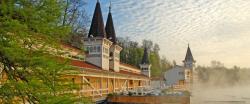
tartalom: + 1 The parts of the Hévíz Bath nowadays Entrance of the Lake with the cherub statues on the dr. Schulhof Vilmos Promenade. Central Building with 4 indoor pools and rooms and terraces for relaxing. Easily accessible from the direction of Festetics Spa on a floating corridor which was built on the Lake on poles. Festetics Spa, the southern entrance of the Lake which is accessible from Ady E. street. This is the newest building of the Lake where the wellness services are available. Mud pools which are located in the Lake just between the Central Building and Festetics Spa. The entrance from Deák Square also known as the Summer Entrance because it is only open seasonally. The summer dressing room, which stands on the eastern shore of the Lake. It is a building made of wood which is located next to the sunbathing terraces. The „Medve” sunbathing terrace is a separated sunbathing terrace on the southern east part of the Lake. Dr. Schulhof Vilmos Promenade The Promenade is part of the park, located around the thermal lake. The Dr. Schulhof Vilmos Promenade is starting from the “Indoor bath” („télifürdő”) building, located at the end of the pedestrian zone and it leads to the main entrance of the thermal lake. Hévíz Lake is situated on one side of the Promenade, which is shaded by sycamore trees and bordered by benches, while on the other side we can find the historical buildings of Szent András Reumakórház (Saint Andrew’s Hospital for Rheumatic Diseases). These buildings were built in the 1870s and they were transformed into the current two-storey structures in the beginning of the 1900s. Each house got its own history.
György House (György-ház)
The Art Nouveau style building is located at the northern part of the „Újtelep”, an area established by the Festetics Family. It was named after György Festetics, founder of the town of spas. Currently the György House is accommodating the “A” Building of Szent András Reumakórház (Saint Andrew Rheumatologic Hospital).
Rákóczi House (Rákóczi-ház)
It was named after Ferenc Rákóczi the Second, as the building was built in 1863 and the ashes of Ferenc Rákóczi were brought back from Turkey to Hungary in the same year. Currently the Rákóczi House is accommodating the “B” Building of Szent András Reumakórház (Saint Andrew Rheumatologic Hospital).
Ella-villa
The building was named after Ella Karola, who was the daughter of Tasziló Festetics. Currently it is accommodating the “C” building of Szent András Reumakórház (Saint Andrew Rheumatologic Hospital).
If we carry on towards south, the next building is a restaurant and assembly hall. The border of the Festetics Estate stretched to this building; this was the first house built from stone. It was built at the end of the 1860s for accommodating guests of the thermal bath. An additional storey was added to the building in 1909, and it became a “Cure Saloon” („Kúrszalon”), which at the time was necessary at bathing resorts. Currently the assembly hall of Szent András Reumakórház (Saint Andrew Rheumatologic Hospital) can be found here.
If we carry on towards south, the next building is a restaurant and assembly hall. The border of the Festetics Estate stretched to this building; this was the first house built from stone. It was built at the end of the 1860s for accommodating guests of the thermal bath. An additional storey was added to the building in 1909, and it became a “Cure Saloon” („Kúrszalon”), which at the time was necessary at bathing resorts. Currently the assembly hall of Szent András Reumakórház (Saint Andrew Rheumatologic Hospital) can be found here.
Francis Joseph House (Ferenc József-ház)
Francis Joseph – the King of Hungary and Austrian Emperor- made Festetics (II.) Tasziló into prince in the year of the building’s handover, who was the builder of the building. Therefore the choice of name for the building. Currently the Francis Joseph House is accommodating the “D” Building of Szent András Reumakórház (Saint Andrew Rheumatologic Hospital).
House No. 7 (Hetes Ház)
The building was built based on the plans of Ferenc Lonkay, the manorial architect of the Festetics Family in 1870-71. The house was part of the “Újtelep”, where the houses were serial numbered. Therefore the choice of name for the building. Currently a hotel is operated in the building under the management of Hévíz Medicinal Spa and Saint Andrew Hospital for Rheumatic Diseases.
Deák House (Deák-ház)
The history of the Hévíz Bath Spa Hévíz between 1795 and 1905 The first rectangular bathhouse, consisting of two buildings, was built in 1795 by the landowner Count I. Festetics György. The news on the benefits of the medicinal water reached Vienna in 1801, and the presence of the white water lilies in the lake was already mentioned in a memoir in 1818. Additional Indian species were planted to these water lilies in 1898. In 1858, afforestation around the lake, modernisation of the spa buildings and development of the lakeside buildings for guests started. In the centre of the lake, the male and female mirror baths (baths surrounded with cabins) were located, but many people still used the sluice of Hévíz, which was wider that time, for swimming. Spa Hévíz in the 1910s and 1920s From 1905, leaseholder Reichl Vencel did his best to develop Hévíz into an international spa town. The former bathhouse was replaced by a domed building, and it is also due to him that a number of modern accommodation and restaurants, and the „Cure Salon”, essential to the health resort, were built. In 1907, on the site of the old built bridge, a roofed bridge was erected and the characteristic two-towered main entrance was completed. In the same year, the Sanatorium and Spa Hotel of Hévíz was built. In 1911, the town received the „spa resort-like settlement” title. Spa Hévíz in the 1930s After 1926 development started up again. The characteristic lakeside bathhouse was built, as well as the main building received a glass roof in 1932 and thus it became completely covered. In 1930, there was already 7 hotels, 11 restaurants and 40 villas in the village. Varied cultural life awaited the almost 16 thousand guests who came her annually. In these years of happy peace time Dr Schulhof Vilmos was the chief physician in Hévíz. He did a lot through his work to popularise the therapeutics of Hévíz. Today, the promenade beside the lake is named after him. Buildings of Hévíz before 1945 Contemporaneously with the completion of the first bathhouse (1795), the „cupping house” used for healing (venesection=scarification) was erected. Whereas the surrounding area of the lake was merely a reedy, marshy area in the first half of the 19th century, from the 1850s a beautiful choice of hotel buildings was built on purpose. In 1870, the Houses I to VII, out of which the House No. Seven was the only two-story building, were already completed. A Roman Catholic chapel was also built (it was demolished later), then in the beginning of the 1900s the hotels, bazaar buildings, as well as the „Cure Salon”, where balls and concerts were held, were finished. Spa Hévíz in the 1950s and 1960s In 1948, the thermal lake and all related buildings and parks, which were owned by the Festetics Family up to that time, were nationalised and the period of state-subsidised holidays began. In 1952, the National Spa Hospital of Hévíz was established and later this year Hévíz was declared a health resort of national importance. By 1968, the country's most modern spa building fully equipped with balneo-therapeutic medical devices. Dr Moll Károly, the internationally renowned rheumatologist physician, who invented the weight bath, started his work during this period. Spa Hévíz in the 1970s and 1980s In the 1970s tourism increased to such an extent – thanks to the western guests too – that the building of additional quality hotels and the rebuilding of the thermal lake buildings were needed. The former domed buildings were replaced by larch-covered, towered buildings from 1977 continuously. The total renovation was completed by 1985, but the visitors could not enjoy the new facility for a long time since it was completely destroyed as a result of a fire on 3rd March 1986. Finally, the new buildings were finished in 1989. Traditional Hévíz Therapy People could read about the beneficial effects of Hévíz medicinal water in 1780 for the first time. Initially, in addition to bathing, only bloodletting was applied as a therapy, the sanatorium was built in 1907 in the village. The first famous doctor of the village was Schulhof Vilmos, who already used electrotherapy and x-rays, in addition to bathing, in the musculoskeletal rehabilitation. From the 1950s the work of Dr Moll Károly put new life into the Hévíz therapy, the country's most modernly equipped balneo-therapeutic bathhouse was completed in the village in 1968. Since then, services have increased with a wide spectrum of treatments, but the basis of the Traditional Hévíz Therapy is still the following: bathing in medicinal water, medicinal mud wrap or mud bath and weight bath by Moll Károly. These can be individually supplemented by drinking cure, medicinal massage, movement-, physio- or hydrotherapy. Kind memories of Hévíz During the last 220 years, the spa resort attracted a number of visitors, who could be celebrities or less famous people, or in exceptional cases even animals, who became famous. Whereas it was quite natural that animals were driven into the water in the 1800s, in 1914, it caused a great sensation when Nelly, the sore-legged elephant was moved to Hévíz. Bathing in muddy medicinal water twice a day was prescribed to the former circus elephant and she performed it with great enthusiasm. The 3-year-old elephant was so popular that she became an extra tourist attraction to the town and the visitors surprised her with basketful of goodies, such as fresh cherries, every day.
The original name of the building was Tasziló villa, but after the death of Prince Festetics (II.) Tasziló it was renamed to Deák House after Ferenc Deák.
title:
description:
címkék: ;Hévíz;Spa;Hévíz Lake;Mansion;Building;
fókusz kulcsszó:
szinoníma címkék:
3. VIP
Last modification: 2022. September. 26. 09:11
Találati relevancia adatok
megtalálta: szöveg (1) | összesen: 1 pont
Tárolt adatok:
cím: VIP
lead:
tartalom: + 1 THE WORLD'S ONLY NATURAL THERMAL LAKE Take a dip in the warm waters of the unique Lake Hévíz and let the mystical feeling make you forget the worries of everyday life! >>> Would you like to level up? Look out for the Moonlight Bath events and bask in the glamour, or choose a mud massage with your ticket and enjoy ultimate relaxation! >>> THE HIGHER THE BETTER! In Hévíz, you can fly up to the skies in the country's largest hot-air balloon dome to admire the sunset or even the sunrise over Lake Balaton from the best seats. Don't settle for less! Surprise yourself and your partner with a romantic trip above the birds, under the clouds. Book the whole basket of 19 people just for yourselves and organise a real VIP trip! >>> SHINE EVERY DAY! Make your holiday in Hévíz about you! Professional facial and body treatments for all ages. A younger and fitter body, a brighter complexion and you'll feel already better! Choose from the most advanced cosmetic treatments available in Heviz, whether it's a romantic makeover, lift, firming or slimming. >>> GOLF IS THE SPORT OF FREEDOM! Spread over 160 hectares, 6351-metre-long, lake-filledThe 18-stage (Par 72) championship golf course was built to USGA standards, making it suitable to host international and world-class tournaments. No matter what handicap you start with, enjoy the game! >>> 5-STAR RELAXATION Why settle for anything less than the best? Pamper yourself in Hévíz in one of the most modern suites, request breakfast in bed, choose all inclusive treatment, and after a relaxing massage, relax by the pool and all you have to do is order your favourite cocktail! >>> WATER TRIPS ON THE HÉVÍZ STREAM IN WINTER Unique winter canoe trips on the steaming Hévíz stream along a 10 km stretch of wild and scenic landscape. Between 1 November and 15 March. >>> Feeling competitive? Hiking not enough? Prove yourself at the HEVIZIBIVALY Duathlon! >>> HAPPY PEACETIMES OF HÉVÍZ- THE GOLDEN AGE OF A BATH Be a part of the City Day celebrations every year the highlight of the day will be the costume parade, recalling the golden age of the former Hévíz Spa. Rent a nice dress and join the glamourous life of Hévíz! >>>
title:
description:
címkék:
fókusz kulcsszó:
szinoníma címkék: