Search
Kizárt szavak
Tiltott szavak
- cialis
- viagra
- php
- sql
- html
- https
- http
- chr
- script
- sex
- porn
- sexmassage
Alternatív kifejezések
- =
1. Cserszegtomaj Delights
Last modification: 2025. November. 26. 09:41
Pickles, fermented vegetables, smoky zakuska, homemade jams, and roasted hazelnuts — all crafted from homegrown produce, free of additives, just like grandma used to make.
Találati relevancia adatok
Tárolt adatok:
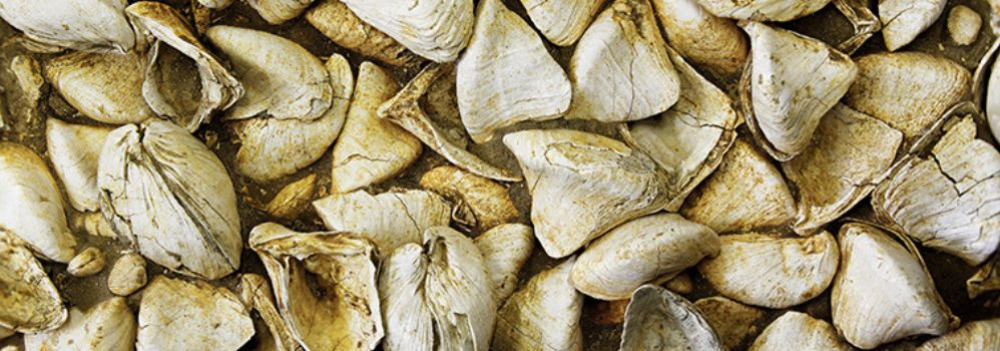
Imagine a vast body of water — over 1,000 meters deep and more than 400 times the size of Lake Balaton — once rippling across this land. The story of the Pannonian Lake is not just a fascinating chapter of geological history, but a legacy that continues to shape the region: it left behind mineral resources, fertile soils, and even inspired legends. Discover how an ancient lake transformed Transdanubia — and why its impact is still felt today.
An Inland Sea for Millions of Years
At its greatest extent, the Pannonian Lake covered an enormous area, far surpassing the size of today’s Balaton. For millions of years (approximately 12 to 8.5 million years ago), it dominated the region. As surrounding mountain ranges gradually rose, the lake became cut off from the world’s oceans. Its water slowly turned fresh, and its basin began to fill with sediments. Because of its isolation, the lake developed a unique ecosystem with many endemic species.
The Lake Didn’t Appear Overnight
The Pannonian Lake didn’t simply “appear” in the Carpathian Basin. Its formation was the result of millions of years of tectonic activity and shifting climate. It emerged as an independent, enclosed body of water — no longer connected to the open seas.
Deep Waters, Varied Shores
In some areas, the lake reached depths of over 1,000 meters. Elsewhere, shallower zones supported lagoons, river deltas, and small, isolated lakes. During high water periods, rocky shorelines formed along the mountain fringes — traces of which can still be found today in the Keszthely Hills and the Mecsek Mountains.
The Lake’s Retreat — and Sediment Legacy
Despite its size, the lake was eventually filled in by immense volumes of sediment, carried mainly by rivers flowing from the Alps and the Carpathians. Over the course of 6.5 million years, it gradually disappeared from the landscape.
What did it leave behind?
Its sediments — composed mostly of sand, clay, and fine silt — became the so-called “Pannonian formations,” which today hold key mineral resources (such as petroleum) and aquifers. These formations define much of the surface geology of Transdanubia, including the Zala Hills.
Fertile soils later formed on the laminated silty and clay-rich deposits of the Somló Formation. Even the legendary “Tihany goat’s hoof” fossils — actually worn shell fragments of the Congeria ungulacaprae mollusk — can still be found embedded in these ancient layers.
The Final Lakes and a Gradual Goodbye
Because most of the sediment entered from the northwest, north, and northeast, the lake slowly retreated toward the south and southeast — as if it were “withdrawing” from what is now Hungary.
Small remnant lakes persisted for much longer in areas of present-day Slavonia (Croatia) and northern Serbia, but due to their different scale, character, and fauna, they are not considered true successors of the ancient Pannonian Lake.
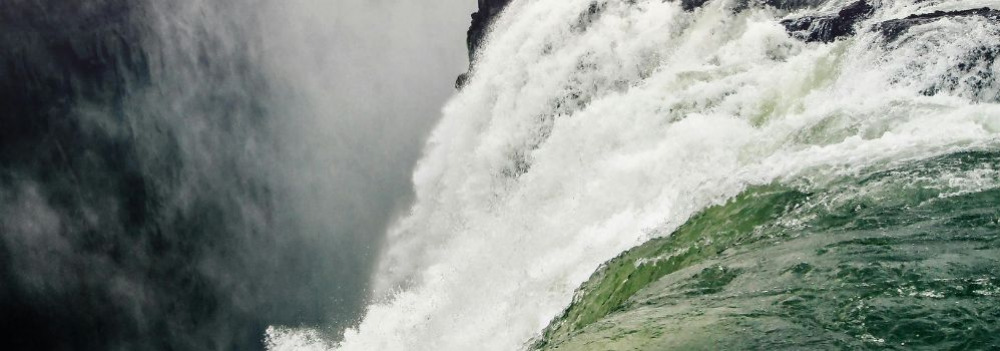
About 10,000 years ago, rapid climate warming triggered a cascade of natural responses: torrential floods, landslides, and intense rock weathering. The landscape we walk on today was not shaped over mere centuries, but by the dramatic forces of climate and water, working together. Did you know that the Zala Valley floor is made up of sediments deposited by a kind of "river of time"? Discover how the Earth’s surface became one of the most sensitive indicators of climate change.
Climate Change: Not Just a Modern Phenomenon
We often associate climate change with contemporary issues, but Earth’s climate has shifted many times throughout its history — sometimes quite rapidly. Within large-scale climatic cycles, alternating periods of warming and cooling have long been part of the planet’s natural rhythm.
When Climate Changes, Everything Reacts
A change in climate sets off a chain reaction of environmental processes. It’s not just animals and plants that respond — so does the landscape itself.
Around 10,000 years ago, as the climate warmed significantly, rainfall became more intense.
More rain meant more erosion: stormwater began washing away sediment from hills and valleys into riverbeds. The rivers, now carrying more water and more sediment, flooded more often and spread these materials across the landscape.
Shaping the Terrain
This had a major impact on topography: the land surface became more fragmented and dynamic. Warming temperatures also sped up chemical and physical weathering, breaking down bedrock and helping fertile soil layers to develop.
In short, natural geological processes that had long been underway suddenly accelerated — and reshaped the surface of the land.
Young Sediments at the Base of the Slopes
Today, in many areas of the region, the lower slopes and valley edges are coated with sediment — debris washed down from higher ground, largely within the last 10,000–20,000 years. In the Zala Valley, for instance, these deposits have spread so far that they now reach the center of the valley floor.
The original bedrock source of these sediments varies: in Zala, it’s typically Pannonian sand (Somló Formation), while in the Keszthely Hills, marine-origin carbonates dominate — mostly dolomite, with some limestone. These sediments now appear as fine gravel, pebbles, or coarse sand, quietly recording the environmental changes of the recent past.
2. Dédi nyomában Biogarden
Last modification: 2025. November. 26. 09:43
Homemade delicacies made from sun-ripened, chemical-free vegetables — straight from the pantry.
Találati relevancia adatok
Tárolt adatok:
About 10,000 years ago, rapid climate warming triggered a cascade of natural responses: torrential floods, landslides, and intense rock weathering. The landscape we walk on today was not shaped over mere centuries, but by the dramatic forces of climate and water, working together. Did you know that the Zala Valley floor is made up of sediments deposited by a kind of "river of time"? Discover how the Earth’s surface became one of the most sensitive indicators of climate change.
Climate Change: Not Just a Modern Phenomenon
We often associate climate change with contemporary issues, but Earth’s climate has shifted many times throughout its history — sometimes quite rapidly. Within large-scale climatic cycles, alternating periods of warming and cooling have long been part of the planet’s natural rhythm.
When Climate Changes, Everything Reacts
A change in climate sets off a chain reaction of environmental processes. It’s not just animals and plants that respond — so does the landscape itself.
Around 10,000 years ago, as the climate warmed significantly, rainfall became more intense.
More rain meant more erosion: stormwater began washing away sediment from hills and valleys into riverbeds. The rivers, now carrying more water and more sediment, flooded more often and spread these materials across the landscape.
Shaping the Terrain
This had a major impact on topography: the land surface became more fragmented and dynamic. Warming temperatures also sped up chemical and physical weathering, breaking down bedrock and helping fertile soil layers to develop.
In short, natural geological processes that had long been underway suddenly accelerated — and reshaped the surface of the land.
Young Sediments at the Base of the Slopes
Today, in many areas of the region, the lower slopes and valley edges are coated with sediment — debris washed down from higher ground, largely within the last 10,000–20,000 years. In the Zala Valley, for instance, these deposits have spread so far that they now reach the center of the valley floor.
The original bedrock source of these sediments varies: in Zala, it’s typically Pannonian sand (Somló Formation), while in the Keszthely Hills, marine-origin carbonates dominate — mostly dolomite, with some limestone. These sediments now appear as fine gravel, pebbles, or coarse sand, quietly recording the environmental changes of the recent past.
3. Tourinform Office
Last modification: 2023. August. 02. 12:50
The Tourinform Office is the main information service provider for the visitors arriving in Hévíz; you should also pop in if you have any question or you want to make enquiries about any programs and events in the town. The Office is located in the walking street so it is within easy reach both for motorists and pedestrians. You’ll find a wide range of information publications (leaflets, promotional booklets, calendar of events, catalogue of accommodation, etc.) in the Tourinform Office.
Találati relevancia adatok
Tárolt adatok:
4. Medicinal mud
Last modification: 2019. June. 13. 15:02
Találati relevancia adatok
Tárolt adatok:
5. Drinking cure
Last modification: 2019. June. 13. 14:43
Találati relevancia adatok
Tárolt adatok:
6. Recipe tips from Hévíz
Last modification: 2019. June. 12. 14:13
Találati relevancia adatok
Tárolt adatok:
7. Museums
Last modification: 2021. April. 23. 13:01
Találati relevancia adatok
Tárolt adatok:
8. Man-made attractions
Last modification: 2019. July. 22. 14:30
Találati relevancia adatok
Tárolt adatok:
9. Composition of the water
Last modification: 2019. June. 12. 13:20
Találati relevancia adatok
Tárolt adatok:
10. S.O.S. Hévíz
Last modification: 2020. August. 08. 13:17
Találati relevancia adatok
Tárolt adatok:
Information
The on-call medical service operates in Keszthely, in the Keszthely Hospital.
Central medical service operates in in the Keszthely Hospital (8360 Keszthely, Ady street 2.)
Phone number: +36 92 321 000, or 104
The joint rescue management / dispatching tasks are carried out by the National Ambulance Service’s Operating Group of Zalaegerszeg.
The service area of the Central medical service is Hévíz, Alsópáhok, Felsőpáhok, Nemesbük and Zalaköveskút. It serves the guests staying in the town and those who come upon.
Opening hours:
Monday– Friday: 4.00 pm – 8.00 am
On weekly rest-days and public holidays: 8.00 am – 8.00 am
Paediatrician in attendance is provided within the Central medical service. The on-call time is:
Monday – Friday: 4 pm – 9 pm
On weekly rest-days and public holidays: 8 am – 12 pm, 4 pm – 9 pm
During the on-call time the paediatrician, after being called, is required to appear on the spot of the phone call within 30 minutes and provide medical attendance.
The Emergency Dental Service is provided by the Allfordent Company in Keszthely
Location: Allfordent Kft., Keszthely, Kossuth Lajos str. 7-9.
Phone number: +36 83 777 427
On-call time on weekends, holidays: 9 am - 1 pm
The Local Government of Hévíz performs a higher level of medical care by providing the Central Medical Service, whose operation hopefully will be to your and our town’s guests’ satisfaction.
The emergency medical attendance is provided free of charge for both Hungarian citizens and citizens coming from EEA member states and also outside the EEA region (Russia, Ukraine).
Dr. Szendrődi Miklós
Phone: +36 83 342-871
Consulting hours:
Monday – Friday: 7.30 - 11.00 a.m.
Tuesday: 2.00 - 3.00 p.m.
Dr. Hegedűs Mihály
Phone: +36 83 343-403
Consulting hours:
Moday, Tuesday, Thursday: 8.00 - 11.00 a.m.
Wednesday, Friday: 9.30 - 11.30 a.m.
Dr. Mikolás Andor
Phone: +36 83 342-855
Consulting hours:
Monday, Wednesday, Friday: 8.00 - 12.00 a.m.
Thursday: 1.00-5.00 p.m.
Dr. Kovács Judit paediatrician
Phone: +36 83 343-382
Consulting hours:
Monday, Tuesday, Wednesday, Friday: 8.00 - 11.00 a.m.
Thursday: 10.00 a.m. -1.00 p.m.
Place: Hévíz, József Attila str. 2.
Tavirózsa Pharmacy
Hévíz, Kossuth str. 5.
Phone:+36 83 343-421; +36 83 540-023; +36 83 540-024
Opening hours:
Monday - Friday: 8.00 a.m. -6.00 p.m.
Saturday: 8.00-12.00 a.m.
Sunday: 8.00-12.00 a.m.
Balzsam Pharmacy
Hévíz, Vörösmartystr. 14.
Opening hours:
Monday - Friday: 8.00 a.m. - 6.00 p.m.
Saturday: 8.00 a.m. -1.00 p.m.
Pharmacy in the Hospital
Hévíz, Dr. Schulhof Vilmos Promenade 1.
Tel.: +36 83 501 700/ 230
Opening hours:Monday – Friday:
8.00 – 12.00 and 13.00 – 15.00
Saturday
8.00 – 12.00
OTP Bank
Hévíz és Vidéke Takarékszövetkezet: Széchenyi str. 66.
K&H Bank: Rákóczi str. 13/15.
11. Lake Bath opening hours, prices
Last modification: 2023. April. 01. 09:20
Találati relevancia adatok
Tárolt adatok:
12. Wellness ABC
Last modification: 2024. August. 16. 13:38
Learn about the most important wellness treatments
Találati relevancia adatok
Tárolt adatok:
13. Leisure
Last modification: 2024. August. 16. 13:33
Találati relevancia adatok
Tárolt adatok:
14. Special leisure programs
Last modification: 2024. August. 16. 13:40
Találati relevancia adatok
Tárolt adatok:
15. Smart parking in Hévíz
Last modification: 2022. February. 21. 07:57
Találati relevancia adatok
Tárolt adatok:
16. Smart parking system
Last modification: 2024. June. 18. 09:48
Találati relevancia adatok
Tárolt adatok:
17. Frequently Asked Questions
Last modification: 2025. May. 08. 09:21
Frequently asked questions about Hévíz
Találati relevancia adatok
Tárolt adatok:
18. EKF - Hévíz
Last modification: 2025. March. 19. 12:25
Találati relevancia adatok
Tárolt adatok:
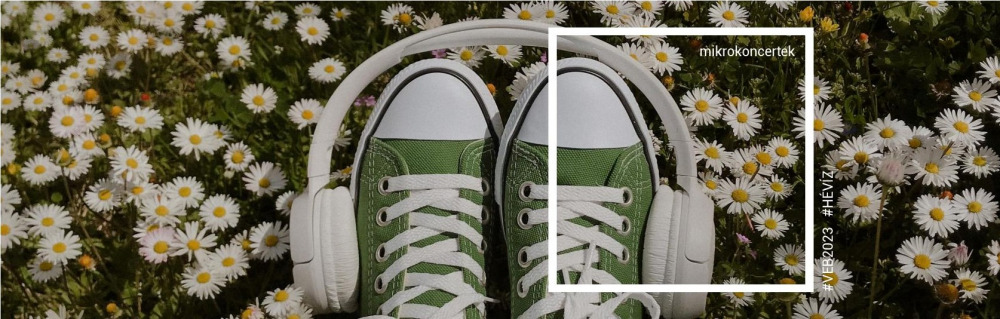
Find the music!
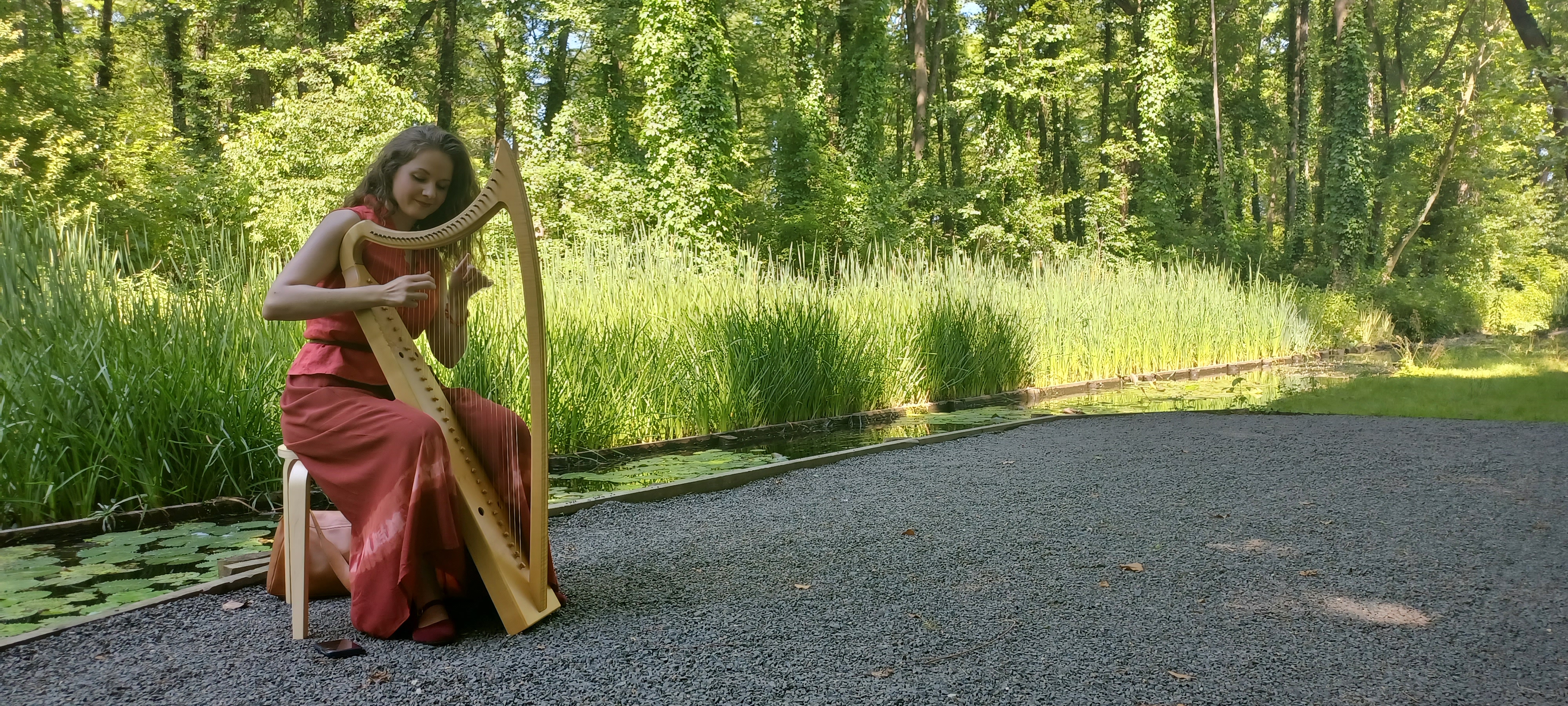
The "music" of the GROUND, the WIND, the WATER and the BIRDS - microconcers in secret spots of the Protective Forest.
Wander through the charming paths of the Forest and find the music of the forest. Enjoy the soft music and the cool of the trees. You can listen to short, 15-minute micro-concerts in the secret venues hidden in the trees, once in every hour.
23 June 15.30 in the West Protective forest, on the Treetop Walkway
14 July 16.00 in the Northern Protective forest
4 August 16.00 in the Northern Protective forest
18 August 16.00 in the Northern Protective forest
8 September 16.00 in the West Protective forest, on the Treetop Walkway
15 September 16.00 in the Northern Protective forest
We reserve the right to change the program! In case of rain, the program will be held at a new time or at a different location depending on the occasion!

Egregyi Museum Garden - August 4-6. Friday-Saturday-Sunday
First Egregy Eco-festival
Step on the grass allowed! Try it, experience it, learn it, listen it, enjoy it, see it…performances, arts and craft show, creative works and many others!
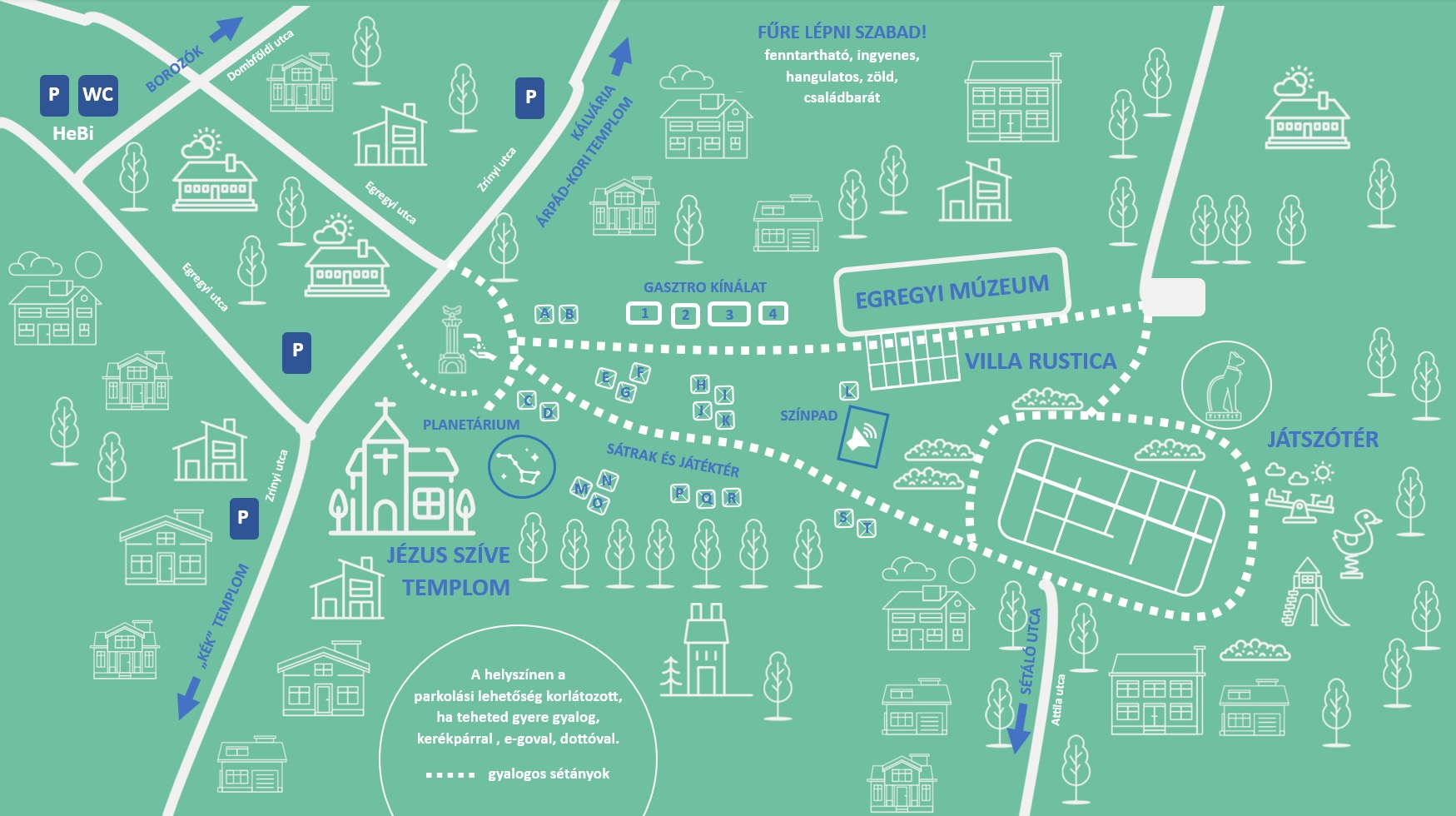
programs before the festival
3 August, Thursday
20:00 Trio Brax concert
21:00 Bossa & More Concert
4 AUGUST, FRIDAY
16:00 pART forest exhibition opening and micro-concerts in the Northern Protective Forest
Between 16:00 and 18:00 Gastronomic presentation - Tanácsa Attila's cooking school (vegan, vegan dishes)
16:00 - 20:00 Try it, experience it, learn it, listen it, enjoy it, see it... in the tents set up in the museum garden in Egregy: singing bowl session, mandala painting, lifestyle advice, right hemisphere drawing, vegan food, gastro show, craft creative sessions and much more!
16:00 Brum Bandi Band
17:50 Film: Climeate-film - film of the Balaton-Uplands National Park
18:30 Klára Hajdu and Milán Szakonyi concert
20:00 Ivett & JB Jazz concert

5 August, Saturday
10:00 Morning Yoga
10:00-18:00 Try it out, experience it, learn it, listen to it, enjoy it, see it... in the tents set up in the museum garden in Egregy: sound bowl session, mandala painting, lifestyle advice, drawing with the right hemisphere, vegan food, gastro show, craft creative sessions and much more!
10:00 - 18:00 Playhouse
11:00 Gastronomy presentation with tasting - Attila Tanácsa cooking school (vegan, vegan dishes)
14:30 - Joy dance for and with seniors
15:00 Gastronomy presentation with tasting - Attila Tanácsa cooking school (vegan, vegan dishes)
15:00 Nature film: Wild Waters
16:00 Igricek concert
16:00 Caricature painting with Tibor Karnics
From 4:00 p.m. TRAVELING PLANETARIUM - new shows every hour in a traveling planetarium
Amazing universe film (from 6 years old) in English
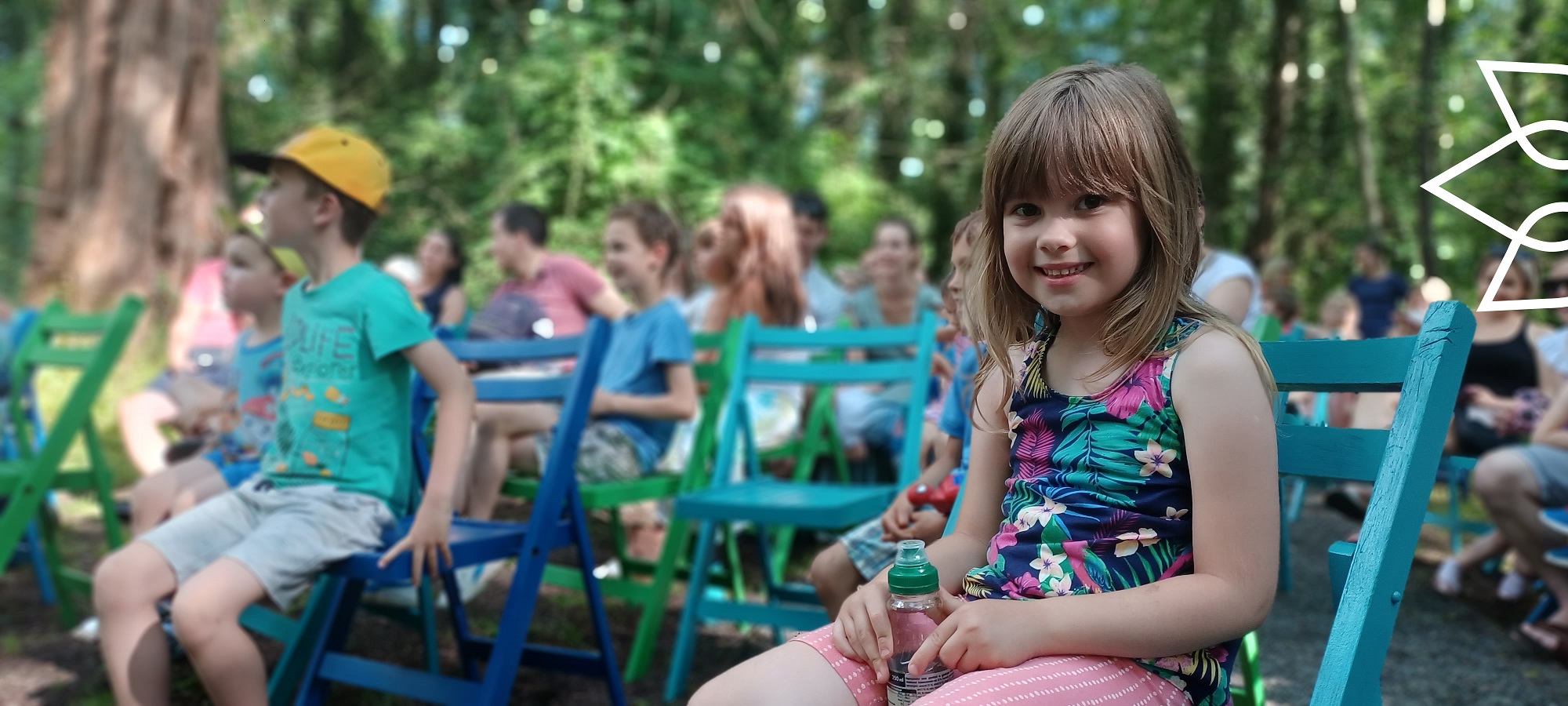
17:00 Light musical afternoon with the Vagabond Trio and the Cséplő-Poór Duo
19:30 Krisztián Grecsó autographs
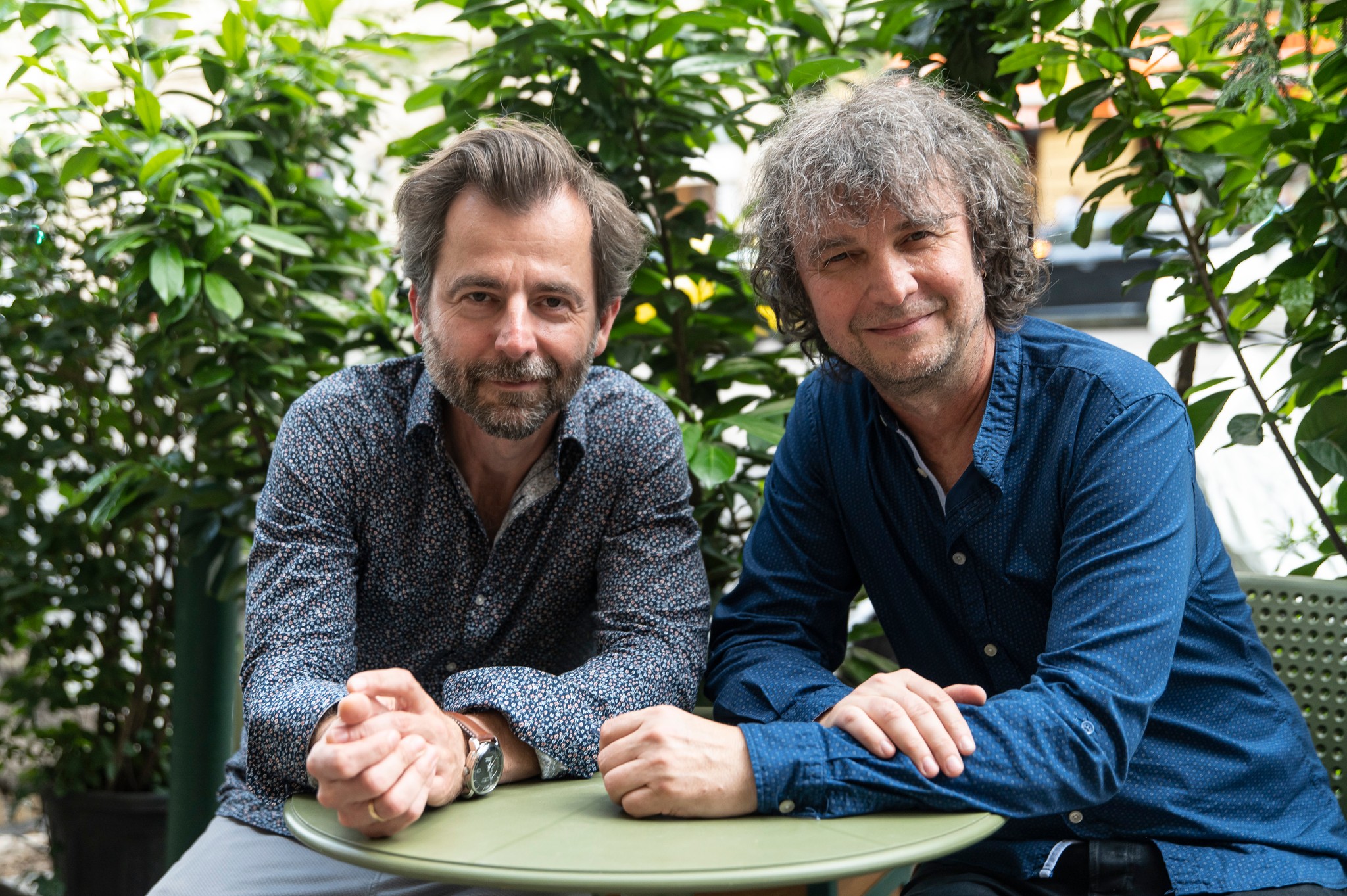
20:00 Libikóka: Grecsó & Hrutka musical literary evening
6 August, Sunday
10:00 a.m. Musical nursery for the little ones
10:00-16:00 Try it out, experience it, learn it, listen to it, enjoy it, see it... in the tents set up in the museum garden in Egregy: sound bowl session, mandala painting, lifestyle advice, right hemisphere drawing, vegan food, gastro show, craft creative sessions and much more!
10:00-12:00 Playhouse
11:00 Kanga Training
15:00 Tüskevár film HU
16:00 A nagy Ho-Ho-Horgász film (The big angler) HU
17:00 Nature film entitled Wild Hungary HU
Refreshing beverages and delicious snacks every day!
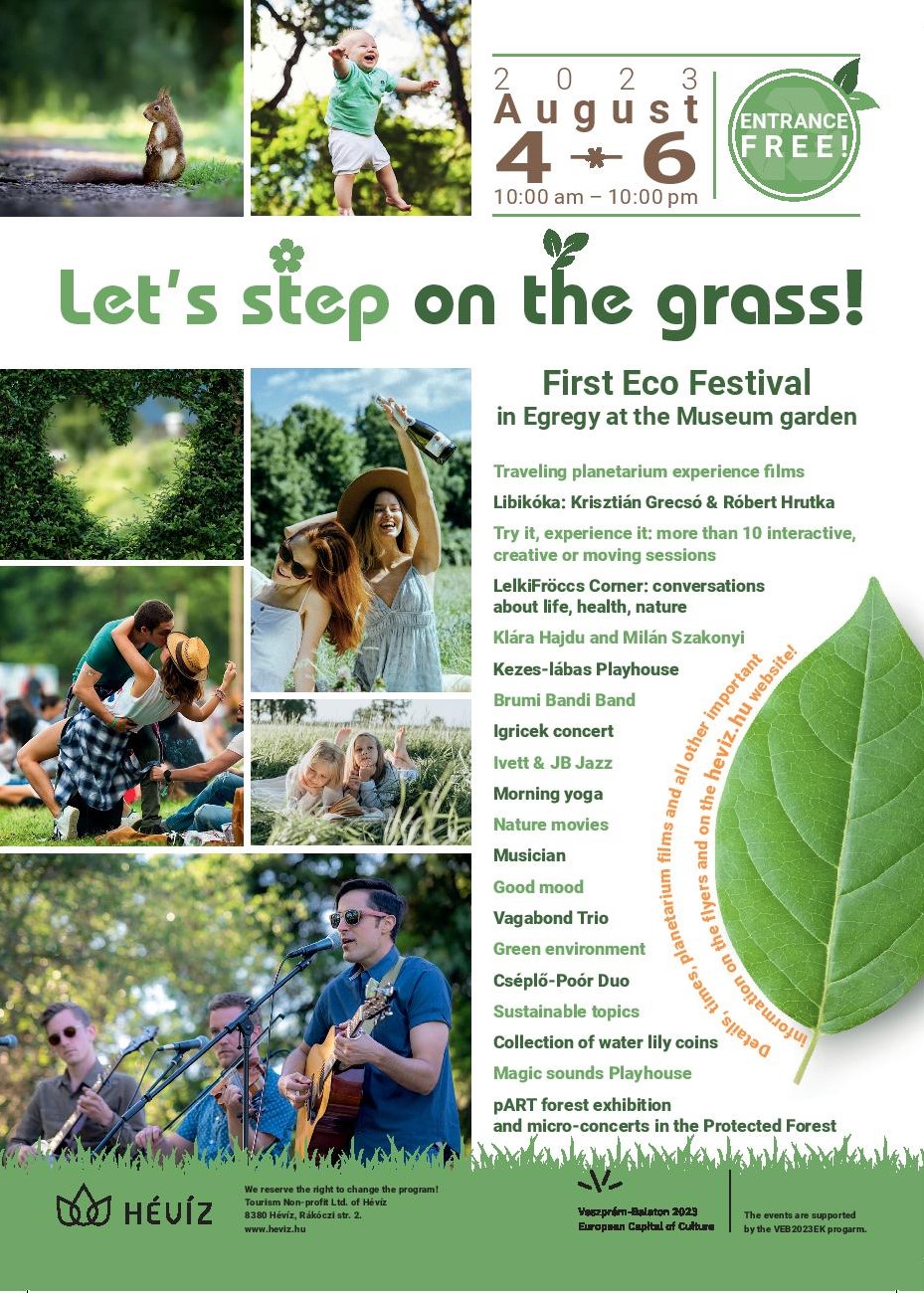
The program is implemented within the framework of the Veszprém Balaton 2023 European Capital of Culture program with the support of VEB2023.
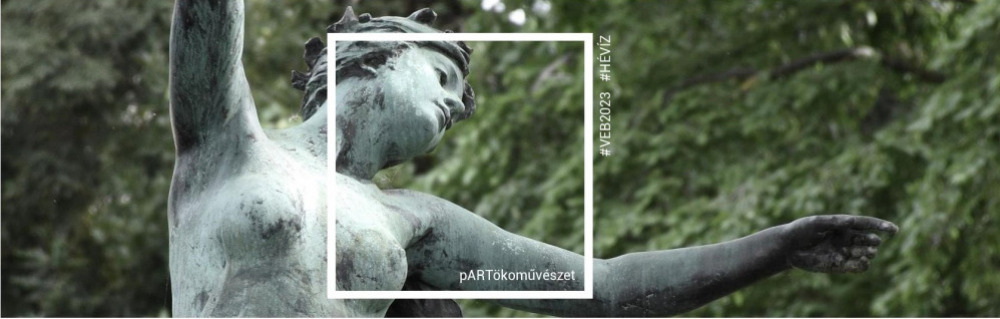
Opening on August 4, 2023 at 4:00 p.m. in Protective forest.
The essence of the pART project is to consider the forest itself as an art space, and let nature itself be the central component of the work of art. Art is not alien to its environment, on the contrary: it is an integral part of the landscape. The creations are not made to last forever, but are volatile and changeable, just like nature. They are part of a permanent cycle, while the forest itself becomes a gallery and also the subject of art.
We will introduce the artists and the exhibition after the opening!
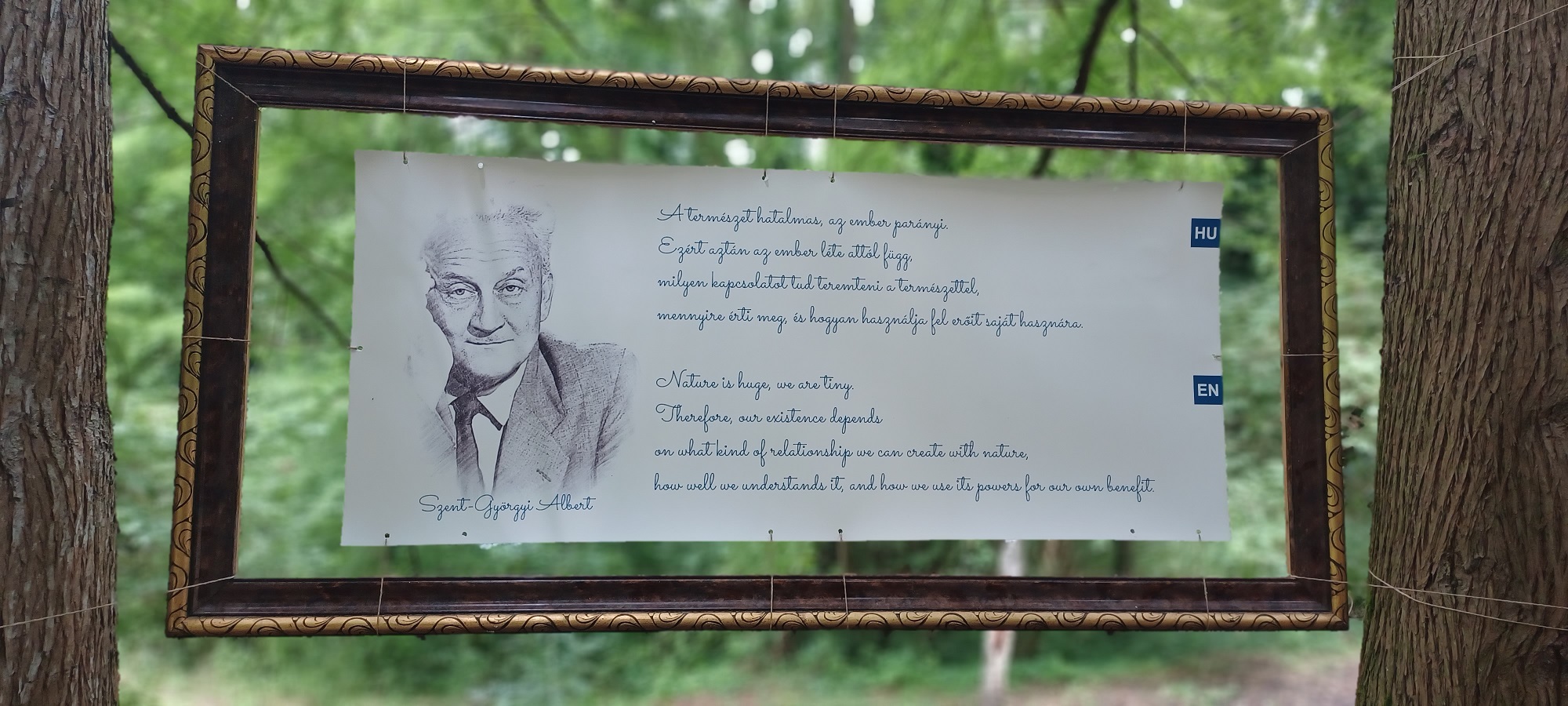
Anyone who knows the area and has seen the exhibition - which is not only about the forest but also about the forest itself - will understand the choice of title. The pART forest exhibit is located on the forest path next to the northern stream of Lake Hévíz. The exhibition of more than 60 images of the wildlife in the nature reserve allows you to walk through the forest and discover the hidden beauties that are usually difficult to see with the naked eye or remain hidden during an ordinary walk. The pictures, stretched on and between trees, show wonderful birds, special plants, small animals and insects. Many of the works are paintings by nature illustrator Márton Zsoldos. The exhibition also includes a few photos taken by nature conservation guards Előd Búzás and Gábor Sinka in the immediate vicinity of Lake Hévíz.
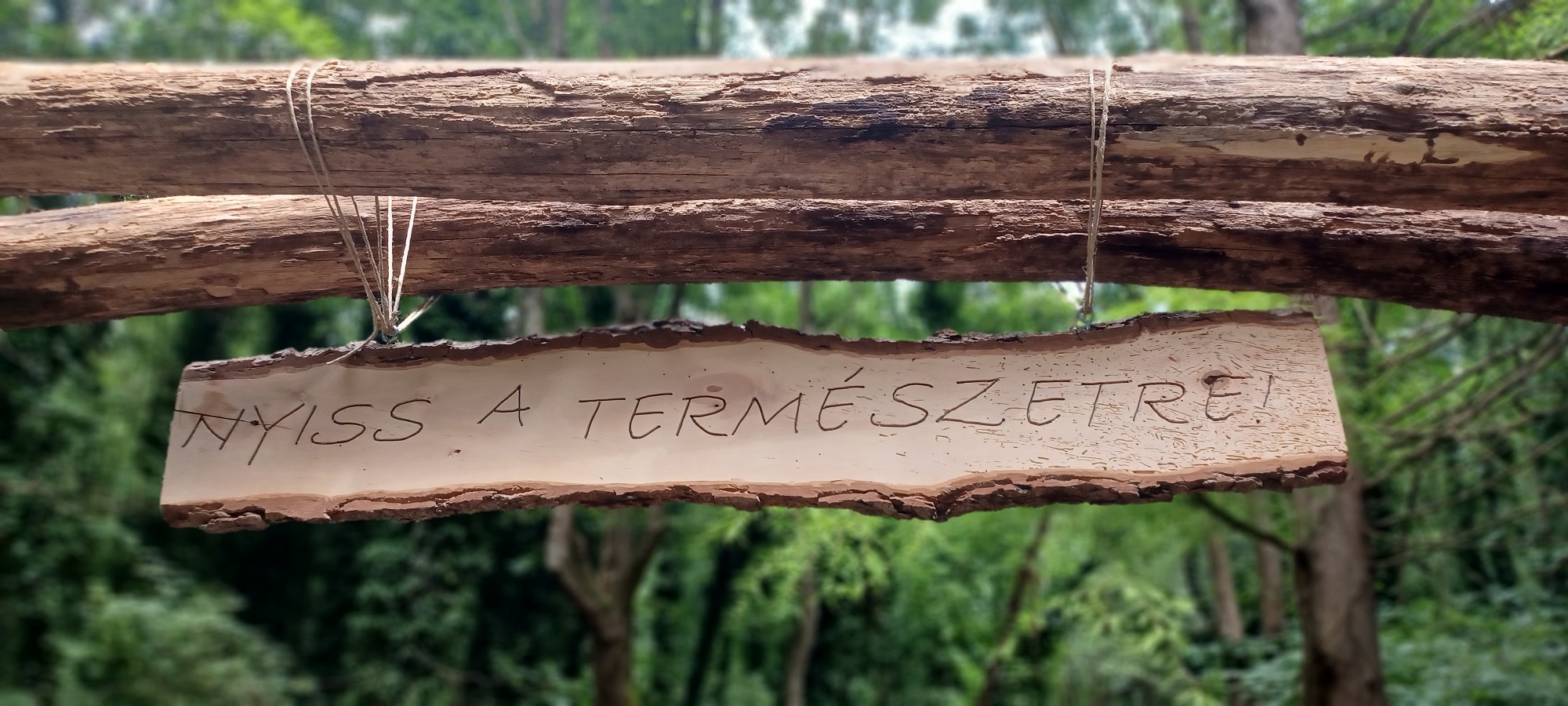
The forest exhibition opens with a wooden gate bearing the motto of the exhibition:
"Open to nature!"
Tamás Pálffy from the organizer Hévízi Turisztikai Np Kft. emphasized that the whole Forest Ministry programme series was organized taking into account the nature conservation, sustainability and green event aspects. Each event tries to leave as small an ecological footprint as possible, and in all its elements it strives to bring people, nature and cultural experiences closer together in a way that only interferes with nature in a small but in no way harmful way.
For this exhibition, recycled wooden picture frames donated by local residents were used, and sugar cane was used for fixing. The forest exhibition is expected to be on display until 30 September, but this may change depending on the use of natural materials and weather conditions. Durability was not an objective in this case.
However, the gate will remain! Because whether or not there is a pART Forest Tour in the Hévíz Forest, the message is always the same: Open to nature!
Galerie
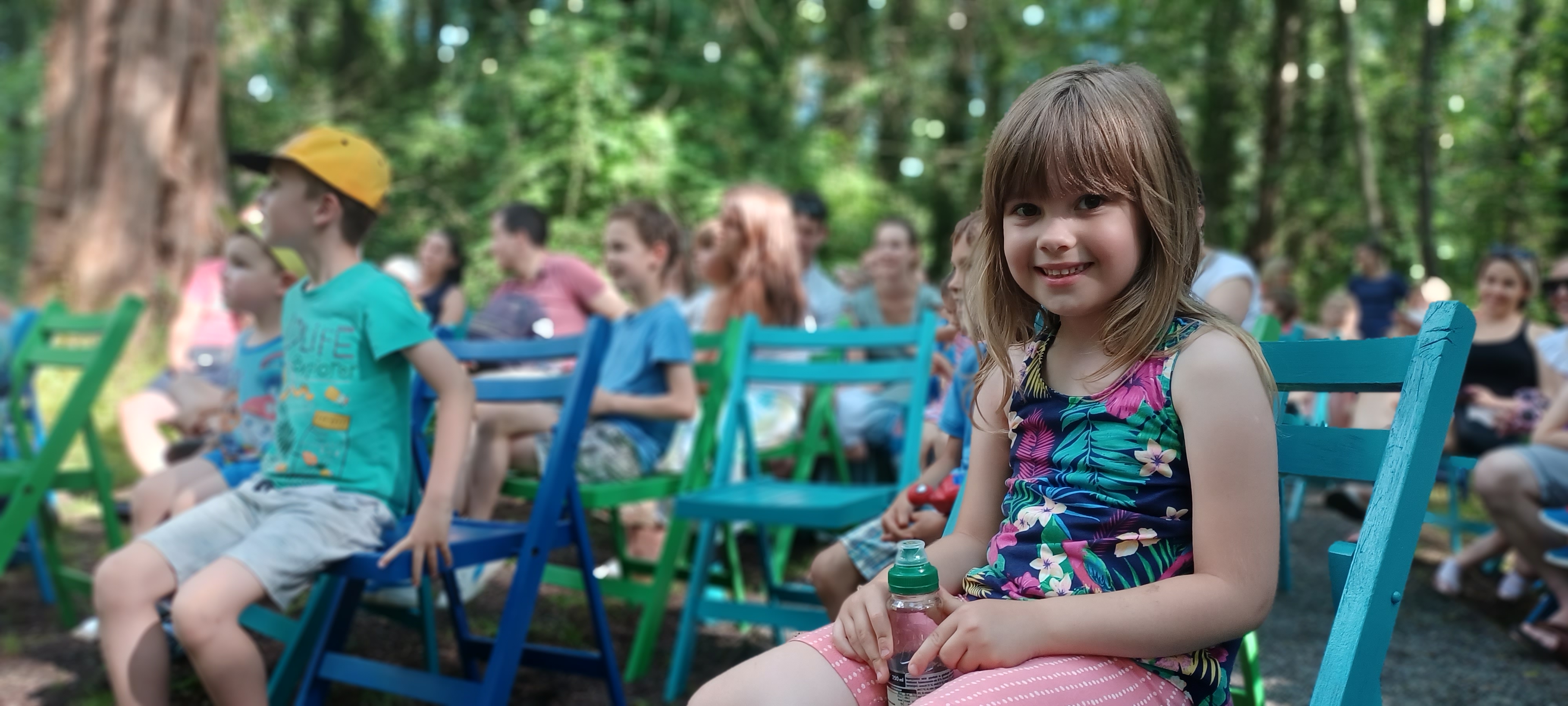
The stage plays are held in the Protective Forest, at the crossing near to the Water Lily Trail.
We can provide 60 places to sit, attendance is free of charge!
All plays are held in Hungarian!
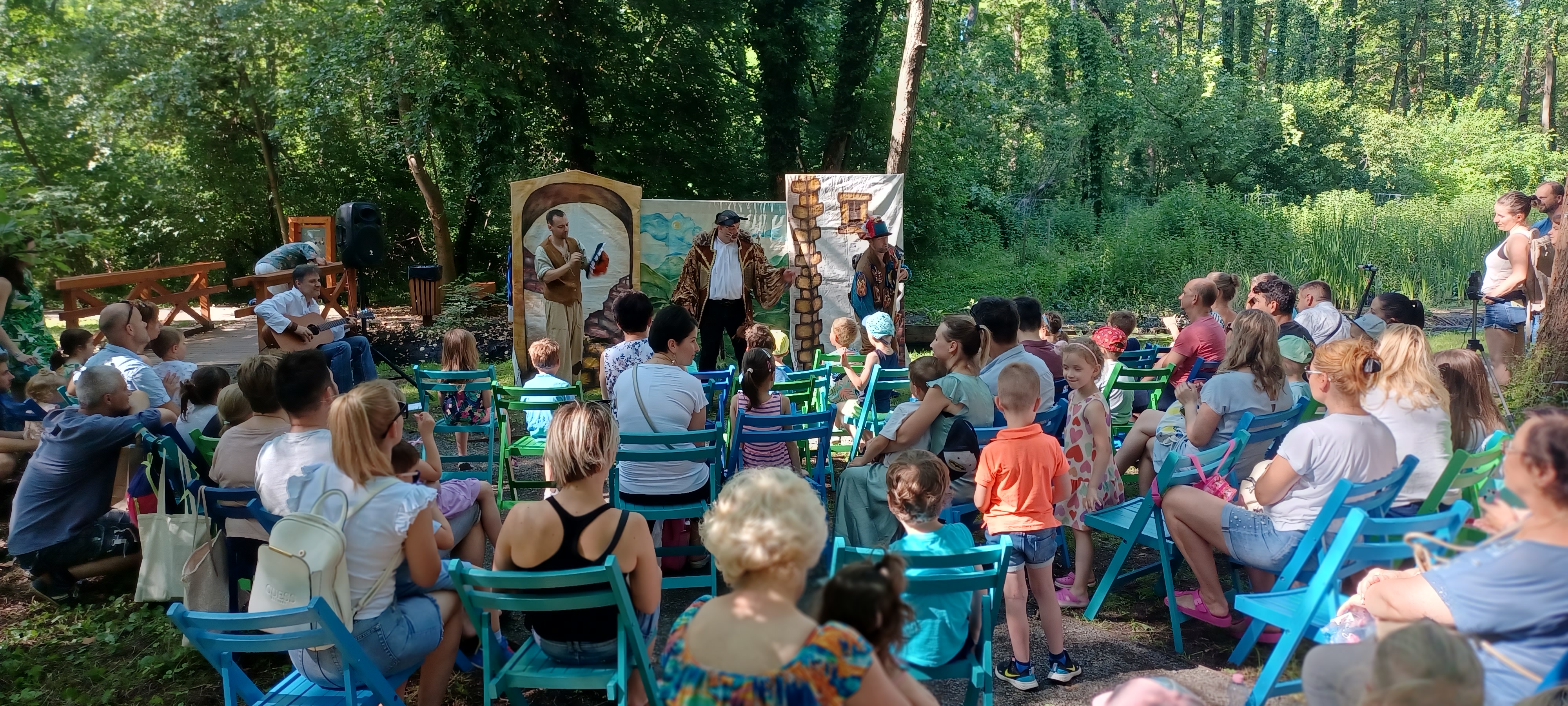
15 July Saturday 17:00 Kacor Király (King Kacor) performance for children - performed by the Hahota Children's Theater
19 August Saturday 16:00 A császár új ruhája (The ceasars new clothes) performance for children - performed by the Hahota Children's Theater
26 September Tuesday 10:00 Mátyás király és az uzsorás (King Matthias and the usury performance for children - performed by the Hahota Children's Theater
Guided geobotanical tours for adults - geotour in the Protective Forest / 120 min.
Zoltán Tamás Samu geocoach will lead the tours. On the nearly 2-hour geotour, we can get to know many unique species, from the swamp cypress and the protected forest, from the marsh cypress to the waterlilies. What gives the Hévíz forest its speciality and uniqueness? You will get know the landscape specifications! The maximum number of participants is about 15 people.
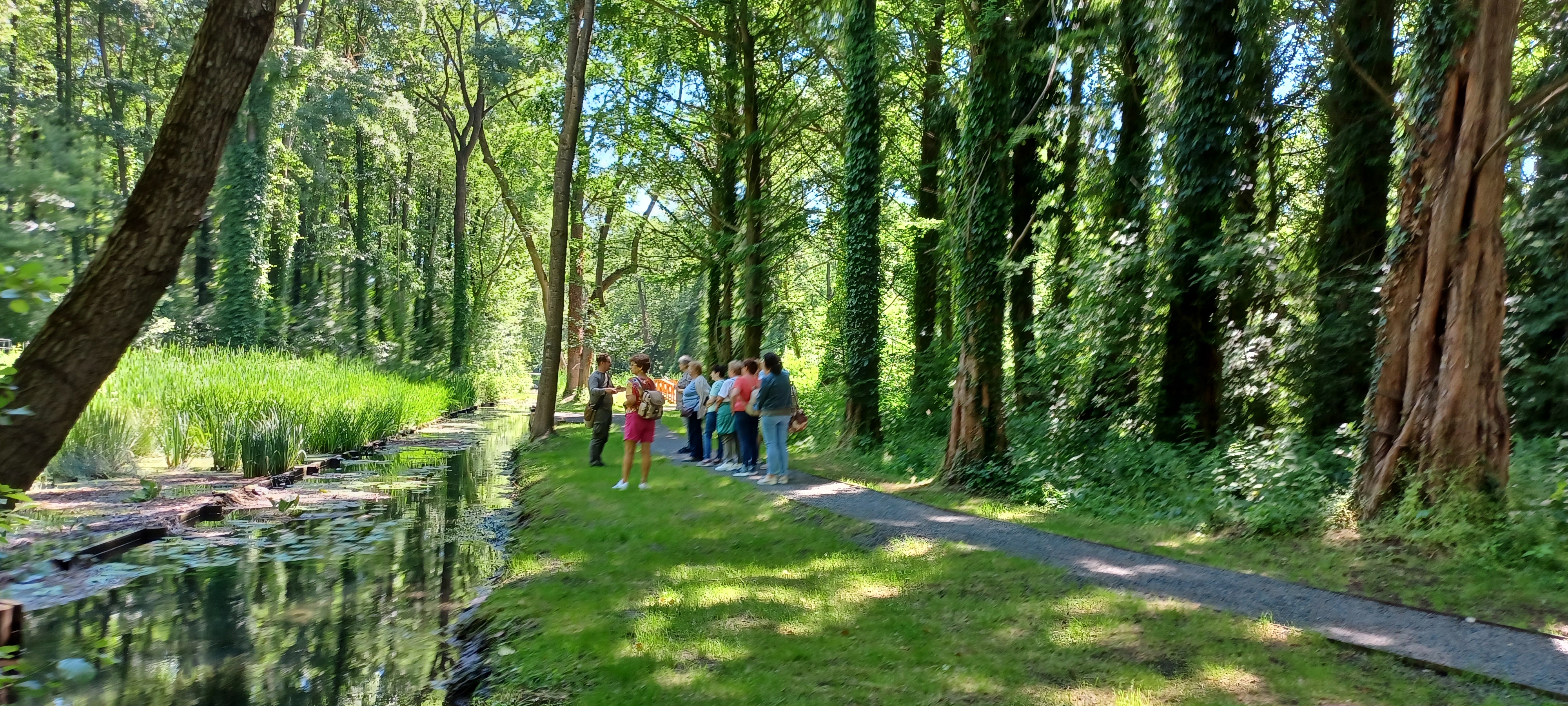
The guided tours are held in Hungarian (except 2 times, which will be held in German!)
30 April 14.00
27 May 16.00
24 June 16.00
14 July 10.00
16 July 10.00 - in German
19 July 11.00
4 August17.00
6 August 10.00- in German
8 September 14.00
7 October 15:00
21 October 15:00
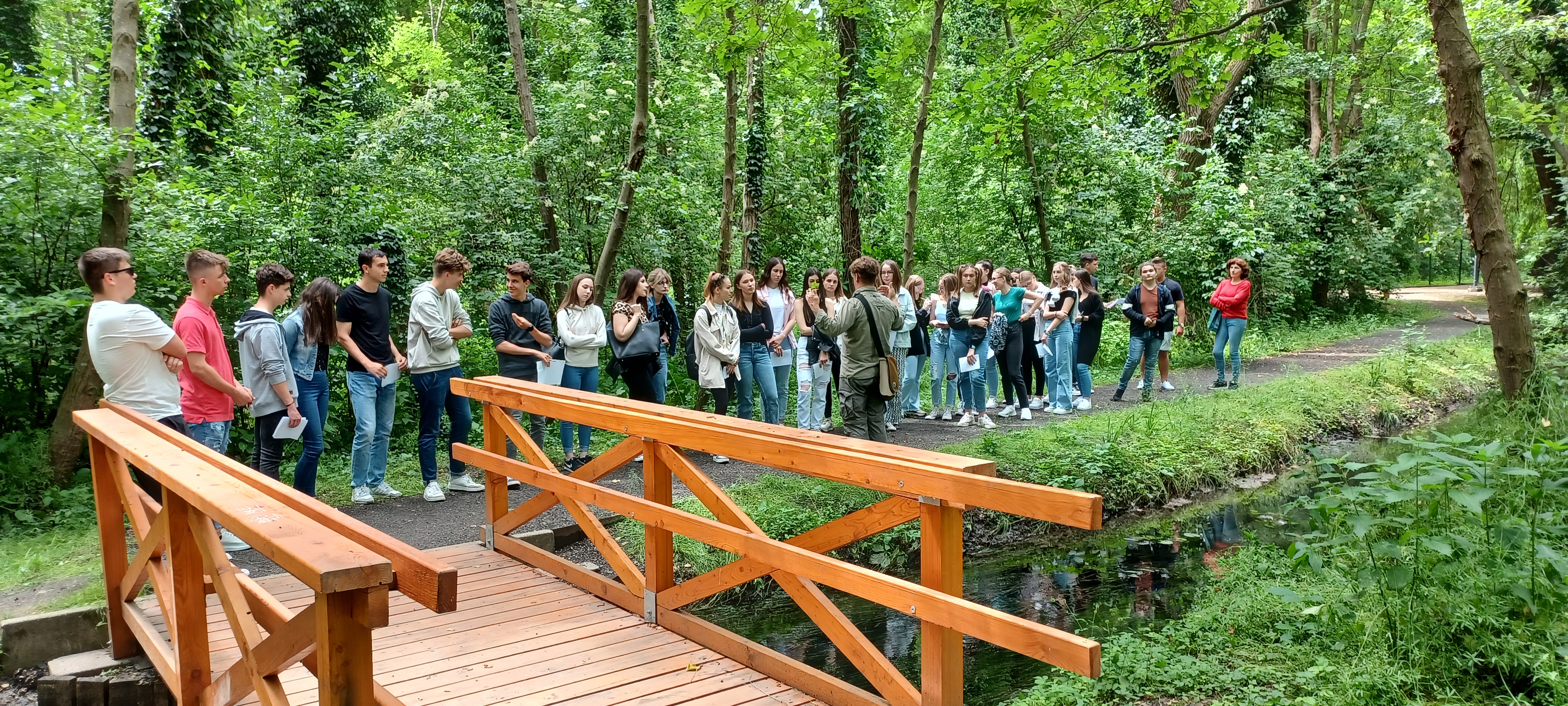
Duration of the tours 120 minutes.
Regitstration
By phone at the tour guide, Tamás Zoltán Samu: +36 30 414 9009 By phone at the Tourinform office every day between 9 a.m. and 5 p.m.: 06 83 540 131
EVERY TOUR IS FOR FREE!- ONLY IN HUNGARIAN (or German) LANGUAGE
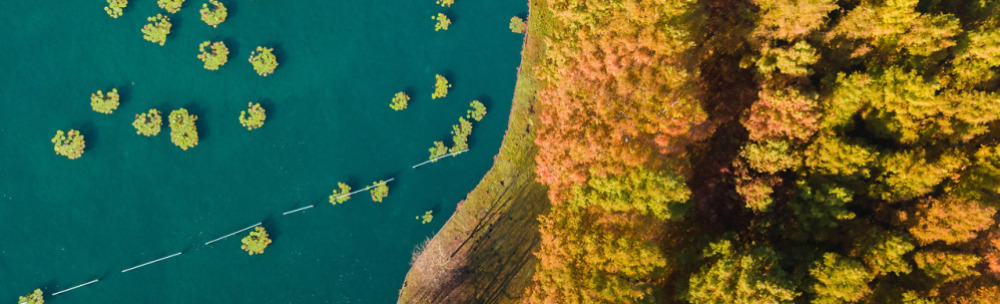
The main aim of the program is to see the forest as a protected natural value while we also show it as an existing place for culture and art. We would like to connect the man-nature-art trio to each other to create a new unity with the help of cultural events.
What do WE do to reach this?
- we do not intervene in the circle of nature with our events, we do not create alien objects in the forest
- we do not set stages, lighting or an auditorium: everything stays natural
- we only use portable devices
- the number of attendees are limited to 50 people/event
- we do not spend more than 3 hours in the forest at one occasion
- we do not litter, and we try to reduce the ecological foot print of the event to the minumum
- we honour the rules of the forest - we do not make noise, we do not harm the flora and fauna, we do not pollute the air and we do not disturb the life of the night forest
- we didn't buy new devices for the programs
- we minimalise the usage of plastic
- we give eco-friendly and sustainable gifts for the participants of the guided eco-tours
What can YOU do for our forest?
- don't litter in the forest
- protect the flora and fauna of the forest
- do not leave the beaten path. You can't know if there is a small hedgehog family hiding among the fallen leaves or a new tree is about to grow out of the ground
- be aware that our events are micro events - here experience is more than comfort
- our programs are free of charge, but you can buy a souvenir in the Tourinform Office if you'd like to support what we do
- come to our events on foot or by bicycle or by public transport
- bring water with you and we provide you fresh water to refill your flasks
- take a picture, shoot a video or a selfie during or events or in the Protective Forest and share the experience on social media, use #IloveHévíz
19. VIP
Last modification: 2022. September. 26. 09:11
Találati relevancia adatok
Tárolt adatok:
20. Bike routes
Last modification: 2022. July. 12. 11:30
Találati relevancia adatok
Tárolt adatok:
Hévíz-Egregy/ 7,95 km/ ascent: 75 m Distance: 7,95 km | Ascent: 75 m | Difficulty: easy
Hévíz-Egregy bikeroutr map
- Start point at the Large Car Park
- You pass by well-kept private houses in Attila Street
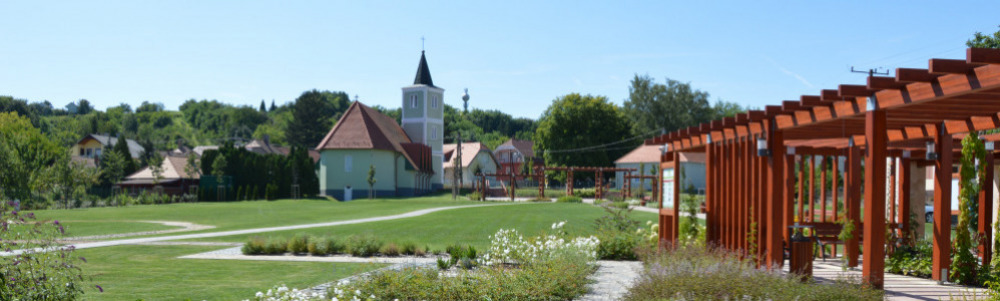
- The ruins of a Villa Rustica, the Egregy Museum, a dry Kneipp path and a herb garden can be found in the Roman Ruin Garden. In the ruin garden several sculptures can be seen, such as the Danish dog statue sitting in the gateway called "The Gateway to Home", the Emperor Flavius Theodosius with his nurse, and "The Fawn", which may have been an ornament on a late Roman tomb.
- The green Church of the Heart of Jesus, also known as the Fradi Church with a memorial park for the victims of the war in its garden.
- After 600 metres along the Egregy row of wineries, you reach the church of St. Magdalene, a precious Árpád-era monument.
- The street named after the famous Hévíz doctor Dr János Babócsay offers a wonderful panoramic view of Hévíz, so it is worth tackling the small ascent at the beginning.
- The seven towers of the Church of the Holy Spirit, the unique dove-wing-shaped floor plan and striking blue colour attract the attention of visitors from afar. The church, together with the Town Hall, was completed in 1999.
- At the end of Vörösmarty Street, you can see impressive villa buildings, which were the first villas of Spa Hévíz, such as the Sorg sanatorium or the House of the Officials. The newest church of Heviz, the Icon of the Holy Mother of God "Fountain of Life” Orthodox church with its spired tower is located next to the cycle path.
- Bypassing the main attraction of the town, the Lake Baths - and its two entrances, the Festetics Bathhouse and the summer entrance on Deák Square -, you arrive back in the centre of Hévíz.
Distance: 27 km | Ascent: 413 m | Difficulty: difficult, mountain bikes are recommended
Hévíz-Rezi-Cserszegtomaj-Hévíz map
- The starting point of the tour is the Tourinform Office, where you can also rent a bicycle. For this tour, we recommend tracking or mountain bikes.
- You pass by well-kept private houses on Attila Street
- The ruins of a Villa Rustica, the Egregy Museum, a dry Kneipp path and a herb garden can be found in the Roman Ruin Garden. In the ruin garden several sculptures can be seen, such as the Danish dog statue sitting in the gateway called "The Gateway to Home", the Emperor Flavius Theodosius with his nurse, and "The Fawn", which may have been an ornament of a late Roman tomb.
- The green Church of the Heart of Jesus, also known as the Fradi Church with a memorial park for the victims of the war in its garden.
- At the green church, the tour is continued along Zrinyi Street, the street under the row of cellars of Egregy and the Church of St. Magdalene. The asphalt road ends after a short road section.
- You ride past the Jewish cemetery of Karmacs, which was used by the Jewish community of Hévíz from the 19th century until the end of the World War. The cemetery was nicely renovated in 2012.
- Following the blue sign, it is worth taking a short break at the Gyöngyös Betyárcsárda (Highwayman’s Tavern), which was built in 1729 as a manorial tavern. Near the tavern, a willow tree marks the graves of the highwaymen Pista Kökes and Illés Vak.
- Past the tavern, towards the Meleg hill, the road leads to the small wine-growing village of Rezi. The almost 6-kilometre stretch climbs steadily. You follow the blue sign mostly on an asphalted road to Rezi.
- In the charming centre of Rezi, you can see a statue of Cardinal Mindszenty carved in a lime tree in the garden of St.Luke's Church.
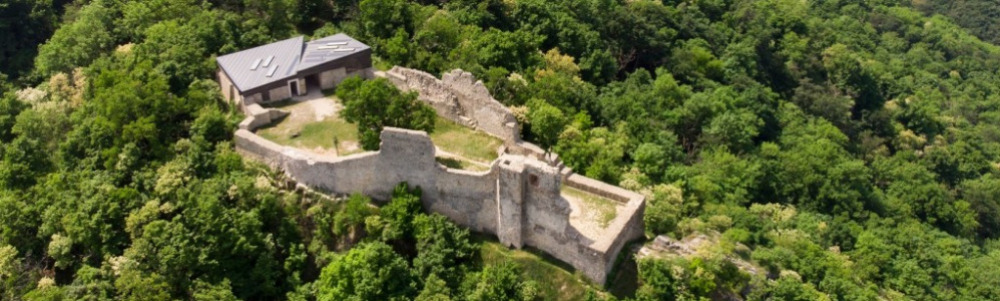
- Several well-marked hiking trails lead to the castle from the village. Whichever route you choose, you can reach the castle ruins on a dirt road, so from here you will need a mountain bike. The castle of Rezi was built sometime in the 11-12th centuries. It changed hands several times and was blown up for strategic reasons at the end of the 16th century.
- On the way back, we pass the Dino adventure park on the Rezi road and continue parallel with the Csókakő stream to Cserszegtomaj. Holes and caves dissolved by ancient hot springs can be found in the area around the Meleg hill. The Csókakő (Jackdaw stone) got its name from the fact that its hard-to-access cavities were used by jackdaws.
- Passing by the Local Government’s Office of Cserszegtomaj, you continue past the entrance to the Kútbarlang (Well Cave). The cave was discovered in 1930 and it can only be visited with a permit.
- Another attraction of Cserszegtomaj is the privately-owned Margaret Lookout Tower, built in the early 2000s.
- Passing by the Dobogóhalom and the Balaton Ballooning airstrip we return to the centre of Hévíz. Dobogó (‘stamping, drumming’) is said to have got its name from the strange drumming sound of horses' hooves on the hill, which is home to tombs from the Migration Period.
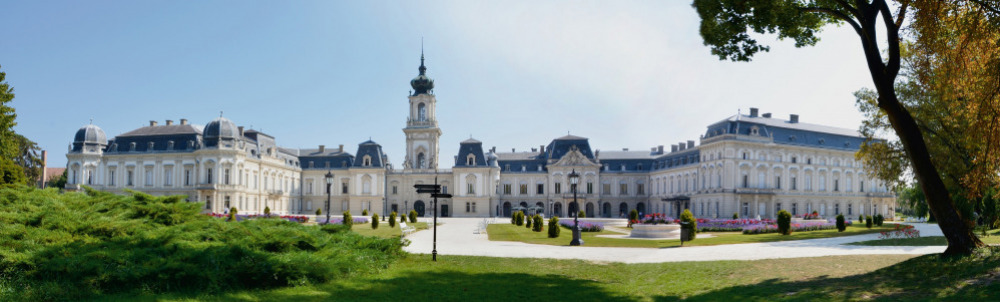
Distance: 17,6 km | Ascent: 100 m | Difficulty: easy
Hévíz-Keszthely-Hévíz route on map
- Starting from the Tourinform office in Hévíz, we take the beautiful panoramic road around Lake Hévíz in the Protective Forest.
- One of Hungary's most beautiful cycle paths is the 2.5 km cycle path between Hévíz and Keszthely, which leads through a line of bald cypresses towards the Balaton Bike Circle cycle path. The Hévíz-Keszthely route, once peaty and waterlogged, was a challenge for horse-drawn carriages 150 years ago. Today it is an asphalted cycle path through a beautiful wild landscape.
- The bike tour passes several sites closely connected to the Festetics family, the most important of which is the family palace, the third-largest baroque palace in Hungary with 101 rooms. The Helikon exhibitions include the Museum of Carriages, the Hunting and Model Railway Exhibition, the Amazon House's exhibition entitled “Travels of the Aristocrats" and the Palm and Bird House. The palace garden is open to the public.
- The cycle path leads through the pedestrian street of Keszthely to the Main Square, where you can see the Holy Trinity statue, the Town Hall and the Balaton Theatre. The ruins of Keszthely's castle and the oldest church of the town, the Our Lady of Hungary Parish Church, can also be found on the square.
- The beautiful villas of Erzsébet Királyné (Queen Elisabeth) Street recall the wealth of Keszthely at the turn of the century. The monument in the Helikon Park commemorates the literary meetings organised by György Festetics.
- You reach the shore of Lake Balaton passing two historic buildings, Hotel Hullám and Hotel Balaton, which need to be renovated. In the summer months, you can see the West Balaton bay from above when riding the Ferris wheel set up here. The towered building of the Island Beach is now part of the Municipal Beach, which you cycle around to the Halászcsárda (Fisherman's Tavern).
- It's worth stopping for a refreshing drink at the thatched-roof tavern, which opened in 1934. The Helikon beach next to the restaurant was often visited by members of the Festetics family, including Princess Maria Haugwitz and little Prince George.
- Passing the Dormitory of the Georgikon University, we reach the institutional houses of the Szendrey-site district via the former farm road of the Festetics estate. Júlia Szendrey, the wife of the famous Hungarian poet Sándor Petőfi, was born here, and her birthplace has been marked by a memorial plaque since 1923.
- Although the surface of the Fenyves (Pinewood) alley is not asphalted, it is easily accessible by a city bicycle. The alley was the favourite route of Princess Mary Hamilton, the wife of Tasziló Festetics II. She had the black pine trees planted that surround you while cycling along the alley, at the end of which you return to the cycle path.
- On the outskirts of Keszthely, you pass through the chestnut grove and return to the same cycle path you took at the beginning of the tour.
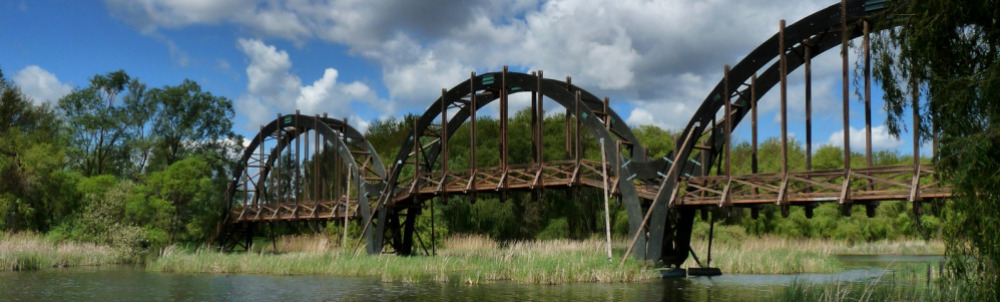
Distance: 54 km | Ascent: Elevation: 264 m | Difficulty: moderately hard
Type of the roads: dirt road along the River Zala to Szentgyörgyvár and the Kis-Balaton visitor centre, asphalted cycle path between the visitor centre and Kányavári island. On the way back: side road between Zalavár and Alsópáhok.
Hévíz-Kis-Balaton (Kányavári-Island) - Hévíz - map of the route.
- Starting from the Tourinform office in Hévíz (2 Rákóczi Street), you take the beautiful panoramic road around Lake Hévíz in the Protective Forest.
- From Hévíz towards Alsópáhok, you continue on a gently ascending cycle path, where you reach the Main Street of the village and, on the opposite side, you can see the impressive building of the Catholic Church of the Exaltation of the Holy Cross. Then you pass the Kolping Hotel Spa & Family Resort, which is located in the immediate vicinity of the church. The name Páh was also used by several settlements in the area, such as Szentandráspáh (today Hévíz), Boldogasszonypáh, Hosszúpáh, Felpáh. This echo word refers to the occupation of the people living here, the leather-working.
- The road to Nemesboldogasszonyfa climbs up to the Zalavár ridge in a nicely unperceived way. Along the way, you can see the “Plots of Zalaers", i.e. beautifully restored and tended cellars and vineyards.
- In Szentgyörgyvár, you pass the cellar of the Bezerics winery, the almost 300-year-old building of the Széchenyi cellar. Then you reach the embankment of the River Zala, which is part of the cycle path but is only paved after the Kis-Balaton House. At this point, you pass Lake Hídvégi (meaning: lake at the end of the bridge), which is a dammed-up part of the River Zala and was established during the first stage of the reconstruction of the Kis-Balaton.
- The Kis-Balaton House is an exhibition area of the Balaton-Uplands National Park with a canteen, toilets, a playground and several interesting attractions, such as the Millennium Monument designed by Imre Makovecz, the ruins of St. Adorján’s Church, the Cyrill-Method Memorial Column, and St. Stephen's Chapel.
- In Hídvégpuszta, it is worth stopping at the fish ladder, next to which there are interesting wooden structures, the birdwatching huts, built by Zurich students.
- At Kis-Balaton, your first destination is Kányavári Island, where you can cross an imposing wooden bridge and take a break on the 2 km long, 500 m wide island.
- On the way back, staying on the main road, you pass the Fenyvespuszta Petting Zoo in Zalavár towards Sármellék, where you ride past the airport and continue on the road towards Alsópáhok. Along this route, there are sections where a cycle path has already been built.
- Leaving Kis-Balaton behind, you ride via Sármellék and return to your starting point, the Tourinform Office in Hévíz.
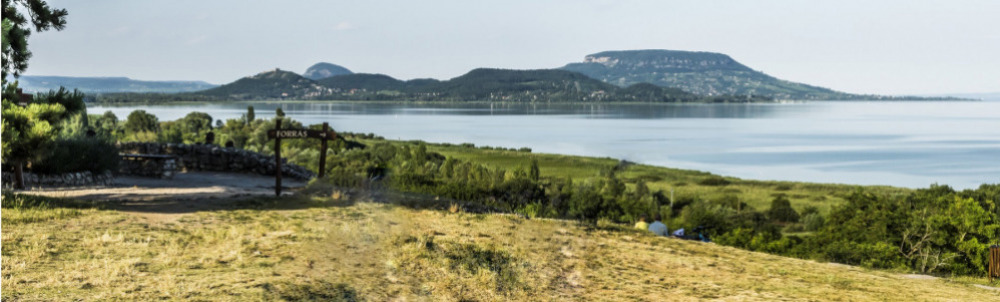
Distance: 38,6 km | Ascent: 153 m | Difficulty: easy
Type of the roads: cycle path all the way long
Hévíz-Balatongyörök Szépkilátó - Hévíz map of the route.
- Starting from the Tourinform office in Hévíz (2 Rákóczi Street), you take the beautiful panoramic road around Lake Hévíz in the Protective Forest.
- One of Hungary's most beautiful cycle paths is the 2.5 km cycle path between Hévíz and Keszthely, which leads through a line of bald cypresses towards the Balaton Bike Circle cycle path. The Hévíz-Keszthely route, once peaty and waterlogged, was a challenge for horse-drawn carriages 150 years ago. Today it is an asphalted cycle path through a beautiful wild landscape.
- The bike tour passes several sites closely connected to the Festetics family. The most important sight is the palace of the family, the third-largest baroque palace in Hungary with 101 rooms. The Helikon exhibitions include the Museum of Carriages, the Hunting and Model Railway Exhibition, the Amazon House's exhibition entitled “Travels of the Aristocrats" and the Palm House and Bird Park. The palace garden is open to the public.
- The cycle path leads through the pedestrian street of Keszthely to the Main Square, where you can see the Holy Trinity statue, the Town Hall and the Balaton Theatre. The ruins of Keszthely's castle and the oldest church of the town, the Our Lady of Hungary Parish Church, can also be found on the square.
- The beautiful villas of Erzsébet Királyné (Queen Elisabeth) Street recall the wealth of Keszthely at the turn of the century. The monument in the Helikon Park commemorates the literary meetings organised by György Festetics.
- You reach the shore of Lake Balaton passing two historic buildings, Hotel Hullám and Hotel Balaton, which need to be renovated. In the summer months, you can see the West Balaton bay from above when riding the Ferris wheel set up here. The Keszthely sign on the lakeside next to the pier is popular with those who want to take some photos.
- On the lakeshore, you head towards Gyenesdiás, but first, you pass the former goose pasture of Keszthely, which is now a popular beach, called the Libás (Goose) Beach. Gyenesdiás is today a popular family-friendly village. Until the last century, the press houses of Keszthely residents stood in the tiny villages of Diás and Falud.
- After leaving Gyenesdiás, you ride through Vonyarcvashegy. This section of the cycle path runs in the shade of willow trees, right along the shore.
- Before leaving Vonyarcvashegy, on the right side of the cycle path, a forest path leads up to the chapel of St Michael, which was built by forty fishermen in 1729. According to popular belief, the fishermen miraculously made it back to shore after being stranded on a block of ice during a winter fishing trip. From the chapel, in the shade of black pines, there is a wonderful panorama of the western bay of Lake Balaton and the buttes. You can leave your bike at the parking lot next to the cycle path, the few minutes' walk is well worth the detour.
- In Balatongyörök you ride to the pier, around which you can see beautifully restored peasant houses with thatched roofs.
- 11. Out of Balatongyörök, next to the Roman spring, which today stands alone under the Szépkiáltó, there was a Roman villa in the 3rd and 4th centuries.
- After the spring, the cycle path climbs up to Szépkilátó (Lookout point), which was a favourite resting place of Lady Mary Hamilton, the wife of Taszilo Festetics II.
- On the way back, you take the familiar cycle path towards Gyenesdiás, where you pass the Imre Festetics Animal Park and return to the starting point of the tour, the Tourinform Office in Hévíz.
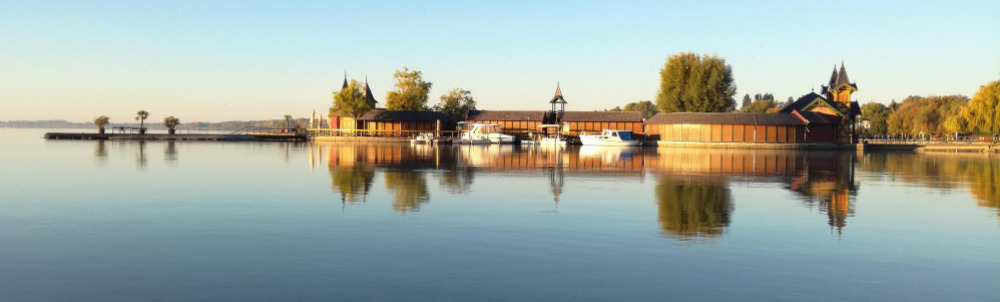
Distance: 47 km (5 km by boat) | Ascent: 138 m | Type of the road: cycle path or bicycle lane on a low-traffic road
Boat timetable: Please note that the tour can only be completed in the summer months! Usually, the boat departs at 10.10 in the morning from Balatonmáriafürdő to Balatongyörök, and the return boat departs at 10.45 from Balatongyörök to Balatonmáriafürdő. During the high season (from 02.07 to 31.08.) there are three boats a day between the two piers.
West Bay Round trip map
- Starting from the Tourinform office in Hévíz, you take the beautiful panoramic road around Lake Hévíz in the Protective Forest.
- One of Hungary's most beautiful cycle paths is the 2.5 km cycle path between Hévíz and Keszthely, which leads through a line of bald cypresses towards the Balaton Bike Circle cycle path. The Hévíz-Keszthely route, once peaty and waterlogged, was a challenge for horse-drawn carriages 150 years ago. Today it is an asphalted cycle path through a beautiful wild landscape.
- The cycle path leads through the pedestrian street of Keszthely to the Main Square, where you can see the Holy Trinity statue, the Town Hall and the Balaton Theatre. The ruins of Keszthely's castle and the oldest church of the town, the Our Lady of Hungary Parish Church, can also be found on the square.
- The beautiful villas of Erzsébet Királyné (Queen Elisabeth) Street recall the wealth of Keszthely at the turn of the century. The monument in the Helikon Park commemorates the literary meetings organised by György Festetics.
- We reach the shore of Lake Balaton passing two historic buildings, Hotel Hullám and Hotel Balaton, which need to be renovated. In the summer months, you can see the West Balaton bay from above when riding the Ferris wheel set up here. The towered building of the Island Beach is now part of the Municipal Beach, which you cycle around to the Halászcsárda (Fisherman's Tavern).
- It's worth stopping for a refreshing drink at the thatched-roof tavern, which opened in 1934. The Helikon Beach next to the restaurant was often visited by members of the Festetics family, including Princess Maria Haugwitz and little Prince George.
- Leaving Keszthely behind, you reach the centre of the once-famous Festetics stud-farm, the Festetics manor and the small mansion in Fenékpuszta. It is currently a construction site, so it is not worth stopping here.
- The area around Fenékpuszta has been continuously inhabited since Roman times, as it was the crossing point between Lake Balaton and the former marshy swampy site of today's Kis-Balaton. There was also a shipyard and a ferry crossing here. The first wooden bridge on the River Zala was built in 1839, and the bridge toll could be paid at the now 400-year-old Customs House.
- At the Zala bridge, the junction of the M76 is currently under construction and the new cycle path is also being built towards Balatonberény, where you can still experience how wild and marshy Lake Balaton was formerly.
- After a mixture of new and old holiday homes at Balatonmáriafürdő, you reach the pier and cross the lake by boat and get to the north shore at Balatongyörök. Check the timetable before you start your bike tour.
- In Balatongyörök, you can see a beautiful thatched peasant house if you cycle along the designated cycle path towards Vonyarcvashegy. On your left, you will soon see the baroque St Michael's Chapel built on a rocky hill. The chapel, the story of which is linked to the legend of forty fishermen, is only a few minutes walk from the cycle path and is worth a stop to admire the panoramic view of Lake Balaton.
- Cycle along the shore of Lake Balaton until you reach Keszthely, where you can join the Hévíz-Keszthely cycle path if you ride on to the town centre. The Hévíz-Keszthely cycle path will take you back to Hévíz.
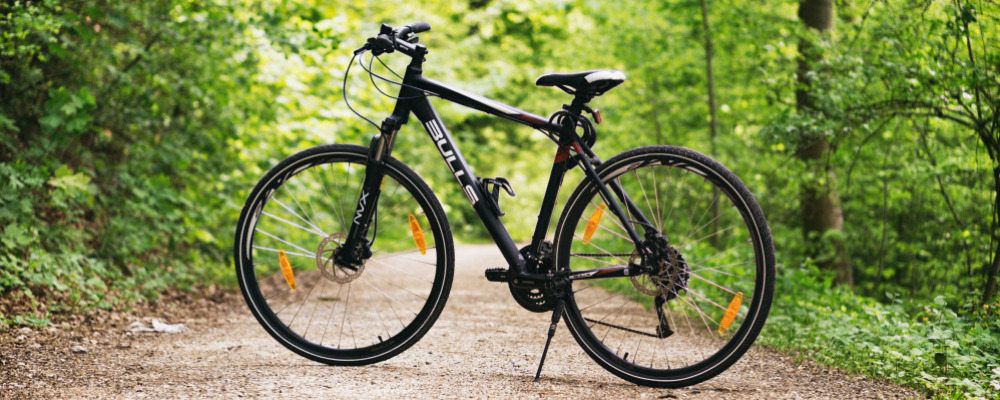
On two wheels
Choose an outdoor spot for sports activities whenever it is possible. While you are on holiday, a lake-shore area, the edge of a forest or a park could be the most ideal spot for active recreation.
Hévíz and its surroundings provide you with good cycling facilities; there are a number of built cycle tracks and marked cycle routes. While cycling, you can get to know the towns and superb landscapes of the Balaton Highlands, the volcanic hills and the valleys hiding between the shore hills as well as the wildlife of the Kis-Balaton. You can hire a bike in various places, including tourist offices, hotels and even guest houses.
Bicycle and E-bike rent at the Tourinform Office
From January 2021, we await our guests with a whole new set of bicycles, e-bikes!
Prices from 15.05.2025
| 3 hours |
24 hours |
3 or more days |
|
| Classic bicycle |
4 900 Ft | 6 900 Ft | 6 500 Ft/day |
| e-bike - NEUZER |
6 000 Ft | 9 000 Ft | 8 000 Ft/day |
| e-Trekking BIANCHI | 9 000 Ft | 14 000 Ft | 12 500 Ft/day |
| e-MTB fully BIANCHI | 14 000 Ft | 22 000 Ft | 20 000 Ft/day |
/We reserve the right to change./
Free accessories:
- child seat
- bicycle lock
- crash helmet
Accessories for rent:
- phone holder: HUF 1,000 / pc
- side bag: HUF 1,000 / pc
- water bottle holder: HUF 1,000 / pc
- basket: HUF 1,000 / pc
Bike Rental – General Conditions
Pick-up and Return:
Bikes can be collected at the Tourinform Hévíz office and must be returned to the same place no later than 30 minutes before closing time, or stored overnight in a locked place. Rental extension is possible with an extra fee (grace period max. 30 minutes).
Payment:
The rental fee must be paid in advance. Accepted payment methods: cash, bank card, SZÉP card. Payment is made in HUF.
Equipment and Accessories:
Bikes are handed over in proper technical condition. Helmets, child seats, phone holders, baskets, panniers, and bottle holders are available on request. E-bikes are provided fully charged.
Use:
The renter must comply with traffic regulations and use the bike properly. It is forbidden to leave the bike unattended or unlocked. Overnight, it should be stored in a locked or guarded place whenever possible.
Liability:
After collection, all risks are borne by the renter. The renter is financially responsible for any damage, loss, or theft of the bike, as well as for any damages or violations caused with the bike. Any damage must be reported and settled immediately upon return.
Data Protection:
Personal data required for the rental will be processed by Hévízi Turisztikai Nonprofit Kft. in accordance with its privacy policy.
This summary is for informational purposes only. The detailed terms and conditions are set out in the rental agreement signed on site.