
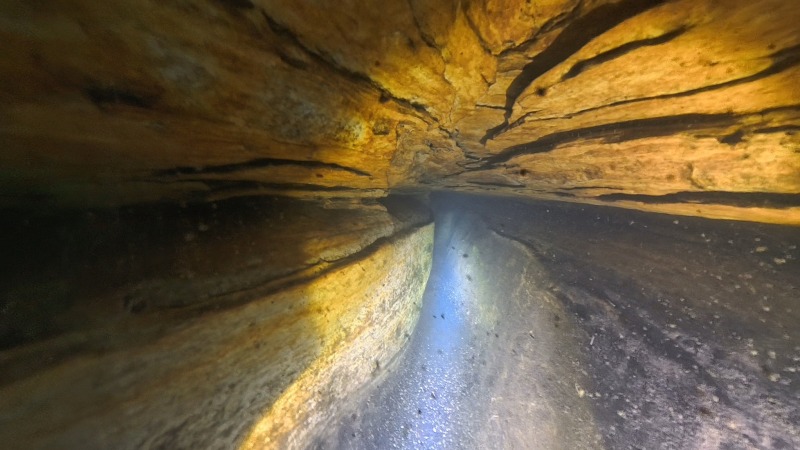
While swimming in Lake Hévíz, or simply floating in its soothing waters, a thought inevitably crosses the bather’s mind: what might be happening beneath us right now, what lies hidden in
the depths below the surface? This invisible world, the mystery of the unknown, has stirred human imagination for thousands of years. But what do we actually know about the underwater world of the lake?
A historical turning point that changed everything…
By the late 1970s, the previously steady and peaceful development of Hévíz was disrupted by an unexpected and increasingly intense conflict. This was the so-called “Hévíz versus Nyirád”
debate, the roots of which date back to the 1950s. During the forced industrialisation following World War II, heavy industry as well as mineral extraction were given priority, and
bauxite mining became increasingly significant in the karst regions of Transdanubia –including the catchment area of Lake Balaton.
Initially, mining took place above the karst water level, but it soon extended deeper and deeper. At the time, no one suspected that the consequences would one day affect Lake Hévíz.
However, the impacts gradually became evident: the significant decline in the lake’s water yield observed in the 1970s could no longer be explained by natural fluctuations. It was a
clear warning sign that called for urgent intervention.
The investigation into the effects of bauxite mining and karst water extraction in Nyirád was not merely an attempt to resolve an environmental conflict, but the beginning of a scientific
discovery process that fundamentally reshaped our understanding of Lake Hévíz. Research launched in 1972 revealed that the lake is fed by deep karst waters, not from a single source but from a complex cave system beneath it. Its water supply originates from distant areas and is directly connected to mining activities in the Nyirád region.
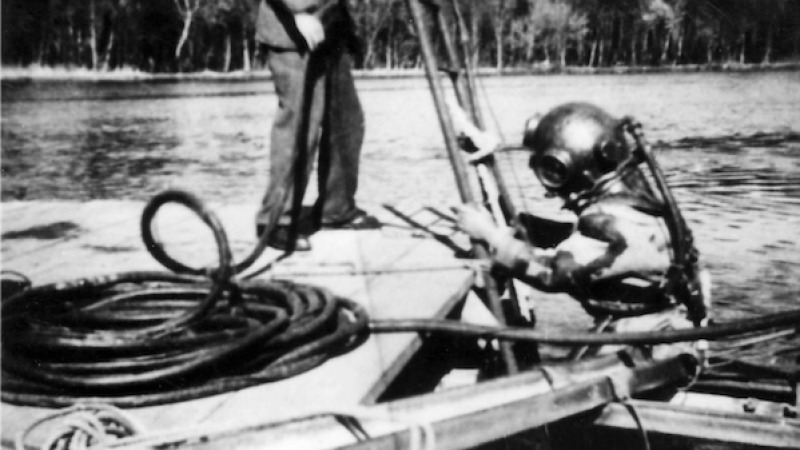
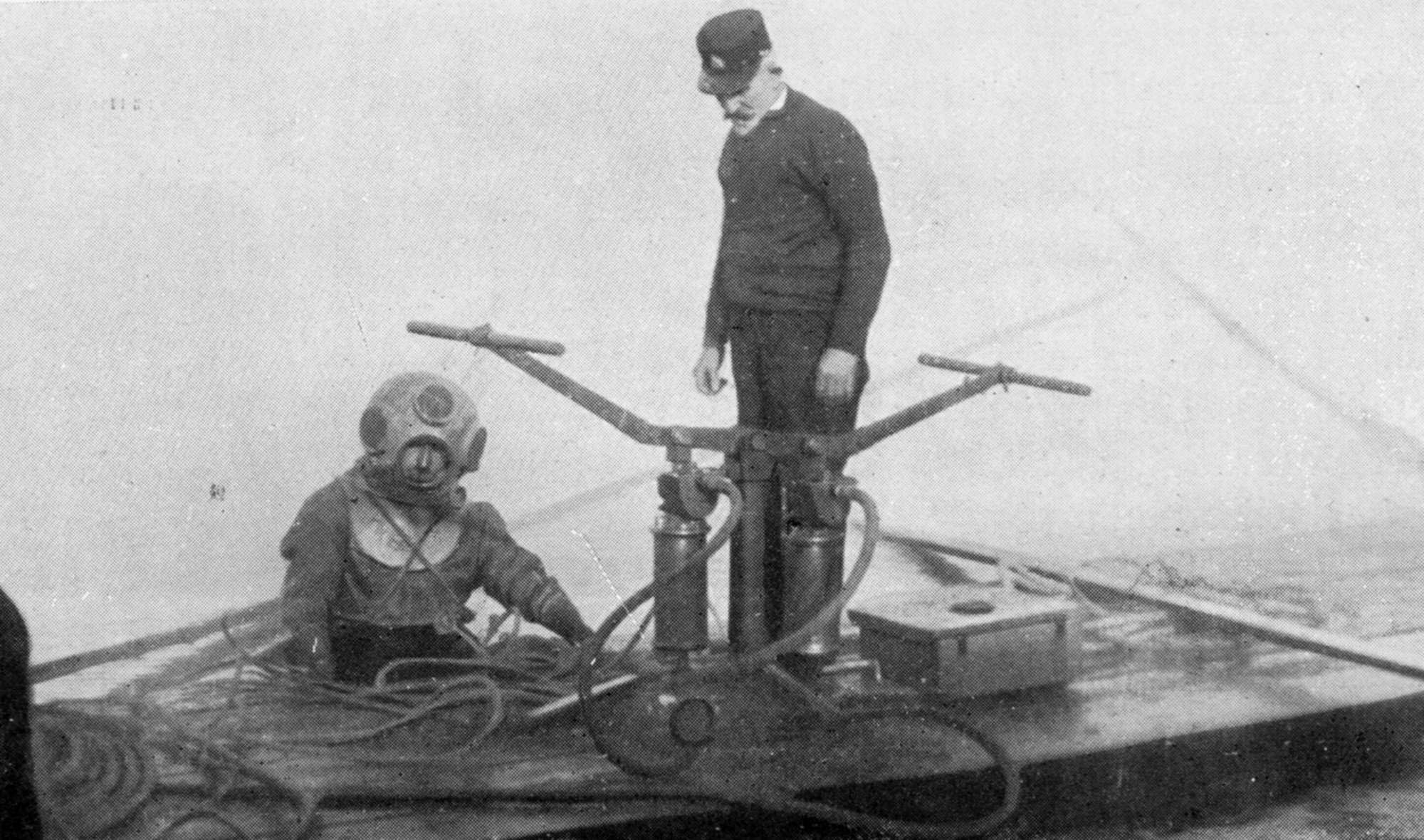
The divers of Lake Hévíz back then….
In order to refine earlier, approximate data, divers were also involved in mapping the depths of the lake. This step marked the beginning of cave exploration in Hévíz, as it was the first attempt to directly explore the source of the lake and understand its structure.
As the culmination of the project, on 10 February 1975, two members of the Amphora Diving Club, István Plózer and Lajos Csávosi, reached the spring cavern—often referred to as a crater.
But what do we know today, more than 50 years after this major breakthrough?
Nearly five decades after the first explorations, research has gained new momentum. Following consultations between the nature conservation experts of the Balaton Uplands National Park Directorate and the Hévíz St. Andrew Rheumatology Hospital and Thermal Bath, a new phase of investigations into the cave system of Lake Hévíz has begun.
This time, the aim is to carry out geodetically precise measurements of five additional smaller caves that had already been identified fifty years ago during the exploration of the spring cave, in the area beneath the so-called “gossip benches”.
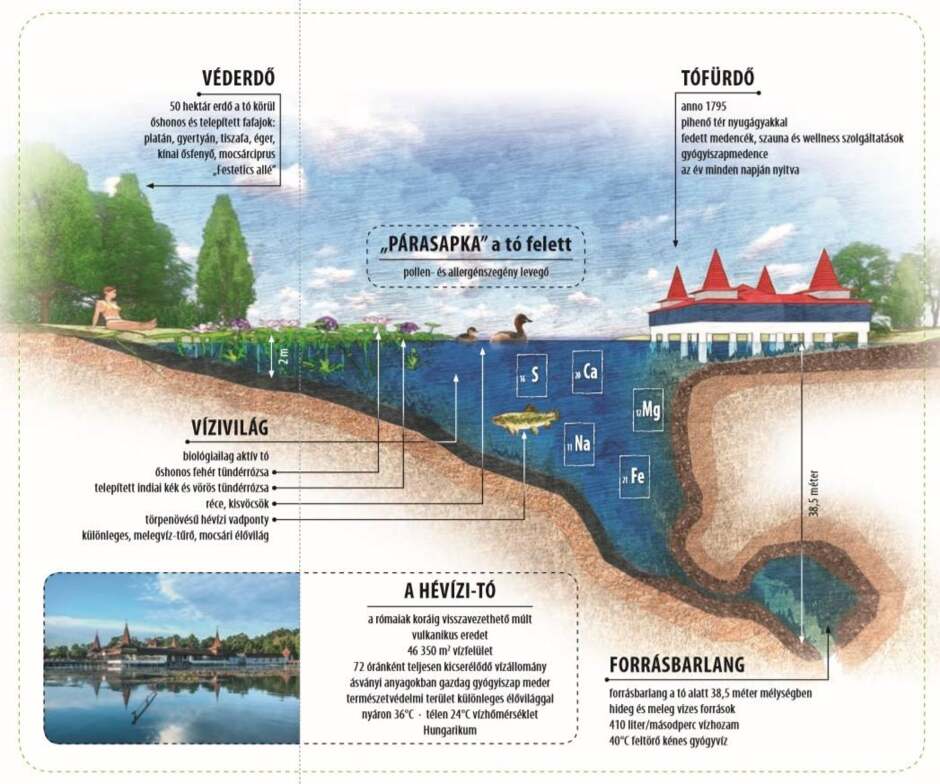 On 17 March 2026, two divers from the Balaton Uplands National Park—responsible for the management of Lake Hévíz—descended to the entrances of the caves. Their task was to determine the exact positions (geographical coordinates) of the cave entrances using geodetic-grade GNSS equipment operated by experts in a boat on the surface, aided by buoys placed in the depths. However, carrying out the measurements proved to be far from simple.
The lake’s water system is fed by waters of different origins: warm thermal water rising from the depths and cooler karst water flowing in laterally. The processes taking place below are not static—the water is in constant motion, with currents varying in both direction and intensity. During the investigation, persistent winds further complicated the coordinated work of the teams operating above and below the surface. Despite these challenges, the mission was successfully completed, and the divers also captured spectacular footage of the caves.
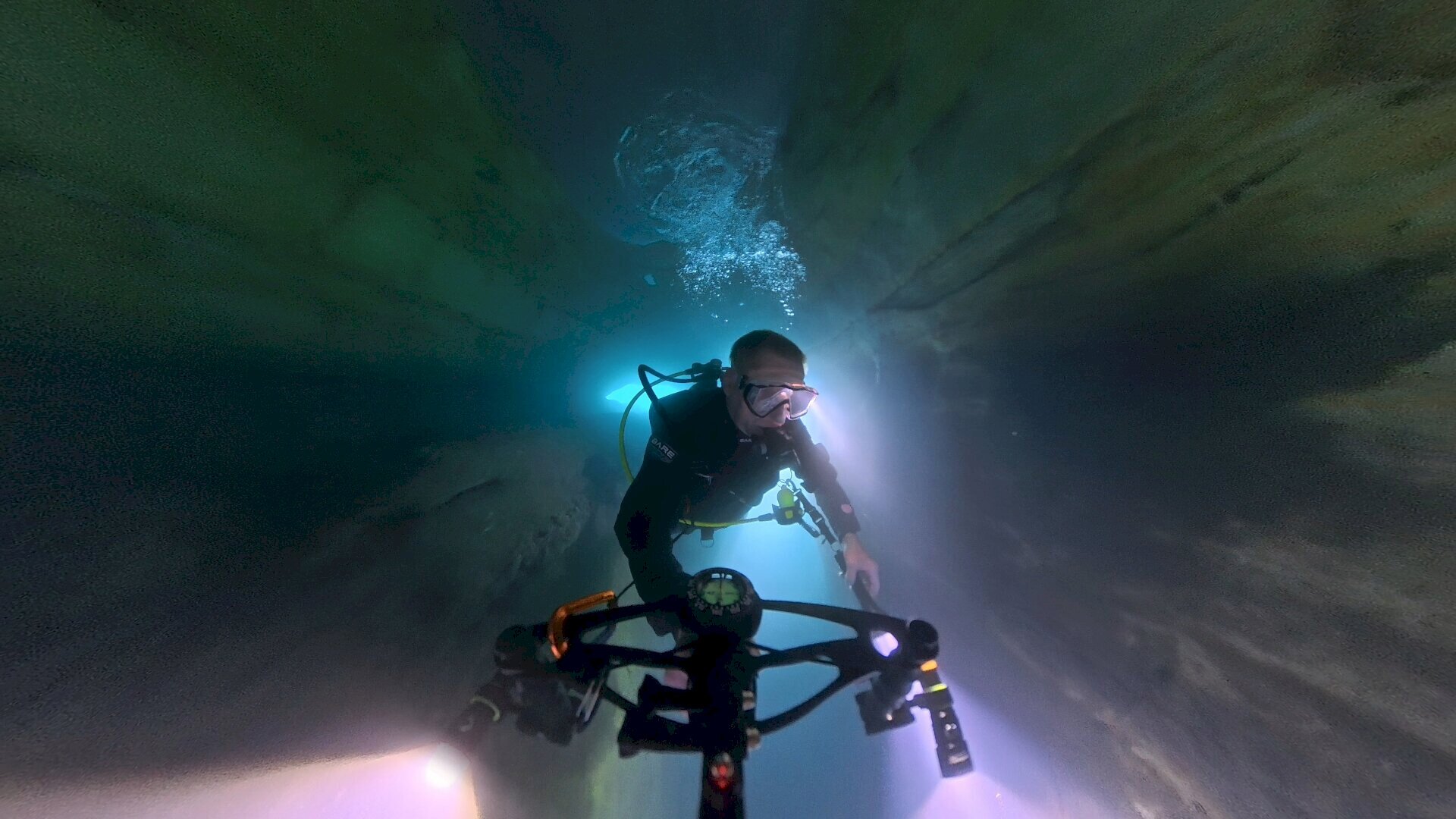
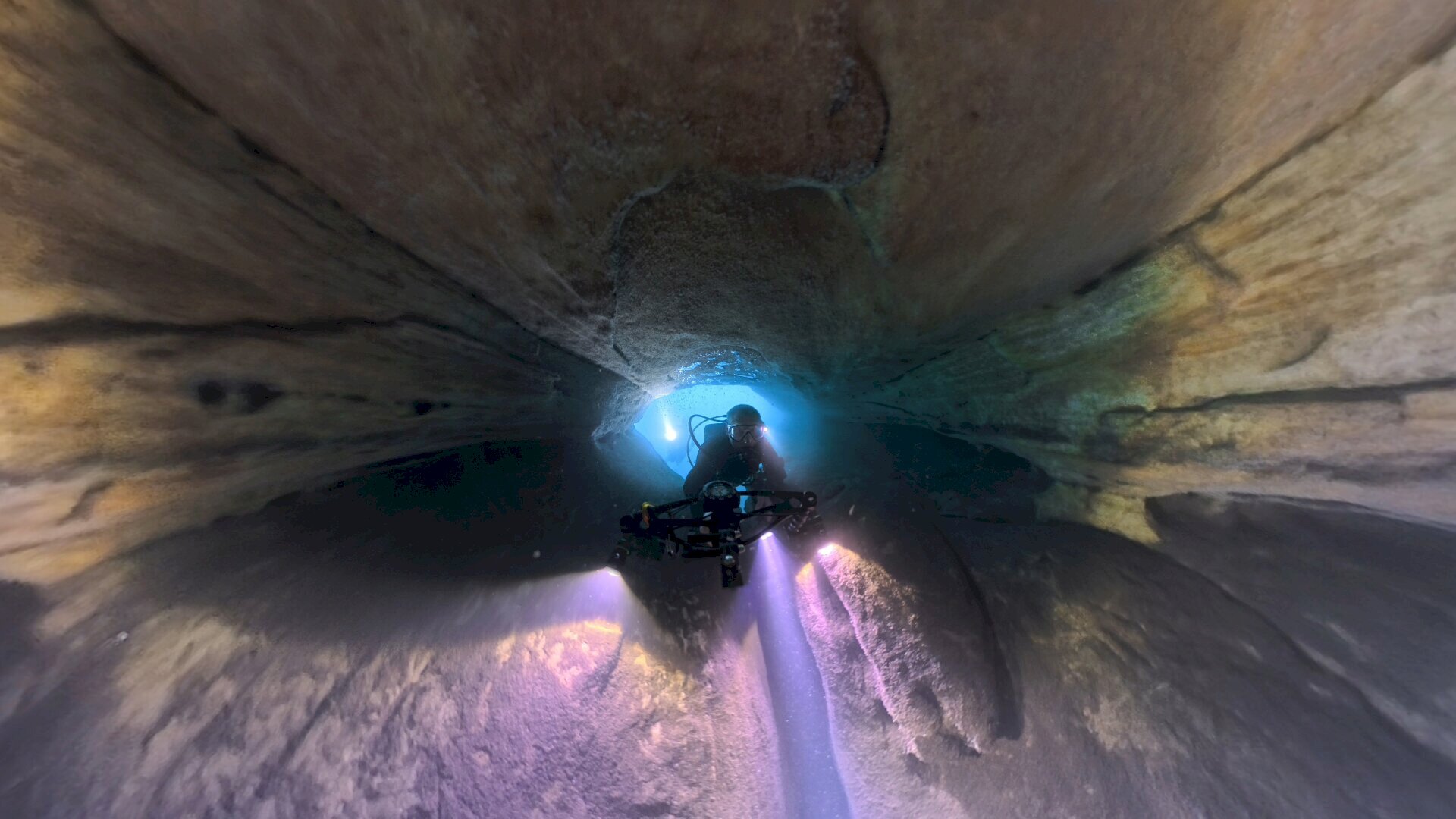
…and now.
Lake Hévíz was first granted protected status in 1993, and in 2006 the originally designated conservation area was further expanded. One of the key objectives of the current research is to
ensure that, based on precise measurements, all known caves of the lake can be officially registered in the national cave registry, thereby strengthening the site’s scientific and
conservation significance.
The end?
After all this, it is fair to ask: are there still new chapters to come, or have we reached the end of the story? Perhaps the most intriguing question is not what we have discovered so far—but
what might still await us beneath the surface. One thing, however, is certain: the future—whether viewed in a narrower or broader terms—will bring changes that will inevitably shape this unique natural system. The story of Lake Hévíz is therefore far from finished. Rather, it is part of an ongoing process in which every answer evokes new questions.
And perhaps next time you immerse yourself in the lake’s healing waters, you will not only feel how good it is to be present—but also sense that everything happening around and beneath you, in the depths of the water, is truly unique and unrepeatable.
Sources:
Hévíz, az élet forrása
Balaton-felvidéki Nemzeti Park
Szántó Endre: Egy fürdőváros születése - Hévíz története 5.